Introduction
A logistics visibility platform is essential for fertilizer organizations to ensure timely delivery and minimize wastage across complex distribution networks. A fertilizer organization in the Manufacturing & Resources industry faced challenges in managing dealer networks, cooperatives, and regional hubs with limited real-time visibility. Fragmented logistics operations led to stock-outs and inefficiencies during peak agricultural seasons. By implementing a logistics visibility platform with IoT and analytics, the organization improved coordination, enabled real-time tracking, and strengthened distribution performance.
Customer
A fertilizer organization in the Manufacturing & Resources industry managing dealer networks, cooperatives, and regional distribution hubs.
Business Objective
- Enable real-time visibility across logistics operations
- Improve Just-In-Time delivery performance
- Reduce stock-outs and wastage
- Enhance farmer satisfaction through reliable supply
- Centralize control over distribution networks
Scope of Services
- Integration of fleet and shipment data across networks
- GPS-based vehicle tracking enablement
- IoT-based cold-chain monitoring for sensitive products
- Centralized command-center dashboards for operations
- Real-time analytics for decision-making
Benefits of Logistics Visibility Platform
- Improved real-time visibility across distribution
- Better coordination between dealers and hubs
- Reduced wastage through proactive monitoring
- Reliable fertilizer availability during peak seasons
- Increased trust across the distribution ecosystem
Impact
- Reduced stock-outs during critical periods
- Lower wastage and spoilage
- Improved on-time delivery performance
- Stronger operational resilience in logistics

Customer
Global IT operations and automation became a strategic priority for a leading European transport and vehicle logistics company managing end-to-end vehicle movement and fleet distribution across multiple countries. Operating at international scale, the organization relied on complex logistics networks and mission-critical IT systems to coordinate vehicle flows, fleet visibility, and operational support. However, ad-hoc processes and fragmented support models limited efficiency, scalability, and responsiveness across regions.
Business Objective
The customer aimed to:
-
Replace ad-hoc and non-standardized processes with structured operations
-
Identify automation opportunities to reduce manual effort
-
Transition to a globally integrated IT operations model
-
Eliminate duplicate tickets and improve incident response times
-
Improve flexibility to adopt new digital capabilities
-
Support multi-language operations across European regions
Scope of Services
BXI Technologies partnered with the organization to deliver a globally integrated operations and automation program that included:
-
Application development, AMS, and infrastructure support for 55+ applications
-
Multi-language service support across four languages
-
End-user computing (EUC) services
-
Network Operations Center (NOC) and Security Operations Center (SOC) support
-
Global delivery model spanning France, Poland, and India
-
Proximity support across 13 countries
-
Event-driven monitoring with AI/ML-based automation
-
Auto-ticketing and elimination of duplicate incidents through intelligent workflows
This approach unified applications, infrastructure, and monitoring under a single operational framework.
Benefits
The organization achieved:
-
Unified delivery across infrastructure and applications
-
Reduced manual intervention through automation
-
Faster and more reliable incident handling
-
Improved coordination across regional support teams
-
Higher operational efficiency through industrialized processes
-
Better adaptability to organizational and operational changes
Impact
-
30–40% reduction in duplicate tickets through event-driven automation
-
20–25% improvement in incident response and resolution time
-
15–20% operational cost savings through automation
-
55+ applications managed under a unified operations model
-
IT support delivered across 13 countries

Customer
Global transportation management transformation became a strategic priority for a leading global shipping company operating across ocean freight, land transport, and multimodal logistics. Managing large-scale transportation networks worldwide, the organization faced increasing complexity across systems, processes, and data flows. Fragmented visibility across transport modes and regions limited decision-making and slowed progress toward next-generation logistics capabilities. The customer required a unified digital strategy to modernize operations, harmonize processes, and enable global visibility.
Business Objective
The customer aimed to:
-
Transform complex, multimodal transportation operations
-
Build a single global visibility platform for transport data
-
Create a future-ready roadmap for logistics capabilities
-
Harmonize processes across business units and geographies
-
Evaluate Tier 1 Transportation Management Systems (TMS) for modernization readiness
-
Improve operational consistency, data synchronization, and planning
-
Enable an integrated approach to global logistics management
Scope of Services
BXI Technologies partnered with the customer to deliver a comprehensive assessment and transformation blueprint.
Enterprise Assessment & Discovery
-
Conducted discovery across four business units in three global regions
-
Mapped transportation workflows across Road, Rail, Barge, Ocean, and Intermodal modes
-
Analyzed existing systems, integrations, dependencies, and operational gaps
Analysis, Evaluation & Recommendations
-
Assessed the existing Tier 1 TMS landscape
-
Identified redundancies, capability gaps, and improvement opportunities
-
Recommended process harmonization and data architecture enhancements
-
Defined a future-state capability roadmap aligned with global logistics operations
Blueprinting & Transformation Platform
Benefits
The organization achieved:
-
A unified strategic blueprint for global transportation transformation
-
Clear visibility into future logistics capabilities and investments
-
Standardized processes across regions and business units
-
Improved data consistency across multimodal operations
-
Stronger decision-making through system and TMS evaluation
-
Reduced operational fragmentation across transport networks
This global transportation management transformation established a scalable foundation for unified visibility, harmonized processes, and future-ready logistics operations.
Impact
-
25–30% improvement in process standardization
-
40–50% faster access to unified transportation insights
-
20–25% reduction in duplicated transport workflows
-
30–35% improvement in readiness for TMS modernization
Customer
As part of an omni-channel digital transformation for logistics, a leading integrated logistics service provider based in APAC set out to unify its customer experience and operations. Rapid growth driven by mergers and acquisitions had resulted in a fragmented digital ecosystem with dozens of disconnected touchpoints. Customers encountered inconsistent journeys across transportation, warehousing, fulfillment, and cross-border services, while internal teams operated in silos with limited visibility. The organization needed a single, scalable digital platform to restore consistency, transparency, and growth.
Business Objective
As part of an omni-channel digital transformation for logistics, a leading integrated logistics service provider based in APAC set out to unify its customer experience and operations. Rapid growth driven by mergers and acquisitions had resulted in a fragmented digital ecosystem with dozens of disconnected touchpoints. Customers encountered inconsistent journeys across transportation, warehousing, fulfillment, and cross-border services, while internal teams operated in silos with limited visibility. The organization needed a single, scalable digital platform to restore consistency, transparency, and growth.
Scope of Services
BXI Technologies partnered with the customer to deliver a consolidated digital business platform.
-
Launched a One Digital Business Platform unifying 30+ customer channels
-
Standardized workflows and created a single digital entry point for all services
-
Implemented Data Event Management for real-time shipment visibility
-
Built cloud infrastructure using Infrastructure as Code (IaC):
-
AWS EC2, RDS, S3, SQS, EMR, Kinesis
-
AWS CLI automation via Ansible
-
CI/CD pipelines on AWS Cloud
-
iPaaS-based backend integrations
-
Backup and disaster recovery setup
-
Adopted an MVP-first approach starting with Track & Trace
-
Refactored backend systems to unify routing, pricing, and fulfillment logic
This omni-channel digital transformation for logistics eliminated silos while enabling faster innovation.
Benefits
-
Unified omni-channel experience through a single digital platform
-
Consistent customer journeys across all logistics services
-
Improved shipment visibility and faster issue resolution
-
Stronger customer engagement through a consolidated interface
-
Increased cross-sell opportunities across transport and logistics offerings
-
Streamlined backend operations with standardized workflows
Impact
-
20% reduction in customer churn
-
28% reduction in call center volume for shipment tracking
-
30+ customer channels consolidated into a single platform
-
72 fragmented customer journeys eliminated
Customer
Digital platform consolidation for supply chain operations became a critical initiative for a global supply chain services and logistics company based in the United States. Operating large-scale freight forwarding, warehousing, transportation, and distribution networks, the organization manages massive shipment volumes worldwide. As operations expanded, a fragmented application landscape and rising run-the-business costs began impacting visibility, efficiency, and customer experience. The company needed a unified digital foundation to regain control and scale efficiently.
Business Objective
The customer aimed to:
-
Reduce run-the-business (RTB) costs and improve operational efficiency
-
Enhance shipment visibility across the global supply chain
-
Re-engineer and standardize business processes for better resource utilization
-
Reduce incident ticket volumes and year-on-year support overhead
-
Establish integrated SLAs and KPIs for AMS and infrastructure operations
-
Consolidate a fragmented application landscape into a single platform
-
Improve customer onboarding speed and increase revenue realization
Scope of Services
BXI Technologies delivered a multi-layer digital transformation program covering:
Core Freight Forwarding System Modernization
Next-Generation Digital Platform Development
-
Built a unified digital platform replacing 170+ legacy applications
-
Created a single source of truth for shipments, customers, vendors, and freight
-
Standardized processes across the supply chain ecosystem
Application Support (AMS)
-
Managed 115 applications across 25+ technologies
-
Delivered incident management, problem management, enhancements, testing, and release services
-
Implemented automation to eliminate redundant and recurring tickets
Infrastructure Support & Help Desk
-
Provided end-to-end infrastructure operations and monitoring
-
Delivered L1, L2, and L3 user support
-
Integrated SLAs, KPIs, and governance across AMS and infrastructure
Benefits
The organization achieved:
-
Lower run-the-business costs through automation and consolidation
-
Faster customer onboarding via standardized digital workflows
-
A unified digital platform replacing 170+ applications
-
Improved shipment visibility across global operations
-
Stronger governance with integrated SLAs and KPIs
-
Reduced manual support effort through stabilization and automation
-
Increased revenue realization driven by operational accuracy
Impact
-
$100 million reduction in run-the-business costs
-
60% faster customer onboarding
-
11% increase in revenue realization
-
20%+ reduction in incident ticket volumes

Customer
Digital experience transformation for public transportation became a strategic priority for a leading Australian regional authority responsible for managing airports, train stations, and citizen-facing mobility services. Serving millions of passengers each year, the authority needed to modernize travel experiences while balancing accessibility, cost efficiency, and future readiness. Aging systems, fragmented digital touchpoints, and rising operational costs limited their ability to deliver seamless, inclusive journeys across physical and digital channels.
Business Objective
The authority aimed to:
-
Redesign end-to-end traveler experiences across airports, train stations, and mobile platforms
-
Apply human-centered design principles to improve accessibility and inclusivity
-
Reduce total cost of ownership through strategic application and infrastructure outsourcing
-
Enable a resilient and scalable multi-cloud environment
-
Incubate innovation using emerging technologies such as AR, VR, and digital walkthroughs
-
Deliver a next-generation travel platform that improves satisfaction and enables self-service
Scope of Services
BXI Technologies partnered with the authority to deliver a comprehensive transformation program spanning experience, technology, and operations.
Human-Centered Experience Design
-
Redesigned traveler journeys across new airport terminals and train stations
-
Created AR/VR-enabled experience prototypes for future-state travel
-
Improved accessibility for diverse traveler groups, including mobility- and sensory-impaired users
Strategic Outsourcing (Applications & Infrastructure)
-
Established an outsourced operating model for apps and infrastructure
-
Reduced TCO through consolidation, automation, and shared-service delivery
Multi-Cloud Enablement & Migration
-
Enabled hybrid and multi-cloud capabilities for resilience and scalability
-
Migrated legacy workloads to modern cloud environments
-
Modernized systems to improve reliability and performance
Innovation Incubation
-
Explored AR, VR, and digital twin concepts
-
Built rapid prototypes to validate new travel experience models
Benefits
The authority achieved:
-
More intuitive and immersive travel experiences through AR/VR-led design
-
Improved accessibility and inclusivity for all citizen travelers
-
Lower operating costs through consolidated applications and infrastructure outsourcing
-
Higher reliability and scalability enabled by multi-cloud adoption
-
Modernized digital touchpoints across mobile apps, airports, and train stations
-
A stronger innovation pipeline supported by rapid experimentation
This digital experience transformation for public transportation enabled the authority to deliver accessible, future-ready travel experiences while reducing operational complexity and cost.
Impact
The authority achieved:
-
More intuitive and immersive travel experiences through AR/VR-led design
-
Improved accessibility and inclusivity for all citizen travelers
-
Lower operating costs through consolidated applications and infrastructure outsourcing
-
Higher reliability and scalability enabled by multi-cloud adoption
-
Modernized digital touchpoints across mobile apps, airports, and train stations
-
A stronger innovation pipeline supported by rapid experimentation

Customer
As part of a digital transformation of the parcel ecosystem, a leading British multinational postal and courier company set out to modernize its end-to-end parcel operations. With only 20% of parcel traffic digitized, the organization faced poor visibility across deliveries, limited customer experience, and operational inefficiencies across sortation and last-mile networks. To compete with digital-first logistics providers, the client needed a fully digitized, real-time, and integrated parcel platform.
Business Objective
The client aimed to:
-
Achieve 100% digital capture of parcel events
-
Enable real-time in-flight delivery changes for customers
-
Improve customer onboarding, experience, and retention
-
Increase operational efficiency across sortation, routing, and delivery
-
Reduce incidents, delays, and manual interventions
-
Compete effectively with digital-native logistics platforms
These goals defined the roadmap for digital transformation of the parcel ecosystem across the enterprise.
Scope of Services
BXI partnered with the client to deliver a comprehensive transformation across the parcel lifecycle.
Parcel Digitization
-
Enabled end-to-end digital capture of all parcel events (scan, sort, route, deliver)
-
Replaced legacy manual workflows with real-time digital processes
Integration Modernization
-
Modernized the enterprise integration landscape
-
Unified Parcel Systems, Sortation Hubs, and Route Planning Systems
-
Implemented event-driven architecture for real-time parcel intelligence
Customer Experience Transformation
-
Introduced real-time in-flight delivery change capabilities
-
Enabled doorstep collection and intelligent task assignment
-
Improved track-and-trace visibility and customer notifications
Operational Intelligence & Monitoring
-
Deployed monitoring, alerting, and observability tools
-
Implemented Solution Manager, WILY, HAWK alerting, and EEM
-
Enabled proactive issue detection and experience analytics
This digital transformation of the parcel ecosystem created a scalable foundation for future innovation.
Benefits
-
Complete digital visibility across the parcel journey
-
Improved customer control and delivery flexibility
-
Higher operational efficiency through automation
-
Better routing and sortation intelligence
-
Reduced dependency on manual interventions
-
Stronger competitive positioning against digital-first players
Impact
-
Complete digital visibility across the parcel journey
-
Improved customer control and delivery flexibility
-
Higher operational efficiency through automation
-
Better routing and sortation intelligence
-
Reduced dependency on manual interventions
-
Stronger competitive positioning against digital-first players
Customer
As part of a connected fleet and telematics modernization initiative, a leading U.S.-based trucking and logistics company set out to transform how it manages and monetizes fleet operations. Operating a large nationwide fleet, the organization faced growing pressure from rising maintenance costs, customer expectations for real-time visibility, and industry disruption driven by electric and autonomous vehicles. To stay competitive, the customer needed a data-driven platform that could unify telematics data, improve operational efficiency, and unlock new revenue opportunities.
Business Objective
The logistics provider aimed to:
-
Monetize telematics data across its expansive fleet
-
Prepare for disruption from electric and autonomous vehicles
-
Improve customer experience through real-time fleet insights
-
Strengthen process and data consistency across fleet operations
-
Enable predictive analytics–driven business capabilities
-
Reduce maintenance costs by predicting failures early
-
Optimize fleet performance, compliance, and safety through automation
These objectives defined a roadmap for connected fleet and telematics modernization at enterprise scale.
Scope of Services
BXI Technologies partnered with the customer to deliver a unified, intelligence-driven fleet platform.
-
Designed a connected fleet platform ingesting near real-time telematics data
-
Unified data across ~0.5M vehicles from major truck OEMs, telematics service providers, and IoT platforms
-
Enabled enterprise-wide decision-making using centralized telematics intelligence
-
Delivered real-time visibility into:
-
Vehicle health and condition
-
Predictive maintenance alerts
-
Emergency driver assistance status
-
Implemented real-time route optimization based on traffic, operational cost, and constraints
-
Built a scalable foundation to monetize telematics data across the logistics ecosystem
This connected fleet and telematics modernization approach enabled both operational efficiency and new digital revenue streams.
Benefits
-
Lower maintenance costs through predictive maintenance intelligence
-
Improved regulatory compliance across fleet operations
-
Enhanced customer satisfaction via value-added telematics services
-
More accurate ETAs improving customer experience
-
Stronger operational consistency with unified fleet data
-
New monetization opportunities from telematics insights
Impact
-
25–35% reduction in fleet maintenance costs
-
40–55% reduction in unplanned vehicle downtime
-
20–30% improvement in DOT and eDVIR compliance
-
35–45% improvement in ETA accuracy for customer deliveries

Customer
As part of a blockchain interoperability platform for supply chain networks, a global logistics leader headquartered in the EU set out to modernize how multi-party supply chain ecosystems collaborate. Operating complex networks involving carriers, suppliers, customs authorities, and partners, the organization required secure, transparent, and near real-time data exchange. Existing blockchain implementations lacked interoperability and performance, limiting scalability and cross-network collaboration. The client needed a unified blockchain layer to support distributed, future-ready supply chain models.
Business Objective
The logistics provider aimed to:
-
Build a next-generation blockchain collaboration platform
-
Support multiple blockchain protocols within a single ecosystem
-
Enable cross-protocol interoperability across disparate networks
-
Achieve near real-time performance for supply chain events
-
Support pluggable use cases such as track & trace, reverse shipping, and settlements
-
Strengthen network governance, monitoring, and multi-node operations
-
Future-proof supply chain digitization with a unified blockchain foundation
These objectives defined the roadmap for a blockchain interoperability platform for supply chain networks operating at scale.
Scope of Services
BXI Technologies partnered with the customer to design and implement a high-performance, interoperable blockchain platform.
-
Designed a blockchain platform supporting multiple protocols and networks
-
Built a scalable, interoperable architecture using gRPC for low-latency communication
-
Enabled cross-network collaboration between similar and disparate blockchain technologies
-
Developed modular, pluggable components to support multiple supply chain use cases
-
Implemented network management, operations dashboards, and node monitoring
-
Delivered near real-time event processing for thousands of ecosystem participants
This blockchain interoperability platform for supply chain networks removed silos and enabled seamless collaboration across the ecosystem.
Benefits
-
High-performance blockchain operations across large networks
-
Seamless interoperability between multiple blockchain protocols
-
Scalable platform supporting diverse supply chain use cases
-
Faster and more reliable event processing
-
Improved collaboration and secure data exchange among partners
-
Flexible architecture enabling rapid onboarding of new use cases
Impact
-
67% improvement in request fulfillment time
-
Near real-time processing of supply chain events across networks
-
Improved operational visibility across multi-party ecosystems
-
Stronger governance and monitoring of blockchain nodes and networks
Customer
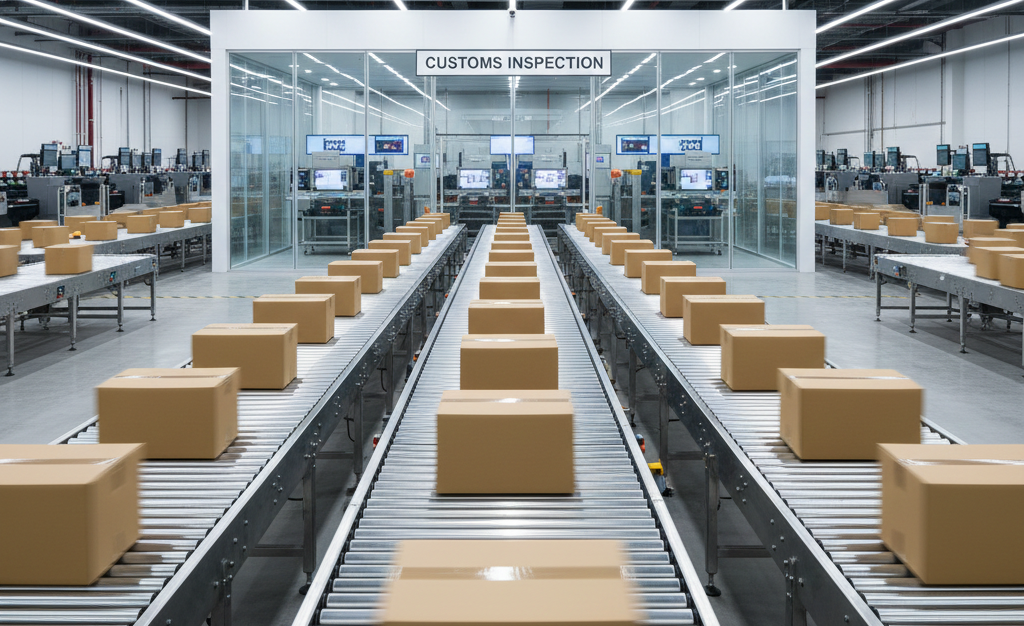
AI-driven customs clearance modernization became a strategic priority for a U.S.-based global courier, express, and parcel (CEP) company handling millions of international shipments daily. Operating across multiple countries, the organization faced complex customs regulations, strict compliance requirements, and increasing customer expectations for faster, predictable international deliveries. To maintain leadership in the international express segment, the company needed to reduce customs delays, prevent shipment holds, and transform clearance accuracy into a competitive advantage.
Business Objective
The customer aimed to:
-
Transform customs clearance into a market differentiator
-
Proactively predict shipment caging probability
-
Improve delivery predictability by minimizing customs delays
-
Reduce revenue loss from misclassification and documentation errors
-
Automate high-volume customs workflows
-
Apply AI to documentation, screening, and inspection processes
Scope of Service
BXI Technologies delivered an AI-powered customs intelligence framework that included:
-
Harmonized System (HS) code search and validation
-
AI-based cage risk prediction models
-
Automated international document identification and preparation
-
Restricted Party Screening (RPS) automation
-
Package image processing and classification
-
Big-data–driven analytics for real-time caging prediction
-
Model-as-a-Service (MaaS) architecture for scalable deployment
This solution embedded AI models directly into live customs workflows, enabling real-time decision-making at operational scale.
Benefits
The organization achieved:
-
Higher customs clearance accuracy through predictive intelligence
-
Faster processing by automating documentation and classification
-
Early identification of high-risk shipments
-
Improved customer experience with predictable delivery timelines
-
Stronger compliance through integrated AI workflows
-
Reduced manual intervention across customs operations
Impact
-
94–97% accuracy in identifying shipment caging risk
-
Substantial reduction in customs-related delays
-
Real-time AI model execution at enterprise scale