Customer
A leading FMCG and hospitality group operating across the Middle East and Africa, with multiple business entities requiring a standardized and scalable HR management environment.
Technology
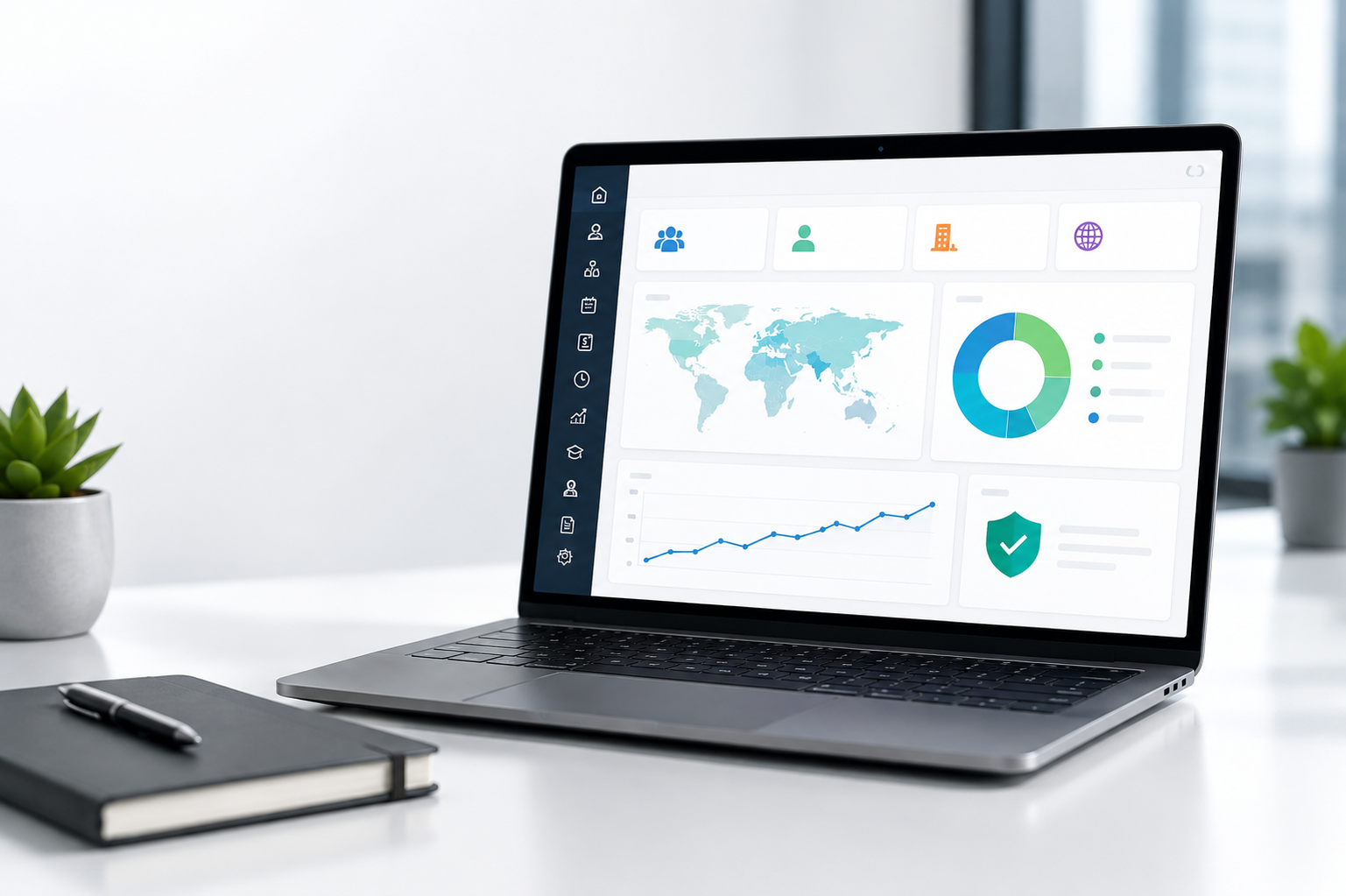
Zoho People Plus Enterprise, Zoho Recruit, Zoho Payroll, Zoho Learn, Zoho Connect, Microsoft 365, Biometric Integration, Oracle/Finance System Integration
Business Objective
The client sought to standardize HR operations across multiple countries and business entities while creating a unified digital platform for workforce management.
Key objectives included:
- Standardize HR operations across multiple countries.
- Digitize the end-to-end employee lifecycle.
- Automate payroll and attendance processes.
- Streamline recruitment and employee onboarding.
- Centralize employee records and HR information.
- Establish a unified HR platform with country-specific compliance.
- Improve visibility through HR analytics and reporting.
Scope of services
BXI Technology procured and implemented Zoho People Plus Enterprise across multiple entities, covering:
- Configuration of core HR and employee management.
- Recruitment and onboarding through Zoho Recruit.
- Payroll and attendance automation.
- Performance management and learning management.
- Employee self-service enablement.
- HR analytics and reporting.
- Integration with biometric devices.
- Microsoft 365 integration.
- Oracle/Finance system integration.
- Employee data migration.
- User training and UAT management.
- Long-term support and maintenance.
Benefits
- Centralized HR management across multiple countries.
- Standardized HR processes and governance.
- Automated employee lifecycle workflows.
- Improved payroll accuracy and compliance.
- Enhanced employee self-service.
- Real-time HR analytics and reporting.
- Simplified multi-country HR administration.
- Scalable support for future expansion.
Impact
BXI Technology delivered a unified cloud-based HR ecosystem that modernized workforce management across multiple countries and business entities. The solution improved operational efficiency, strengthened compliance, enhanced employee experience, and established a scalable digital HR foundation to support continued business growth and global operations.

Customer
A leading financial services organization specializing in investment banking, wealth management, and asset management, operating through multiple legal entities across India.
Technology
Microsoft 365, Microsoft Entra ID (Azure Active Directory), Microsoft Exchange Online, Microsoft Teams, SharePoint Online, OneDrive for Business, Microsoft Intune, Microsoft Security, PowerShell Automation
Business Objective
The client sought to simplify Microsoft 365 licensing and workplace operations across multiple legal entities with different renewal cycles and decentralized administration. The objectives were to:
- Consolidate Microsoft 365 licensing into a single renewal cycle.
- Simplify license administration across multiple business entities.
- Provide expert Level 2 and Level 3 support for workplace infrastructure.
- Strengthen identity, tenant, and cybersecurity management.
- Establish a scalable managed services model for long-term IT operations.
Scope of services
BXI Technology delivered an end-to-end Microsoft 365 managed services engagement covering:
- Enterprise Microsoft 365 license procurement and renewal management.
- Consolidation of multiple license renewal schedules into a unified annual renewal framework.
- Level 2 and Level 3 support for Microsoft 365 administration.
- Active Directory and Microsoft Entra ID administration.
- Tenant management and governance.
- Workplace, network, and cybersecurity support.
- Advanced troubleshooting, PowerShell automation, and identity management.
- SLA-driven managed support through a centralized service desk.
Benefits
- Centralized Microsoft 365 governance across all business entities.
- Simplified license lifecycle management and administration.
- Improved operational efficiency through standardized support processes.
- Faster issue resolution with dedicated L2 and L3 technical expertise.
- Enhanced identity management and security posture.
- Better visibility into Microsoft 365 operations and support performance.
- Predictable, scalable, and streamlined IT operations.
Impact
BXI Technology helped the client establish a centralized Microsoft 365 operating model by standardizing licensing, administration, and managed support across multiple business entities. The engagement simplified IT operations, strengthened governance and security, reduced administrative overhead, and created a scalable foundation to support the organization’s future growth and digital workplace initiatives.

Introduction
As financial and insurance organizations continue expanding digital operations, infrastructure security becomes critical to protecting sensitive business and customer data. Increasing cyber threats, configuration gaps, and infrastructure vulnerabilities create significant operational and compliance risks.
A multinational insurance enterprise required a structured vulnerability assessment and penetration testing (VAPT) program to identify security weaknesses, strengthen infrastructure resilience, and improve overall cyber risk posture across critical systems.
Customer
A multinational insurance enterprise in Japan operating across multiple business units, seeking to strengthen infrastructure security and reduce exposure to cyber threats and operational vulnerabilities.
Business Objective
- Assess infrastructure security posture across critical environments
- Identify technical vulnerabilities, configuration gaps, and attack surface risks
- Improve security governance and remediation prioritization
- Reduce exposure to infrastructure-based cyber threats
- Validate remediation effectiveness through structured reassessment
Scope of Services
Infrastructure Vulnerability Assessment
Performed comprehensive vulnerability assessments across critical infrastructure environments to identify security weaknesses and exposure points.
Penetration Testing & Attack Surface Analysis
Conducted penetration testing to evaluate exploitability and assess potential attack vectors across systems and applications.
Configuration & Security Review
Reviewed infrastructure configurations to identify security misconfigurations, compliance gaps, and operational risks.
Vulnerability Validation & Prioritization
Validated findings through manual analysis and eliminated false positives to improve assessment accuracy and remediation focus.
Remediation Support & Reassessment
Worked closely with internal teams to provide remediation recommendations and performed rescans to validate corrective actions.
Technology Used
- Vulnerability Assessment & Penetration Testing Tools
- Infrastructure Security Monitoring Platforms
- Configuration Review Frameworks
- Risk Prioritization & Reporting Dashboards
Key Challenges Addressed
- Limited visibility into infrastructure vulnerabilities and attack exposure
- Security risks caused by configuration weaknesses
- False positives impacting remediation efficiency
- Lack of structured prioritization for critical vulnerabilities
- Need for validation of remediation effectiveness across environments
Benefits
Improved Security Visibility
Enabled comprehensive identification of infrastructure vulnerabilities and risk exposure
Reduced Attack Surface
Strengthened infrastructure resilience through remediation and security hardening
Accurate Risk Prioritization
Improved focus on business-critical vulnerabilities requiring immediate action
Enhanced Security Governance
Established structured reporting and validation processes for remediation tracking
Impact
- Identified and assessed critical infrastructure vulnerabilities across environments
- Reduced potential attack surface and infrastructure security risks
- Improved remediation planning and vulnerability prioritization
- Enhanced confidence in infrastructure security posture through validation and rescanning
- Strengthened overall cyber resilience and operational security readiness

Introduction
Banking institutions operate in high-availability environments where system downtime and delayed incident resolution directly impact customer experience and business continuity. High incident volumes during peak business hours, duplicate tickets, and manual intervention reduce operational efficiency and increase risk. This case study highlights how a banking institution improved resilience through automated healing, intelligent ticket analysis, and service recovery mechanisms. By enabling event correlation, automation, and proactive monitoring, the organization significantly enhanced system stability and operational efficiency.
Customer
A large-scale banking institution managing high-volume IT incidents across application and infrastructure environments with 24×7 support requirements.
Business Objective
- Improve IT resilience through automated healing and recovery
- Reduce high incident volumes during peak business hours
- Minimize SLA violations and improve response times
- Eliminate duplicate and redundant tickets
- Shift from reactive to proactive IT operations
Scope of Services
- Heat map–based incident analysis across time and business hours
- Identification of peak-hour incident patterns and workload spikes
- Ticket classification and automation probability analysis
- Detection of duplicate and parent-child ticket patterns
- Design and implementation of automated healing workflows
- Enablement of event correlation and alert suppression
- Establishment of 24×7 Integrated Command Centre
Key Insights from Analysis
- 17,600+ incidents analyzed
- 75% incidents occur during business hours (9 AM–6 PM)
- High-volume incident drivers:
- Password issues (22%)
- Account issues (19%)
- Connectivity issues (17%)
- Configuration issues (16%)
- Significant duplication and parent-child ticket patterns observed
Detailed Findings
- High dependency on manual ticket logging and resolution
- Lack of event correlation leading to duplicate tickets (~400–500 cases)
- Inefficient prioritization affecting response times
- Repetitive issues (password, access, configuration) ideal for automation
- High operational load during peak hours impacting service quality
Benefits
- Reduced duplicate and redundant ticket volumes
- Faster incident detection and response
- Improved SLA adherence and service reliability
- Better prioritization of critical incidents (P1/P2)
- Enhanced operational efficiency and workload management
Impact
- 30.7% automated resolution achieved
- Up to 75% automation potential for password-related issues
- Significant reduction in manual intervention
- Improved service recovery and incident handling speed
- Strong foundation for resilient, scalable IT operations

Introduction
Insurance providers operate in highly customer-centric environments where service speed, accessibility, and reliability directly impact customer trust. High volumes of support tickets, SLA violations, and manual intervention often lead to delays and poor customer experience. This case study highlights how an insurance provider transformed its support operations through self-service enablement, automation, and workload optimization. By restructuring IT support processes and introducing intelligent automation, the organization improved service efficiency, reduced operational effort, and enhanced customer trust.
Customer
An insurance provider managing high-volume application support operations across multiple channels, including web, voice, email, and automated alerts.
Business Objective
- Improve customer trust through faster and seamless support
- Reduce SLA violations in response and resolution
- Optimize support workload across L1, L2, and L3 teams
- Enable self-service and automation-led support
- Reduce dependency on manual intervention
Scope of Services
- Ticket data analysis across time, volume, and channels
- Incident vs service request classification and optimization
- SLA compliance analysis (response and resolution)
- Skill-based workload and demand analysis
- Identification of automation and self-service opportunities
- Implementation of BOT, RPA, and auto-healing use cases
- Enablement of self-help and self-service platforms
Key Insights from Analysis
- 3,100 total tickets analyzed
- ~96% tickets converted to incidents (2,988) → poor classification
- SLA violations:
- 527 response breaches
- 589 resolution breaches
- Majority tickets originated from web (2,289)
- High dependency on manual support across channels
Workload & Skill Observations
- Operations contributed 45% of total ticket volume
- Finance & Supply Chain accounted for 44%
- Top skills in demand:
- Oracle EBS (44.9%)
- .Net/C# (20.7%)
- Oracle 4GL (19.7%)
- Strong opportunity for L3 → L2 → L1 shift-left model
Detailed Findings
- Poor ticket classification between incidents and service requests
- High volume of P3 tickets (78%) indicating inefficiency in prioritization
- SLA response violations higher than resolution → process gaps
- Lack of structured service catalogue and self-service adoption
- Repetitive issues (data updates, training, access issues) suitable for automation
Benefits
- Reduced manual ticket handling through self-service
- Improved SLA compliance and response efficiency
- Better workload distribution across support levels
- Enhanced visibility into support operations and performance
- Improved customer experience and trust
Impact
- 48.11% of tickets identified for automation/self-service impact
- 37% overall effort optimization achieved
- Significant reduction in repetitive support workload
- Improved SLA adherence and faster response times
- Enhanced customer satisfaction through seamless support experience

Introduction
Incident analytics–driven IT automation enables banking institutions to improve resilience, reduce incident volumes, and enhance customer experience. Large-scale banking environments often face high volumes of IT incidents, especially during peak business hours, impacting users and customers. Reactive support models lead to SLA breaches, delayed resolution, and operational inefficiencies. This case study highlights how a banking institution leveraged data-driven incident analytics and automation to identify patterns, reduce manual intervention, and build a proactive, self-healing IT operations model.
Customer
A banking institution operating large-scale IT environments with 24×7 support requirements and high incident volumes impacting business users and customers.
Business Objective
- Improve IT resilience through automated healing
- Reduce incident volumes during peak business hours
- Minimize SLA violations in response and resolution
- Shift from reactive to proactive IT operations
- Enhance end-user and customer experience
Scope of Services
- Incident data analysis using heat maps and ticket analytics
- Identification of peak-hour incident patterns
- Classification of incidents based on type and automation potential
- Analysis of high-volume incident drivers (password, account, connectivity, configuration)
- Identification of duplicate and related tickets
- Design and enablement of automation and auto-healing workflows
- Establishment of a 24×7 integrated command center
Benefits
- Faster incident response and resolution
- Reduced dependency on manual support processes
- Improved SLA adherence across operations
- Better prioritization of critical incidents
- Reduced operational noise and duplication
- Enhanced productivity of IT support teams
Impact
- ~75% of incidents during business hours optimized for automation
- Up to 30.7% automated resolution potential identified
- High automation potential across key categories:
- Password issues (22%)
- Account issues (19%)
- Connectivity issues (17%)
- Configuration issues (16%)
- Reduced manual intervention in repeatable incidents
- Established foundation for scalable, self-healing IT operations

Introduction
Application support transformation is critical for insurance providers managing high volumes of customer-facing service requests across multiple channels. Traditional support models relying heavily on L2/L3 teams often lead to delays, SLA breaches, and inconsistent customer experiences. This case study highlights how an insurance provider transformed its application support operations by implementing self-service, automation, and a shift-left strategy. By optimizing ticket handling and enabling multi-channel support automation, the organization improved service efficiency, reduced operational effort, and enhanced customer satisfaction.
Customer
An insurance provider delivering application-based services across operations, finance, HR, and technology domains, handling high-volume support requests through web, voice, email, and alert-based channels.
Business Objective
- Improve customer experience through faster resolution
- Reduce SLA violations in response and resolution
- Shift workload from L2/L3 to L1 through automation
- Optimize operational effort and resource utilization
- Enable scalable multi-channel support
Scope of Services
- Ticket volume analysis and baseline assessment
- Incident vs service request classification
- SLA performance and compliance analysis
- Skill-wise workload and resource optimization
- Automation opportunity identification across applications
- Self-service and BOT-driven support enablement
- Shift-left strategy implementation across L1/L2/L3
Benefits
- Reduced dependency on manual ticket handling
- Faster response and resolution through automation
- Improved SLA compliance across service operations
- Better utilization of L1 support resources
- Enhanced consistency across multi-channel support
Impact
- ~48% of tickets identified for automation
- ~37% effort optimization potential
- Streamlined high-volume incident categories
- Improved customer experience through faster resolution
- Optimized workload distribution across support tiers

Introduction
Unified GRC automation has become essential for financial institutions operating across multiple jurisdictions where regulatory complexity continues to increase. Managing compliance across fragmented systems often leads to delays, higher risk exposure, and costly penalties. This case study highlights how a prominent financial services firm streamlined its regulatory operations by implementing a unified GRC automation platform. By centralizing compliance processes and enabling automation across jurisdictions, the organization improved governance, reduced risk, and accelerated market entry while maintaining strong regulatory alignment.
Customer
A prominent financial services firm operating across multiple international jurisdictions, requiring consistent and scalable compliance management across regions.
Business Objective
- Streamline regulatory compliance processes
- Reduce risk of penalties and non-compliance
- Enable faster entry into new markets
- Standardize governance across jurisdictions
- Improve efficiency of compliance operations
Scope of Services
- Implementation of a unified GRC automation platform
- Automation of compliance workflows and reporting
- Multi-jurisdiction governance enablement
- Integration of regulatory frameworks into a single system
- Centralization of risk and compliance management
Benefits
- Reduced compliance risk across global operations
- Faster and more efficient compliance execution
- Improved visibility into regulatory requirements
- Standardized governance across jurisdictions
- Increased revenue potential through quicker market access
Impact
- Integration of 50+ compliance frameworks
- 20% increase in revenue driven by faster market entry

Introduction
Hybrid IT infrastructure transformation enables global enterprises to reduce capital expenditure, improve resilience, and increase operational agility. A leading international financial services organization faced high infrastructure costs, complex global operations, and limitations in disaster recovery efficiency. Legacy systems and fragmented environments slowed provisioning and impacted service reliability. By implementing a hybrid IT infrastructure model combined with automation and centralized operations, the organization modernized its IT landscape, improved scalability, and enhanced operational performance across global locations.
Customer
One of the world’s largest family-owned financial institute services companies, operating globally across 50+ countries and serving over 100,000 clients.
Business Objective
- Reduce infrastructure CAPEX and shift to OPEX model
- Improve disaster recovery efficiency with defined RTO/RPO
- Increase IT agility and provisioning speed
- Reduce incidents and improve service reliability
- Modernize infrastructure with hybrid IT architecture
Scope of Services
- Core system and infrastructure support
- Service desk and command center operations
- Application and data center services
- Asset and workplace engineering services
- End-to-end 24×7 infrastructure management
- Hybrid IT and disaster recovery enablement
Benefits
- Reduced infrastructure and operational costs
- Improved disaster recovery efficiency and reliability
- Faster provisioning and improved agility
- Enhanced service reliability through proactive operations
- Scalable and standardized global IT operations
Impact
- 90% reduction in IT infrastructure CAPEX
- 45% reduction in disaster recovery costs
- 30% incidents proactively resolved
- 2× increase in provisioning speed
- 7× improvement in IT agility

Introduction
Integrated IT services transformation enables financial institutions to optimize costs, improve service quality, and strengthen governance across complex technology environments. A consumer division of a multinational retail banking group faced rising maintenance costs, fragmented service delivery, and increasing regulatory pressures. Managing applications, infrastructure, and compliance across geographies created inefficiencies and limited scalability. By implementing an integrated IT services transformation, the organization centralized operations, improved service consistency, and established a scalable and secure operating model.
Customer
Consumer division of a multinational retail banking group offering insurance, credit cards, and investment products.
Business Objective
- Reduce recurring IT and application maintenance costs
- Improve service quality and operational consistency
- Enable faster time-to-market for new initiatives
- Strengthen cybersecurity, risk, and compliance posture
- Support scalable operations across geographies
Scope of Services
- Centralized application managed services
- IT service management transformation
- DevOps-driven onboarding and scaling of applications
- Cybersecurity and GRC enablement
- Service knowledge management implementation
- Offshore shared services delivery model
- Continuous cost and productivity optimization
Benefits
- Reduced dependency on large support teams
- Improved efficiency and service consistency
- Stronger cybersecurity and compliance posture
- Lower run and change effort
- Better cost governance and control
- Improved alignment between IT and business functions
Impact
- 22% reduction in incidents
- 19% improvement in cybersecurity and GRC effectiveness
- Up to 30% reduction in run and change efforts
- 6% productivity improvement within 18 months
- 5% improvement in cost control effectiveness
- Enhanced operational resilience across banking operations