Introduction
HR lifecycle automation platforms enable organizations to streamline employee onboarding, movement, and offboarding while improving efficiency and compliance. An organization in the Professional Services industry faced challenges with manual processes, access management errors, and delays during employee lifecycle transitions. These inefficiencies impacted employee experience and increased operational overhead. By implementing HR lifecycle automation, the organization created a seamless, audit-ready, and scalable system that improved process efficiency and reduced manual intervention.
Customer
An organization aiming to modernize and automate employee onboarding, movement, and offboarding processes to improve efficiency, compliance, and employee experience.
Business Objective
- Reduce time and effort in employee lifecycle processes
- Eliminate manual errors in access and asset management
- Improve employee experience during transitions
- Ensure auditability and compliance
- Lower operational costs through automation
Scope of Services
- Automation of onboarding, transfer, and offboarding workflows
- Integration between HRMS and ITSM platforms (e.g., ServiceNow)
- Access control and asset lifecycle management
- Approval workflow automation
- Audit-ready process execution and tracking
Benefits of HR Lifecycle Automation Platform
- Reduced manual effort across HR and IT processes
- Improved accuracy in access and asset management
- Faster employee onboarding and transition processes
- Enhanced compliance and audit readiness
- Consistent and standardized lifecycle workflows
Impact
- End-to-end self-service automation of HR and IT tasks
- Single-click approvals via email or SMS
- Improved cost efficiency through reduced manual effort
- Strong audit trail and compliance readiness
- Significantly improved employee experience

Introduction
AI performance evaluation automation helps organizations streamline employee review processes, improve feedback quality, and enhance manager productivity. An enterprise organization in the Professional Services industry faced challenges with manual and repetitive evaluation cycles, leading to inconsistent feedback and reduced engagement. As evaluation frequency increased, managers struggled with time constraints and declining quality of reviews. By implementing an AI performance evaluation automation solution, the organization simplified workflows, enabled conversational interactions, and improved the overall employee experience.
Customer
An organization seeking to modernize its employee performance evaluation process to improve manager productivity, feedback quality, and overall employee experience.
Business Objective
- Reduce manual effort in performance evaluations
- Improve quality and consistency of feedback
- Increase manager productivity during evaluation cycles
- Enhance employee experience and engagement
- Enable scalable and efficient evaluation workflows
Scope of Services
- Design and development of a conversational HR assistant
- NLP-based chatbot for performance evaluation workflows
- API integration with performance management systems
- Automation of feedback capture and evaluation processes
- Intelligent interaction storage for continuous improvement
Benefits of AI Performance Evaluation Automation
- Reduced manual effort and repetitive tasks for managers
- Improved consistency and quality of performance feedback
- Faster and more efficient evaluation cycles
- Enhanced employee engagement and satisfaction
- Scalable and standardized evaluation process
Impact
- Significant time savings for managers
- Improved efficiency in performance reviews
- Anytime, anywhere access to evaluation workflows
- Better employee experience through simplified interactions
- Higher quality feedback across teams

Introduction
An IoT production monitoring platform is critical for manufacturers to improve efficiency and reduce energy consumption in large-scale operations. A fertilizer manufacturer in the Manufacturing & Resources industry faced challenges in optimizing energy-intensive ammonia and urea production processes. Limited real-time visibility into plant operations led to inefficiencies and higher costs. By implementing an IoT production monitoring platform with real-time analytics, the organization improved operational control, reduced energy consumption, and strengthened its sustainability performance.
Customer
A fertilizer manufacturer in the Manufacturing & Resources industry operating large-scale ammonia and urea production plants.
Business Objective
- Reduce energy consumption across production processes
- Improve efficiency of energy-intensive operations
- Lower carbon footprint and support sustainability goals
- Enable real-time visibility into plant operations
- Stabilize operating costs at scale
Scope of Services
- Engineering optimization for energy-efficient manufacturing
- IoT-enabled monitoring across production, blending, and packaging
- Real-time data capture from plant equipment and sensors
- Operational analytics to identify inefficiencies and energy loss
- Continuous optimization of plant performance
Benefits of IoT Production Monitoring Platform
- Improved energy efficiency across production plants
- Reduced operational waste and inefficiencies
- Better control over blending and packaging processes
- Lower environmental impact and improved sustainability posture
- More predictable and optimized production performance
Impact
- Reduced operating costs through energy optimization
- Lower carbon footprint across manufacturing operations
- Improved production stability and efficiency
- Stronger alignment with ESG and sustainability goals

Introduction
A digital R&D platform is essential for agricultural manufacturers to accelerate innovation and develop sustainable products. An organization in the Manufacturing & Resources industry, specializing in agricultural inputs, faced challenges in reducing time-to-market and improving formulation accuracy. Traditional R&D processes limited scalability and slowed innovation cycles. By implementing a digital R&D platform with advanced analytics and digital twin capabilities, the organization enhanced product development efficiency and strengthened its position in climate-smart agriculture.
Customer
An agricultural inputs manufacturer in the Manufacturing & Resources industry focused on crop protection and nutritional products.
Business Objective
- Accelerate development of sustainable agricultural inputs
- Improve nutrient efficiency using simulation-based design
- Reduce time-to-innovation for new products
- Enable data-driven R&D decision-making
- Strengthen competitiveness in global markets
Scope of Services
- Enablement of digital twin simulations for product modeling
- Design of data-driven R&D platforms
- Integration of experimental and formulation data
- Advanced analytics for performance insights
- Acceleration of sustainable product design cycles
Benefits
- Faster innovation cycles for crop inputs
- Improved accuracy in formulation and nutrient efficiency
- Increased readiness for sustainable products
- Better collaboration across R&D teams
- Stronger competitive positioning
Impact
- Reduced product development and validation time
- Improved innovation throughput
- Better alignment with climate-smart initiatives
- Enhanced R&D competitiveness
Introduction
An IoT analytics platform is essential for energy organizations to monitor consumption and improve efficiency using real-time data. An organization operating in the Energy & Utilities industry faced challenges in utilizing large volumes of sensor data effectively. Disconnected systems limited visibility into energy usage and slowed decision-making. By implementing an IoT analytics platform, the organization enabled real-time insights, improved operational efficiency, and built a scalable foundation for energy optimization initiatives.
Customer
An organization in the Energy & Utilities industry operating IoT systems to optimize energy consumption through advanced analytics.
Business Objective
- Capture and process large volumes of IoT sensor data
- Build an analytics solution for energy monitoring
- Enable data-driven energy optimization
- Support scalable ingestion and analytics
- Establish a future-ready analytics foundation
Scope of Services
- Integration of sensor data into a centralized analytics platform
- Design and implementation of IoT analytics solution on CGP
- Real-time and batch processing of sensor data
- Enablement of analytics to identify usage patterns
- Optimization for scalability and reliability
Benefits
- Improved visibility into energy consumption patterns
- Identification of optimization opportunities
- Better utilization of IoT data for decision-making
- Scalable platform supporting growing deployments
- Strong foundation for smart energy initiatives
Impact
- Reduced energy consumption through analytics insights
- Improved operational efficiency
- Enhanced scalability of IoT-based energy solutions
Customer
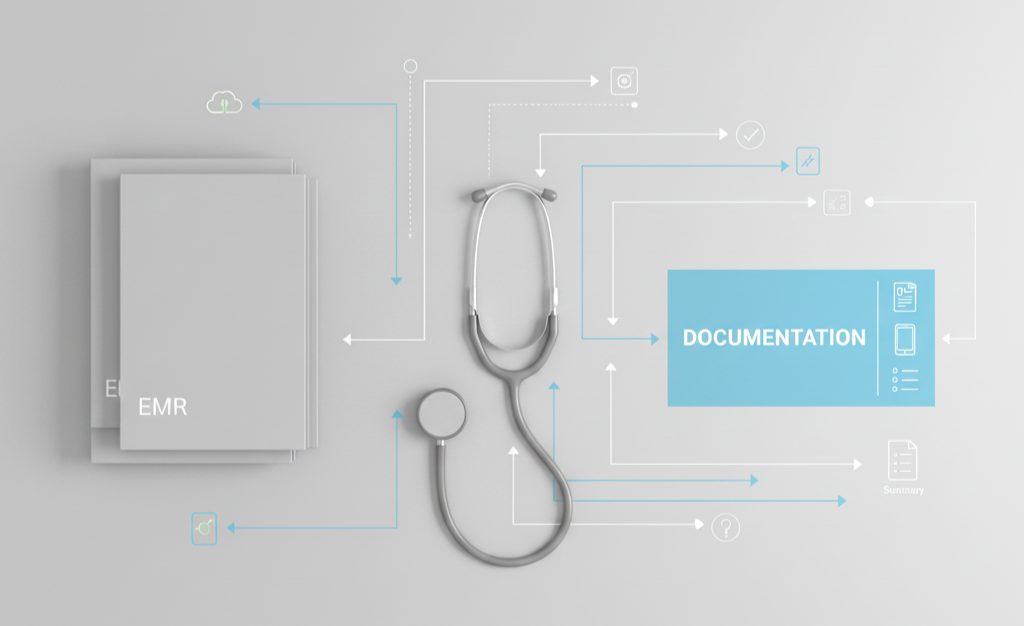
Intelligent clinical documentation enabled the transformation of clinical productivity for an Indian healthcare provider managing high documentation workloads.
Business Objective
Reduce Documentation Burden:
Lower clinician documentation time per patient encounter to improve overall clinical productivity.
Enhance Provider Well-Being & Reduce Burnout:
Address high burnout levels (75%) by introducing AI-enabled tools that streamline administrative tasks.
Improve Quality of Care & Patient Experience:
Free up clinician time for patient interaction, improving satisfaction scores and clinical outcomes.
Scale Operational Efficiency Across Global Operations:
Deploy digital productivity solutions that reduce operational waste, enhance throughput, and scale across regions.
Enable Sustainable Growth:
Use productivity gains to support higher patient volumes, increase revenue per clinician, and expand value-added services.
Scope of Services
BXI Technologies partnered with the healthcare provider to implement an intelligent clinical documentation solution powered by advanced AI and workflow automation. The engagement focused on:
-
Automating clinical note creation and documentation tasks
-
Integrating AI-driven summarization into existing EMR workflows
-
Supporting clinicians across 16 specialties
-
Measuring impact on productivity, experience, and patient satisfaction
-
Enabling scalable deployment and operational readiness across global locations
Benefits
-
Productivity Gains: Reduced clinician documentation time and improved workflow efficiency.
-
Enhanced Provider Experience: Significant reduction in burnout and administrative load.
-
Financial Optimization: Increased capacity, improved provider throughput, and measurable cost savings.
-
Higher Patient Satisfaction: More clinician–patient interaction time and improved experience metrics.
-
Scalability & Future-Readiness: Foundation set for multi-specialty, multi-region expansion.
Impact
-
50% of employed clinicians across 16 specialties are now using the solution.
-
The organization achieved the 50th percentile for documentation burden, reducing documentation time by 34 minutes per provider per day.
-
72% of clinicians reported increased enjoyment of practice.
-
79% reported improved documentation efficiency.
-
85% expressed a preference to continue using the intelligent documentation solution.
-
Higher patient satisfaction observed among clinicians with ≥60% utilization.
-
Estimated annual cost savings of $3 million driven by productivity improvements.