Customer
A leading construction-equipment manufacturer seeking to accelerate the introduction of new machine variants while minimizing physical production-line reconfiguration.
Technology
Digital Twin, Simulation, Line-Balancing Simulation, Production Sequencing, Digital Manufacturing
Business Objective
The client needed to launch several new machine variants without the traditional multi-month line-reconfiguration window.
Key objectives included:
- Accelerate new machine variant launches.
- Reduce physical production-line reconfiguration requirements.
- Validate line balancing before implementation.
- Optimize production sequencing.
- Identify potential production constraints before physical changes.
- Reduce costly changes after line reconfiguration.
Scope of services
BXI Technology developed a digital twin of the shop floor to simulate production-line changes and validate the proposed manufacturing configuration before making physical modifications.
The engagement included:
- Digital twin modelling of the shop floor.
- Simulation of line-balancing scenarios.
- Production sequencing simulations.
- Validation of new machine-variant flows.
- Identification of potential production constraints.
- Virtual validation of line configurations before physical implementation.
Benefits
- Faster validation of new production-line configurations.
- Reduced dependency on physical line experimentation.
- Fewer costly changes after line reconfiguration.
- Improved production planning and sequencing.
- Better visibility into line-balancing requirements.
- More efficient introduction of new machine variants.
Impact
BXI Technology enabled the construction-equipment manufacturer to validate new variant production flows virtually before modifying the physical shop floor. The digital twin approach accelerated the launch of a new variant from a multi-month reconfiguration cycle to a significantly shorter implementation window while reducing costly post-reconfiguration changes.

Customer
A commercial-vehicle OEM seeking to improve fleet uptime and strengthen connected diagnostic capabilities for its customers.
Technology
Onboard Telematics, Predictive Maintenance, Predictive Analytics, Connected Diagnostics, Automated Service Scheduling
Business Objective
The client sought to reduce unplanned vehicle downtime by identifying developing faults earlier and improving service intervention planning.
Key objectives included:
- Detect potential vehicle faults before breakdowns occur.
- Improve fleet uptime for customers.
- Reduce emergency roadside service requirements.
- Use connected vehicle data for predictive maintenance.
- Improve service capacity planning.
- Automate service scheduling based on predictive alerts.
Scope of services
BXI Technology connected onboard telematics with a predictive-maintenance model to identify developing faults and trigger proactive service interventions.
The engagement included:
- Integration of onboard telematics data.
- Predictive analysis of vehicle health and developing faults.
- Early fault detection and alert generation.
- Predictive maintenance modelling.
- Integration of predictive alerts with service scheduling.
- Automated routing of vehicles into service planning workflows.
- Capacity planning based on anticipated maintenance requirements.
Benefits
- Higher fleet uptime for customers.
- Earlier identification of developing vehicle faults.
- Fewer emergency roadside service calls.
- Improved service scheduling.
- Better utilization of service capacity.
- More proactive maintenance operations.
- Improved customer experience through connected diagnostics.
Impact
BXI Technology helped the commercial-vehicle OEM transition from reactive breakdown response to proactive, predictive maintenance. By connecting onboard telematics with predictive diagnostics and service scheduling, the solution enabled earlier intervention, higher fleet uptime, fewer emergency roadside calls, and improved service-capacity planning.
Customer
A leading digital infrastructure and technology solutions provider seeking to modernize its finance and accounting operations through a unified cloud-based ERP platform.
Technology
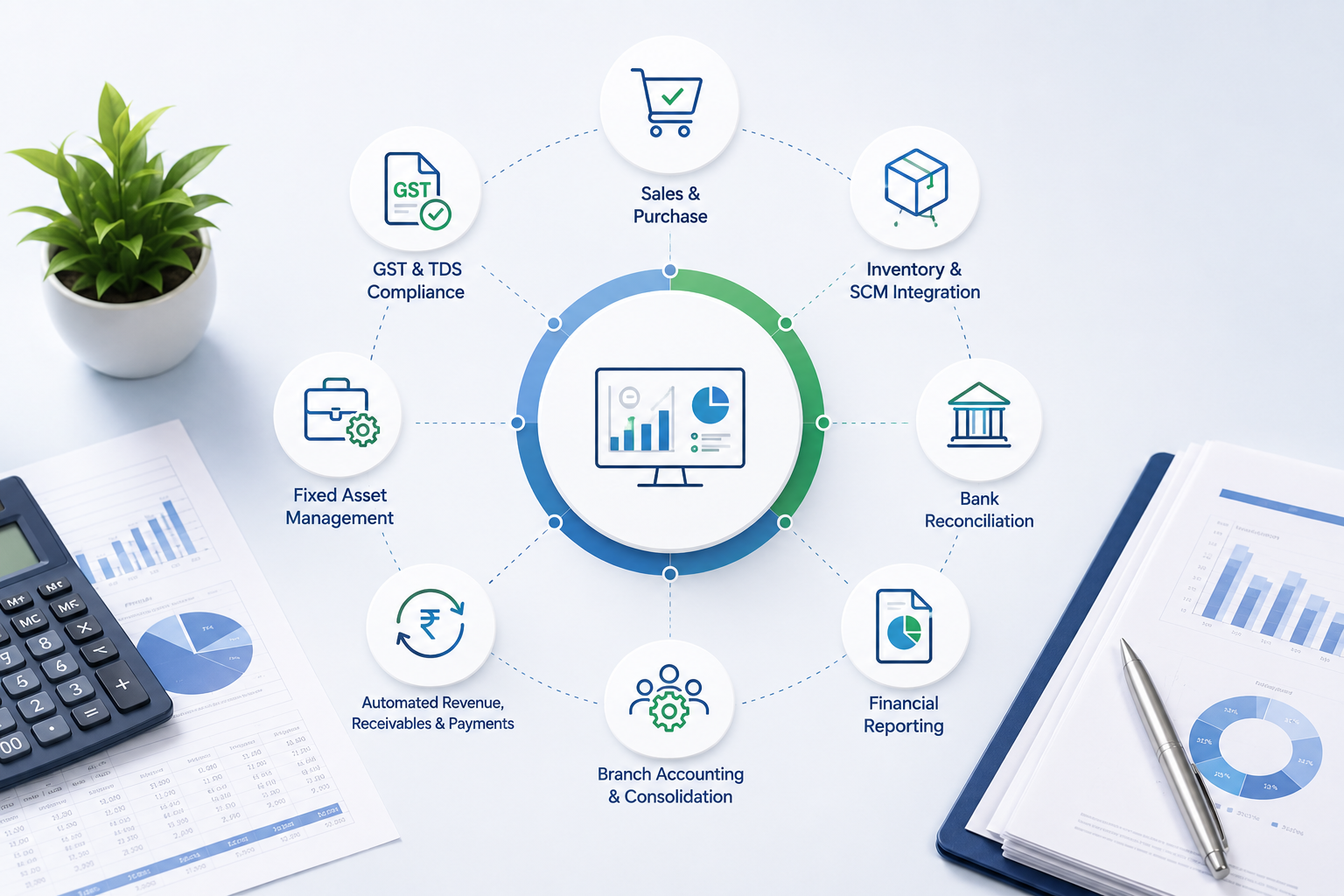
Zoho Books ERP, Inventory Management, Fixed Asset Management, GST & TDS Compliance, Bank Reconciliation, Financial Reporting, SCM-Finance Integration
Business Objective
The client sought to digitize and standardize accounting operations, eliminate Excel-based manual processes, and centralize financial operations across branches through a scalable ERP platform.
Key objectives included:
- Digitize and standardize accounting operations.
- Eliminate Excel-based manual accounting processes.
- Centralize financial operations across branches.
- Improve financial accuracy and compliance.
- Automate accounting and revenue workflows.
- Integrate supply chain and finance processes.
- Improve inventory and asset visibility.
- Enable real-time financial reporting and insights.
Scope of services
BXI Technology implemented and integrated Zoho Books ERP across core finance, inventory, asset, compliance, and supply chain processes, including:
- Configuration of Sales, Purchase, Inventory, Asset, GST, and TDS modules.
- Branch accounting with inter-site transaction management.
- Automated revenue and receivables processes.
- SCM integration with finance, including PR, PO, and vendor management.
- Inventory and material accounting covering GRN, MIRO, and valuation.
- Fixed asset lifecycle and depreciation automation.
- GST and TDS compliance workflows.
- Bank reconciliation and financial controls.
- Real-time financial reporting dashboards.
- Financial process standardization across branches.
Benefits
- Eliminated manual accounting and Excel dependency.
- Reduced duplicate data entry.
- Improved financial accuracy.
- Centralized accounting operations across branches.
- Automated revenue and payment processes.
- Streamlined the procurement-to-payment cycle.
- Enhanced inventory visibility.
- Automated depreciation and compliance processes.
- Enabled faster financial closure through standardized reporting.
- Improved visibility across financial and inventory operations.
Impact
BXI Technology enabled the organization’s transition from fragmented accounting systems to a unified cloud-based ERP platform. The solution standardized financial operations across branches, improved audit readiness and compliance, reduced manual intervention, enhanced visibility into financial and inventory data, and established a scalable digital finance foundation to support future growth and operational expansion.
Customer
A leading digital infrastructure and technology solutions provider seeking to centralize IT service and asset management while improving operational efficiency through a unified service management platform.
Technology
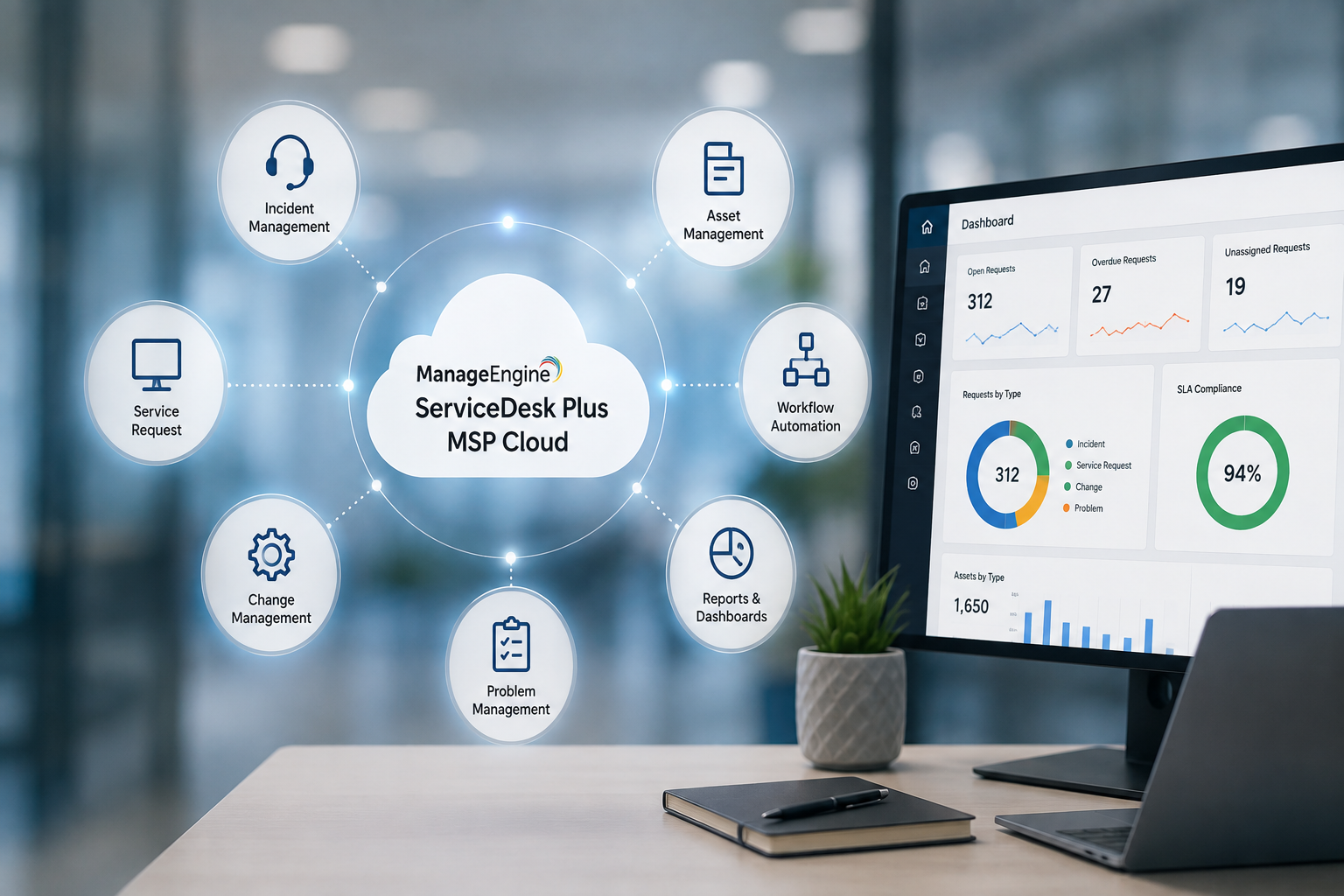
ManageEngine ServiceDesk Plus MSP Cloud (ITSM & ITAM)
Business Objective
The client sought to centralize IT Service Management (ITSM) and IT Asset Management (ITAM) through a unified cloud-based platform. Key objectives included:
- Standardize IT service delivery processes.
- Automate approvals and repetitive workflows.
- Improve IT asset visibility and lifecycle management.
- Enhance service request and incident management.
- Improve SLA compliance and operational efficiency.
- Establish centralized reporting and real-time operational visibility.
Scope of services
BXI Technology implemented and configured ITSM and ITAM capabilities across the organization, including:
- Incident, Service Request, Problem, Change, and Asset Management.
- Service catalogs and standardized request templates.
- SLA configuration and business rules.
- Approval workflows and automated notifications.
- Technician groups and request lifecycles.
- Reports and operational dashboards.
- Employee onboarding-to-asset allocation workflows.
- Employee offboarding automation.
- Purchase request automation.
- Customer solution provisioning.
- Order fulfilment workflows.
- Requester import and asset onboarding.
- User management integration.
- UAT and end-user training.
- Project documentation.
Benefits
- Streamlined IT service delivery.
- Automated repetitive service workflows.
- Improved SLA compliance.
- Accelerated ticket resolution.
- Enhanced asset lifecycle visibility.
- Centralized request tracking.
- Strengthened governance through standardized approval workflows.
- Real-time operational reporting and dashboards.
- Reduced manual intervention across IT service processes.
Impact
BXI Technology established a centralized cloud-based ITSM and ITAM platform that standardized IT operations and service delivery across the organization. The solution enhanced service quality, optimized asset lifecycle management, reduced manual intervention through workflow automation, and provided leadership with real-time dashboards and actionable insights for informed operational decision-making.

Customer
A leading FMCG and hospitality group operating across the Middle East and Africa, with multiple business entities requiring a standardized and scalable HR management environment.
Technology
Zoho People Plus Enterprise, Zoho Recruit, Zoho Payroll, Zoho Learn, Zoho Connect, Microsoft 365, Biometric Integration, Oracle/Finance System Integration
Business Objective
The client sought to standardize HR operations across multiple countries and business entities while creating a unified digital platform for workforce management.
Key objectives included:
- Standardize HR operations across multiple countries.
- Digitize the end-to-end employee lifecycle.
- Automate payroll and attendance processes.
- Streamline recruitment and employee onboarding.
- Centralize employee records and HR information.
- Establish a unified HR platform with country-specific compliance.
- Improve visibility through HR analytics and reporting.
Scope of services
BXI Technology procured and implemented Zoho People Plus Enterprise across multiple entities, covering:
- Configuration of core HR and employee management.
- Recruitment and onboarding through Zoho Recruit.
- Payroll and attendance automation.
- Performance management and learning management.
- Employee self-service enablement.
- HR analytics and reporting.
- Integration with biometric devices.
- Microsoft 365 integration.
- Oracle/Finance system integration.
- Employee data migration.
- User training and UAT management.
- Long-term support and maintenance.
Benefits
- Centralized HR management across multiple countries.
- Standardized HR processes and governance.
- Automated employee lifecycle workflows.
- Improved payroll accuracy and compliance.
- Enhanced employee self-service.
- Real-time HR analytics and reporting.
- Simplified multi-country HR administration.
- Scalable support for future expansion.
Impact
BXI Technology delivered a unified cloud-based HR ecosystem that modernized workforce management across multiple countries and business entities. The solution improved operational efficiency, strengthened compliance, enhanced employee experience, and established a scalable digital HR foundation to support continued business growth and global operations.
Customer
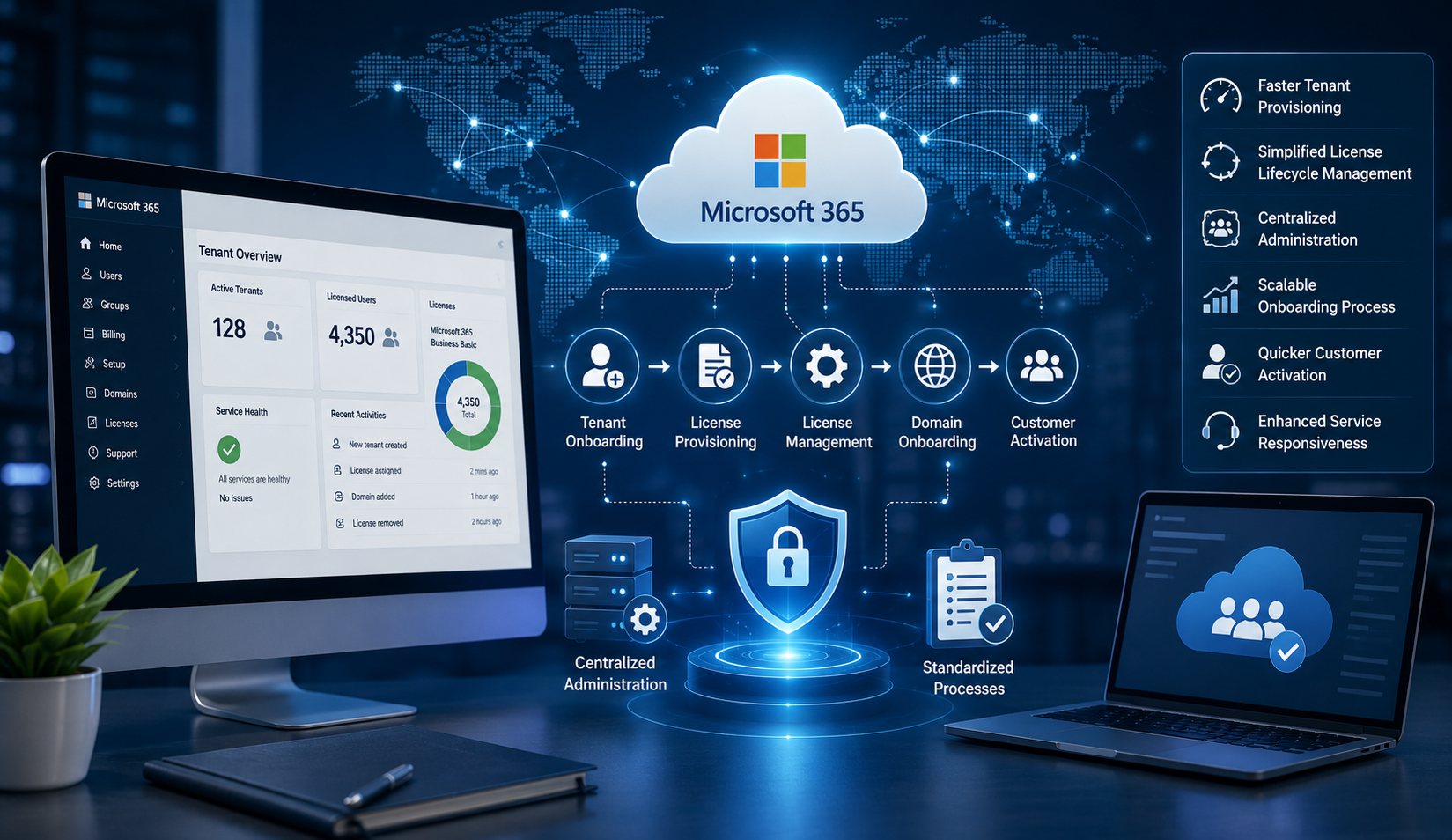
A leading global email infrastructure provider seeking to streamline Microsoft 365 provisioning, tenant onboarding, license administration, and customer domain management through a standardized and scalable service delivery model.
Technology
Microsoft 365 Business Basic, Microsoft 365 Administration, Tenant Management, License Management
Business Objective
The client sought to streamline Microsoft 365 license provisioning and lifecycle management while enabling faster tenant onboarding and customer activation.
Key objectives included:
- Accelerate Microsoft 365 tenant creation and onboarding.
- Simplify license provisioning, modification, and renewal management.
- Establish a centralized process for license administration.
- Standardize customer domain onboarding.
- Improve turnaround times through structured provisioning processes.
- Create a scalable operating model to support business growth.
Scope of services
BXI Technology delivered a standardized Microsoft 365 provisioning and license management framework covering:
- Procurement and provisioning of Microsoft 365 Business Basic licenses.
- Tenant creation and customer onboarding.
- Centralized ticket management for adding, deleting, and modifying licenses.
- Microsoft 365 license renewal management.
- Customer domain onboarding.
- Standardized provisioning workflows with defined service turnaround times.
Benefits
- Faster tenant provisioning and customer activation.
- Simplified Microsoft 365 license lifecycle management.
- Centralized license administration.
- Improved operational efficiency.
- Scalable customer onboarding processes.
- Faster service turnaround.
- Enhanced service responsiveness through structured ticket management.
Impact
BXI Technology established a standardized Microsoft 365 provisioning and license management framework that enabled the client to efficiently onboard customers, streamline license administration, and support business growth through a scalable and automated service delivery model.

Customer
A leading financial services organization specializing in investment banking, wealth management, and asset management, operating through multiple legal entities across India.
Technology
Microsoft 365, Microsoft Entra ID (Azure Active Directory), Microsoft Exchange Online, Microsoft Teams, SharePoint Online, OneDrive for Business, Microsoft Intune, Microsoft Security, PowerShell Automation
Business Objective
The client sought to simplify Microsoft 365 licensing and workplace operations across multiple legal entities with different renewal cycles and decentralized administration. The objectives were to:
- Consolidate Microsoft 365 licensing into a single renewal cycle.
- Simplify license administration across multiple business entities.
- Provide expert Level 2 and Level 3 support for workplace infrastructure.
- Strengthen identity, tenant, and cybersecurity management.
- Establish a scalable managed services model for long-term IT operations.
Scope of services
BXI Technology delivered an end-to-end Microsoft 365 managed services engagement covering:
- Enterprise Microsoft 365 license procurement and renewal management.
- Consolidation of multiple license renewal schedules into a unified annual renewal framework.
- Level 2 and Level 3 support for Microsoft 365 administration.
- Active Directory and Microsoft Entra ID administration.
- Tenant management and governance.
- Workplace, network, and cybersecurity support.
- Advanced troubleshooting, PowerShell automation, and identity management.
- SLA-driven managed support through a centralized service desk.
Benefits
- Centralized Microsoft 365 governance across all business entities.
- Simplified license lifecycle management and administration.
- Improved operational efficiency through standardized support processes.
- Faster issue resolution with dedicated L2 and L3 technical expertise.
- Enhanced identity management and security posture.
- Better visibility into Microsoft 365 operations and support performance.
- Predictable, scalable, and streamlined IT operations.
Impact
BXI Technology helped the client establish a centralized Microsoft 365 operating model by standardizing licensing, administration, and managed support across multiple business entities. The engagement simplified IT operations, strengthened governance and security, reduced administrative overhead, and created a scalable foundation to support the organization’s future growth and digital workplace initiatives.

Introduction
As financial and insurance organizations continue expanding digital operations, infrastructure security becomes critical to protecting sensitive business and customer data. Increasing cyber threats, configuration gaps, and infrastructure vulnerabilities create significant operational and compliance risks.
A multinational insurance enterprise required a structured vulnerability assessment and penetration testing (VAPT) program to identify security weaknesses, strengthen infrastructure resilience, and improve overall cyber risk posture across critical systems.
Customer
A multinational insurance enterprise in Japan operating across multiple business units, seeking to strengthen infrastructure security and reduce exposure to cyber threats and operational vulnerabilities.
Business Objective
- Assess infrastructure security posture across critical environments
- Identify technical vulnerabilities, configuration gaps, and attack surface risks
- Improve security governance and remediation prioritization
- Reduce exposure to infrastructure-based cyber threats
- Validate remediation effectiveness through structured reassessment
Scope of Services
Infrastructure Vulnerability Assessment
Performed comprehensive vulnerability assessments across critical infrastructure environments to identify security weaknesses and exposure points.
Penetration Testing & Attack Surface Analysis
Conducted penetration testing to evaluate exploitability and assess potential attack vectors across systems and applications.
Configuration & Security Review
Reviewed infrastructure configurations to identify security misconfigurations, compliance gaps, and operational risks.
Vulnerability Validation & Prioritization
Validated findings through manual analysis and eliminated false positives to improve assessment accuracy and remediation focus.
Remediation Support & Reassessment
Worked closely with internal teams to provide remediation recommendations and performed rescans to validate corrective actions.
Technology Used
- Vulnerability Assessment & Penetration Testing Tools
- Infrastructure Security Monitoring Platforms
- Configuration Review Frameworks
- Risk Prioritization & Reporting Dashboards
Key Challenges Addressed
- Limited visibility into infrastructure vulnerabilities and attack exposure
- Security risks caused by configuration weaknesses
- False positives impacting remediation efficiency
- Lack of structured prioritization for critical vulnerabilities
- Need for validation of remediation effectiveness across environments
Benefits
Improved Security Visibility
Enabled comprehensive identification of infrastructure vulnerabilities and risk exposure
Reduced Attack Surface
Strengthened infrastructure resilience through remediation and security hardening
Accurate Risk Prioritization
Improved focus on business-critical vulnerabilities requiring immediate action
Enhanced Security Governance
Established structured reporting and validation processes for remediation tracking
Impact
- Identified and assessed critical infrastructure vulnerabilities across environments
- Reduced potential attack surface and infrastructure security risks
- Improved remediation planning and vulnerability prioritization
- Enhanced confidence in infrastructure security posture through validation and rescanning
- Strengthened overall cyber resilience and operational security readiness

Introduction
Transportation Management System (TMS) consolidation enables global logistics enterprises to unify fragmented systems, improve visibility, and reduce operational complexity. Organizations operating across multiple geographies and transport modes often struggle with disconnected platforms, inconsistent data, and limited decision-making capabilities. This case study highlights how a global shipping and transportation company transformed its complex landscape into a unified operating model. By harmonizing data, standardizing processes, and defining a future-ready roadmap, the organization established a scalable foundation for efficient and integrated transportation operations.
Customer
A leading global shipping and transportation company operating across multiple geographies and managing complex, multi-modal logistics networks.
Business Objective
- Consolidate fragmented transportation systems into a unified model
- Achieve global visibility across transportation data and operations
- Define a future-ready transportation capability roadmap
- Reduce IT and operational costs through rationalization
- Enable centralized and data-driven decision-making
Scope of Services
- Enterprise transportation landscape assessment
- Business and IT capability discovery
- Evaluation and selection of TMS platform
- Solution blueprinting for unified operations
- Definition of transformation roadmap
- Data harmonization and process standardization strategy
- Integration and synchronization framework design
Benefits
- Single Transportation Management Platform for unified governance
- End-to-end visibility across all transportation modes and regions
- Standardized processes across geographies and business units
- Improved decision-making through harmonized data
- Scalable foundation for future transportation growth
Impact
- 7% reduction in forecasted IT costs
- $9M estimated total cost savings
- Unified TMS platform across ADM
- Improved global visibility and governance
- Foundation for scalable and future-ready transportation capabilities

Introduction
Manufacturing environments often rely on disconnected systems and manual data collection, leading to inefficiencies and limited visibility. This case highlights how a foundry implemented a digital platform to integrate systems, improve data collection, and enhance operational efficiency. The initiative focused on creating a unified data layer across production processes to enable better monitoring and control.
Customer
A manufacturing enterprise operating an iron foundry with complex production processes. The facility includes multiple stages of production and machinery that require coordination and continuous monitoring to ensure efficiency and consistency.
Business Objective
- Improve data visibility across manufacturing operations
- Integrate disconnected systems and machinery into a unified platform
- Enhance production efficiency across processes
- Enable data-driven decision-making for better control
Scope of Services
- Implementation of integrated SCADA platform across production systems
- Data collection and analysis enablement for operational insights
- Integration with existing machinery and legacy systems
- Dashboard and reporting development for visibility
Technology Used
- SCADA + IIoT platform for centralized monitoring
- Real-time data collection systems for production tracking
- Analytics and reporting tools for insights
- Machine integration frameworks for connectivity
Benefits
- Improved operational visibility across production processes
- Better production efficiency through real-time insights
- Reduced manual data handling and errors
- Enhanced decision-making capabilities
Impact
- Increased efficiency and competitiveness in manufacturing operations
- Improved data-driven production processes across the foundry
- Reduced operational inefficiencies and process gaps