

Technology Brilliance

Introduction

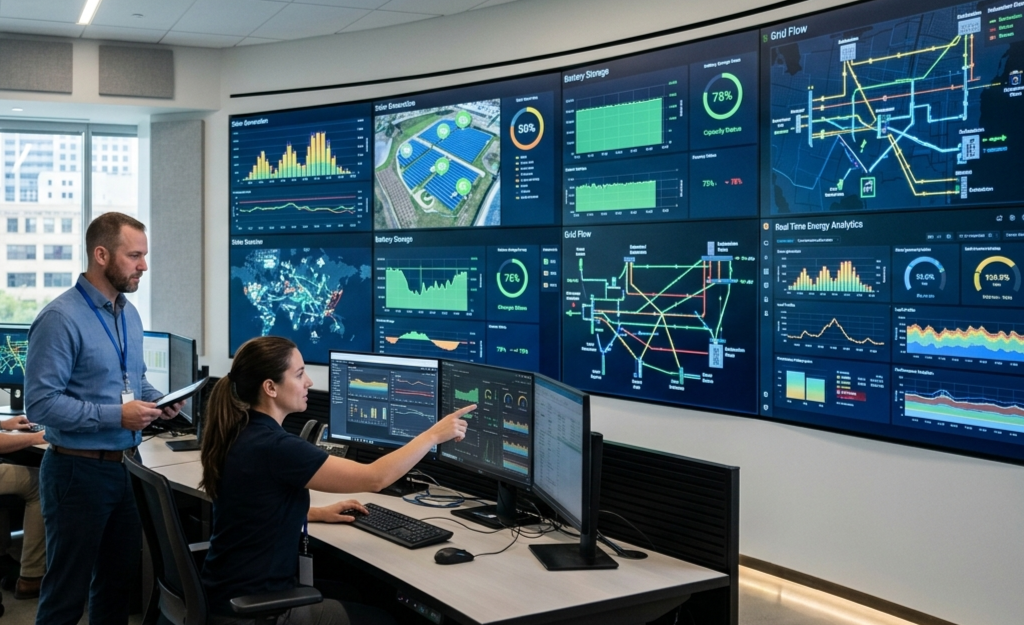
Modern energy ecosystems require intelligent orchestration of multiple energy sources, storage systems, and grid interactions. Traditional systems lack the flexibility to manage decentralized and hybrid energy environments. This case study highlights how a Digital Twin–driven energy management platform enabled real-time control, optimization, and scalability for a complex urban microgrid.

Customer

A Middle East–based renewable energy and infrastructure organization managing distributed energy assets.

Business Objective

  • Enable real-time control of decentralized energy assets
  • Optimize energy usage and storage across microgrid
  • Improve grid resilience and independence
  • Build scalable energy management architecture

Scope of Services

  • Development of centralized energy management platform
  • Integration of solar, battery storage, and grid systems
  • Real-time monitoring and control of energy assets
  • Dashboard and analytics implementation
  • Multi-site energy optimization enablement

Technology Used

  • Digital Twin–enabled energy management system
  • SCADA + EMS platforms
  • Real-time data ingestion and analytics
  • IoT sensors and distributed energy integration
  • Cloud-enabled scalable architecture

Key Challenges Addressed

  • Managing decentralized and multi-source energy systems
  • Integrating diverse hardware and protocols
  • Ensuring real-time control and optimization
  • Handling urban infrastructure constraints

Benefits

  • Unified control across energy assets
  • Improved energy optimization and efficiency
  • Scalable and flexible architecture
  • Enhanced operational visibility

Impact

  • Real-time control of hybrid energy systems
  • Ability to operate independently from main grid for limited duration
  • Improved energy utilization and grid stability

Introduction

Traditional industrial monitoring systems are designed for static environments, but modern logistics and energy operations demand real-time visibility across highly dynamic and distributed assets. This case study demonstrates how a mobile energy provider implemented a scalable IIoT-driven platform to monitor, control, and optimize operations across a constantly moving fleet, enabling resilience, uptime, and real-time decision-making.

Customer

A North America–based mobile energy and logistics provider operating a large fleet of distributed assets.

Business Objective

  • Enable real-time monitoring across mobile and remote assets
  • Ensure high system uptime and resilience
  • Improve visibility across distributed operations
  • Support scalability with growing fleet size

Scope of Services

  • Implementation of distributed SCADA and IIoT platform
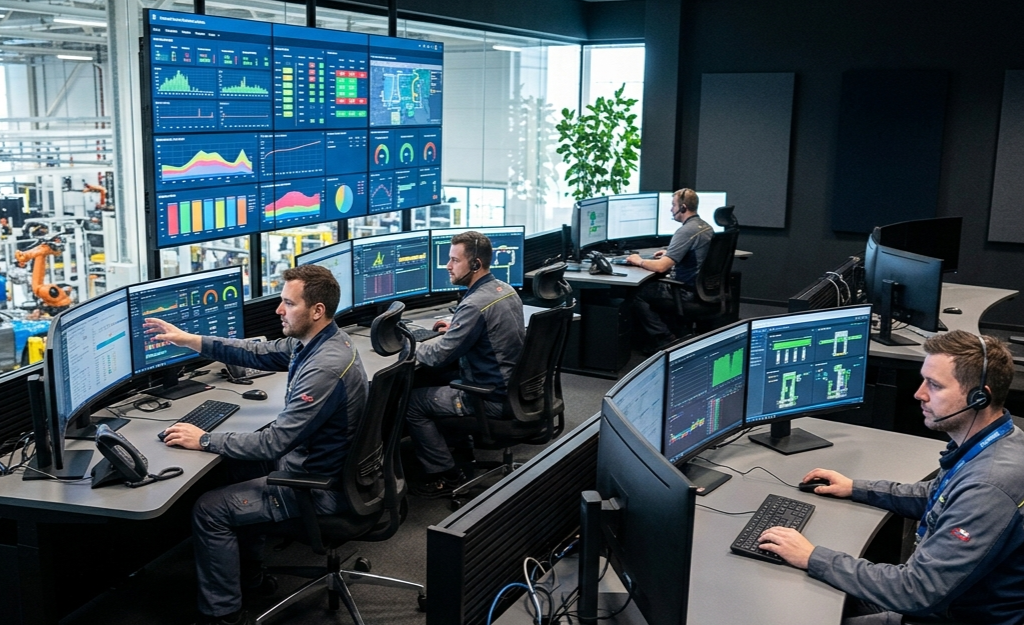
  • Real-time fleet monitoring and control
  • Connectivity optimization across networks (cellular, WiFi, satellite)
  • Centralized visibility dashboards for operations and management

Technology Used

  • IIoT-enabled SCADA platform
  • Real-time data streaming and telemetry
  • Multi-network connectivity (cellular, WiFi, satellite)
  • Edge computing for remote assets
  • Centralized monitoring dashboards

Key Challenges Addressed

  • Monitoring assets that are constantly moving across regions
  • Connectivity variability across geographies
  • Lack of centralized visibility across distributed operations
  • Need for high uptime and resilience

Benefits

  • Real-time visibility across mobile operations
  • Improved uptime and operational reliability
  • Better decision-making through centralized insights
  • Scalable architecture supporting growth

Impact

  • Real-time monitoring across hundreds of remote sites
  • Improved operational control across dynamic fleet environments
  • High uptime achieved through resilient architecture

Introduction

Manufacturing Execution System (MES) case studies highlight how manufacturers overcome fragmented systems, delayed data, and unreliable operational insights. In high-precision industries like steel manufacturing, these challenges directly impact productivity, traceability, and decision-making. This case study explores how a steel manufacturing enterprise implemented a custom MES integrated with enterprise systems to unify operations, improve data accuracy, and enable real-time production visibility.

Customer

A Caribbean and Central America–based steel manufacturing enterprise operating large-scale production facilities.

Business Objective

  • Eliminate manual data entry and fragmented systems
  • Improve trust and accuracy of operational data
  • Enable real-time production visibility
  • Achieve end-to-end traceability across manufacturing lifecycle

Scope of Services

  • Custom MES platform design and deployment
  • Integration with ERP systems (SAP)
  • Real-time production data capture and monitoring
  • Dashboard and KPI visualization
  • Workflow digitization replacing paper and Excel-based systems

Key Challenges Addressed

  • Slow and unreliable data impacting decision-making
  • Manual processes using Excel, paper, and disconnected tools
  • Lack of trust in MES outputs among operators
  • Poor traceability across production lifecycle

Benefits

  • Unified plant-floor and enterprise data
  • Improved operator trust and adoption
  • Real-time KPI visibility
  • Reduced errors from manual processes

Impact

  • End-to-end traceability from raw material to finished goods
  • Real-time production insights enabling faster decisions
  • Significant reduction in manual intervention and errors

Introduction

Large-scale renewable energy environments generate massive volumes of data from distributed assets, making real-time monitoring, interoperability, and analytics critical for performance optimization. However, fragmented systems and inconsistent data capture often limit visibility and slow decision-making. This case study highlights how a solar research and testing environment implemented a centralized Digital Twin framework to unify data, improve operational visibility, and enable real-time analytics. By integrating diverse systems into a single intelligent platform, the organization enhanced research accuracy, maintenance responsiveness, and scalability.

Customer

A North America–based renewable energy research organization managing a large-scale solar testing facility with thousands of distributed energy assets.

Business Objective

  • Enable unified data capture across diverse solar assets and systems
  • Improve real-time monitoring and operational visibility
  • Enhance research accuracy through high-frequency data collection
  • Reduce maintenance delays and improve response time
  • Build a scalable platform for future expansion

Scope of Services

  • Design and implementation of a centralized Digital Twin platform
  • Integration of heterogeneous devices, systems, and protocols
  • Real-time data ingestion and visualization enablement
  • Development of analytics dashboards and KPI tracking
  • Data consolidation into a unified database architecture
  • Standardization of asset models for scalability and future onboarding

Key Challenges Addressed

  • Lack of interoperability across multiple systems and vendors
  • Limited visualization and absence of real-time monitoring
  • Low-frequency data capture impacting research accuracy
  • Fragmented data storage across platforms
  • Difficulty in scaling and adding new assets

Benefits

  • Unified visibility across all solar assets and systems
  • Real-time monitoring enabling proactive decision-making
  • Improved data accuracy and research insights
  • Faster maintenance response and issue resolution
  • Scalable architecture supporting future expansion

Impact

  • Real-time data capture improved from low-frequency to near real-time intervals (every few seconds)
  • Centralized platform enabled complete operational visibility across solar fields
  • Faster maintenance response through real-time monitoring and alerts
  • Scalable system design allowing seamless addition of new assets and devices

Introduction

Banking institutions operate in high-availability environments where system downtime and delayed incident resolution directly impact customer experience and business continuity. High incident volumes during peak business hours, duplicate tickets, and manual intervention reduce operational efficiency and increase risk. This case study highlights how a banking institution improved resilience through automated healing, intelligent ticket analysis, and service recovery mechanisms. By enabling event correlation, automation, and proactive monitoring, the organization significantly enhanced system stability and operational efficiency.

Customer

A large-scale banking institution managing high-volume IT incidents across application and infrastructure environments with 24×7 support requirements.

Business Objective

  • Improve IT resilience through automated healing and recovery
  • Reduce high incident volumes during peak business hours
  • Minimize SLA violations and improve response times
  • Eliminate duplicate and redundant tickets
  • Shift from reactive to proactive IT operations

Scope of Services

  • Heat map–based incident analysis across time and business hours
  • Identification of peak-hour incident patterns and workload spikes
  • Ticket classification and automation probability analysis
  • Detection of duplicate and parent-child ticket patterns
  • Design and implementation of automated healing workflows
  • Enablement of event correlation and alert suppression
  • Establishment of 24×7 Integrated Command Centre

Key Insights from Analysis

  • 17,600+ incidents analyzed
  • 75% incidents occur during business hours (9 AM–6 PM)
  • High-volume incident drivers:
    • Password issues (22%)
    • Account issues (19%)
    • Connectivity issues (17%)
    • Configuration issues (16%)
  • Significant duplication and parent-child ticket patterns observed

Detailed Findings

  • High dependency on manual ticket logging and resolution
  • Lack of event correlation leading to duplicate tickets (~400–500 cases)
  • Inefficient prioritization affecting response times
  • Repetitive issues (password, access, configuration) ideal for automation
  • High operational load during peak hours impacting service quality

Benefits

  • Reduced duplicate and redundant ticket volumes
  • Faster incident detection and response
  • Improved SLA adherence and service reliability
  • Better prioritization of critical incidents (P1/P2)
  • Enhanced operational efficiency and workload management

Impact

  • 30.7% automated resolution achieved
  • Up to 75% automation potential for password-related issues
  • Significant reduction in manual intervention
  • Improved service recovery and incident handling speed
  • Strong foundation for resilient, scalable IT operations

Introduction

Automotive enterprises operate complex IT environments across datacenters, SAP, MES, and enterprise applications. High volumes of manually logged incidents, false alerts, and delayed resolution impact operational efficiency and system reliability. This case study highlights how an automotive leader transformed its IT operations using predictive self-healing and automation. By enabling event correlation, alert suppression, and automated resolution, the organization significantly reduced manual intervention, improved system stability, and enhanced operational efficiency.

Customer

A leading automotive enterprise managing large-scale datacenter operations, enterprise applications, and manufacturing systems across global operations.

Business Objective

  • Reduce manual ticket logging and operational overhead
  • Minimize false alerts and improve monitoring accuracy
  • Reduce P1/P2 incidents impacting critical systems
  • Enable predictive and automated incident resolution
  • Improve IT operations efficiency and reliability

Scope of Services

  • Datacenter and IT incident pattern analysis
  • Event correlation and alert suppression design
  • Automation of service requests and incident resolution
  • Predictive monitoring across SAP, MES, and infrastructure
  • Self-healing workflow enablement across IT environments

Key Insights from Analysis

  • 51%+ issues logged manually → major inefficiency
  • False positives increased up to 19%
  • P1/P2 incidents driven by:
    • SAP security issues
    • MES engine failures
    • SAP HCM downtime
    • Backup failures
  • Automation potential identified across service requests and incidents

Detailed Findings

  • High dependency on manual incident logging and handling
  • Lack of effective alert correlation leading to noise
  • Inefficient prioritization causing delays in critical incidents
  • High recurrence of issues across SAP, MES, and infrastructure
  • Significant automation gaps across EUC, DC, and network

Benefits

  • Reduced manual intervention through automation
  • Improved monitoring accuracy with alert suppression
  • Faster incident detection and resolution
  • Improved system stability and uptime
  • Enhanced efficiency across IT operations

Impact

  • 44% of processes identified as automatable
  • 40–50% automation potential across service requests and incidents
  • Significant reduction in false alerts and operational noise
  • Reduced P1/P2 incidents across critical systems
  • Improved operational efficiency and service reliability

Introduction

Manufacturing efficiency in discrete operations depends heavily on accurate data capture, classification, and real-time measurement of performance metrics such as OEE (Overall Equipment Effectiveness). However, inconsistent data capture, manual interventions, and unreliable PLC logic often lead to incorrect insights, masking true efficiency and impacting decision-making. This case study highlights how an AI–IIoT–enabled framework was conceptualized to address these challenges. By improving data accuracy, automating classification, and standardizing implementation across plants, the organization aimed to unlock true production visibility and operational efficiency.

Customer

A manufacturing organization with operations across forging, drilling, and injection moulding processes, facing challenges in efficiency measurement, data capture, and workforce usability.

Business Objective

  • Improve accuracy of downtime vs. changeover classification
  • Enable reliable rejection and rework data capture
  • Enhance production efficiency measurement beyond planned vs. achieved metrics
  • Strengthen PLC/IoT-based data capture for manual operations
  • Standardize IoT implementation across plants

Scope of Services

  • Design of AI–IIoT–enabled framework for manufacturing operations
  • Automation of downtime and changeover classification
  • Enablement of conditional rejection and rework data handling
  • Implementation of advanced efficiency metrics beyond basic production tracking
  • Enhancement of PLC/IoT logic with anomaly detection
  • Standardization of IoT data capture across multiple plants

Key Challenges Addressed

  • Misclassification of downtime vs. changeover due to flawed timestamp logic
  • Delayed and inaccurate rejection/rework data entry
  • Misleading efficiency metrics masking real production performance
  • Inconsistent pulse capture in manual drilling operations
  • Fragmented IoT adoption across different manufacturing units

Benefits

  • Accurate classification of production events and improved OEE visibility
  • Reduced dependency on manual data entry and intervention
  • Improved quality data accuracy for rejection and rework analysis
  • Better alignment of efficiency metrics with real production performance
  • Standardized and scalable IoT implementation across plants

Impact

  • Improved production accuracy and operational visibility
  • Enhanced workforce usability and reduced manual intervention
  • Better decision-making through reliable efficiency metrics
  • Foundation for scalable AI–IIoT adoption in discrete manufacturing environments

Introduction

Following a large-scale merger, a global media organization faced increasing pressure to improve cash flow visibility and financial efficiency. While revenues remained stable, poor working capital management limited liquidity and reduced the organization’s ability to reinvest and respond to market dynamics.

The challenge was not growth; it was unlocking trapped cash within existing operations.

Customer

A multinational media enterprise undergoing post-merger integration, dealing with fragmented financial processes and inconsistent cash management practices across business units.

Business Objective

  • Improve cash conversion cycle and free cash flow visibility
  • Identify and unlock working capital trapped in operations
  • Standardize financial processes across merged entities
  • Strengthen control over receivables and payables

Scope of Services

Working Capital Diagnostic

Conducted a structured assessment of accounts receivable and payable processes, identifying inefficiencies across the cash cycle.

Process Deep-Dive (Order-to-Cash & Procure-to-Pay)

Analyzed end-to-end financial workflows to uncover delays in collections and inefficiencies in vendor payment structures.

Opportunity Identification & Prioritization

Identified multiple high-impact levers to improve liquidity, including customer payment delays and suboptimal vendor terms.

Financial Visibility Framework

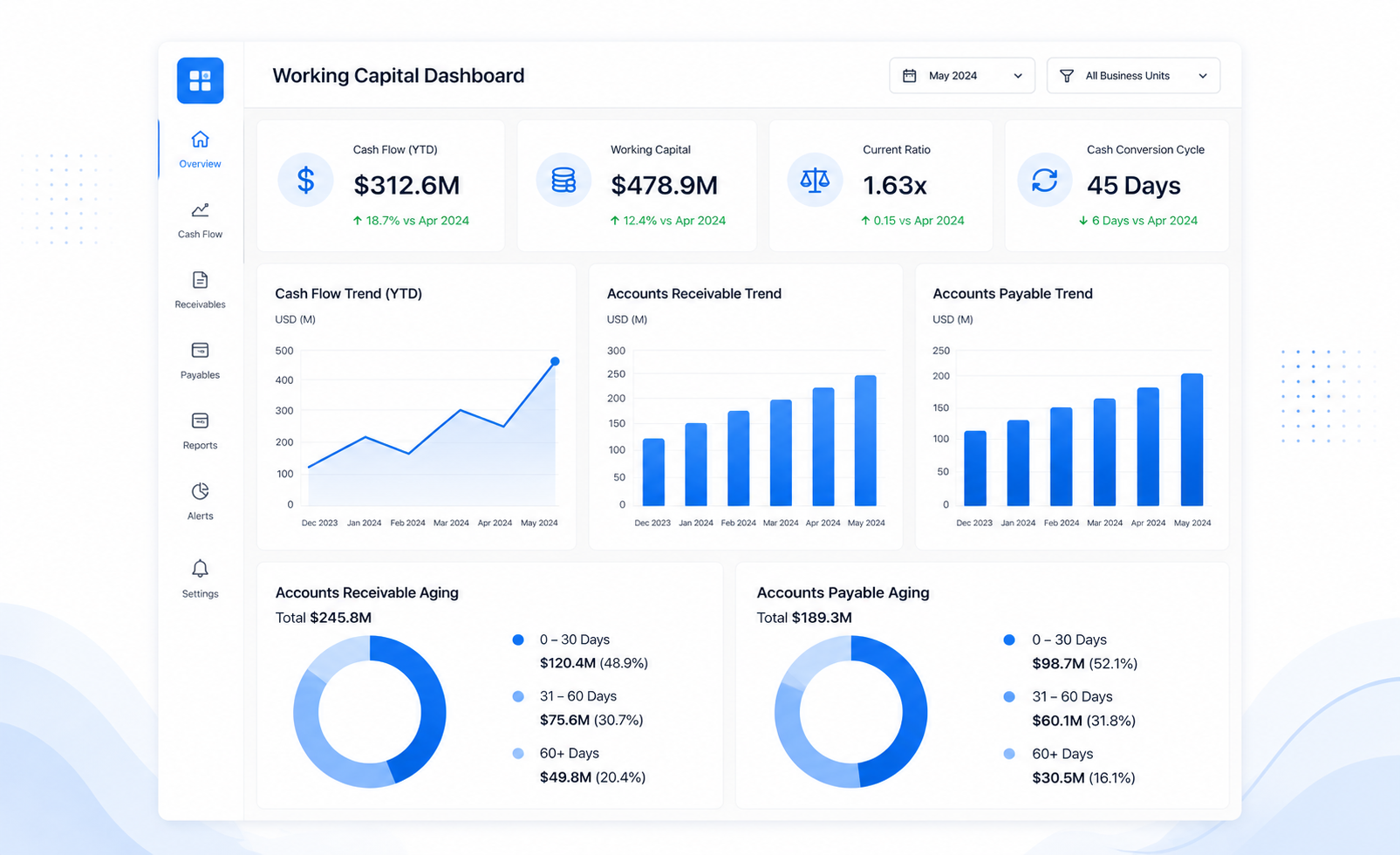
Designed a centralized tracking and reporting mechanism to monitor working capital performance across business units.

Transformation Roadmap & Governance

Established a structured execution plan supported by a program management office (PMO) to drive adoption and ensure accountability.

Key Challenges Addressed

  • Lack of visibility into real-time cash flow performance
  • Delayed customer payments impacting liquidity
  • Vendor payment terms below industry benchmarks
  • Fragmented financial processes post-merger
  • Absence of standardized working capital governance

Benefits

Improved Cash Visibility

Enabled leadership to track free cash flow and working capital performance in real time

Optimized Financial Processes

Standardized receivables and payables management across business units

Stronger Vendor & Customer Management

Improved control over payment cycles and contractual terms

Structured Financial Governance

Introduced accountability through centralized monitoring and execution frameworks

Impact

  • Identified opportunities to unlock $800M+ in cash benefits within two months
  • Improved cash conversion cycle across business units
  • Reduced delays in receivables and optimized payables structure
  • Strengthened financial control in a post-merger environment

Introduction

Telecom ESG transformation is becoming critical as operators face increasing pressure to reduce carbon emissions, optimize energy consumption, and align with sustainability regulations. A leading European telecom operator undertook a large-scale ESG transformation to build a future-ready, sustainable business model while maintaining operational efficiency.

Customer

A leading European telecom operator providing connectivity and digital services across global markets, managing large-scale network infrastructure with high energy consumption and strict regulatory requirements around sustainability.

Business Objective

  • Achieve net-zero emission targets
  • Reduce energy consumption across network infrastructure
  • Align operations with ESG regulations
  • Enable sustainable growth without impacting service quality

Scope of Services

  • ESG strategy design and roadmap development
  • Energy optimization across telecom infrastructure
  • Data-driven monitoring of emissions and energy usage
  • Integration of sustainability metrics into operations
  • Governance model for ESG tracking and reporting

Key Challenges Addressed

  • High energy consumption across telecom networks
  • Lack of real-time visibility into emissions
  • Regulatory pressure for sustainability compliance
  • Balancing cost optimization with ESG goals

Benefits

  • Improved energy efficiency across operations
  • Better visibility into sustainability metrics
  • Reduced environmental impact
  • Alignment with global ESG standards

Impact

  • 45% emission reduction target achieved
  • Strong progress toward net-zero goals
  • Improved operational efficiency alongside sustainability
  • Enhanced brand positioning as a sustainable telecom provider

Introduction

Telecom operations transformation is essential for operators dealing with rising costs, fragmented processes, and increasing customer expectations. A leading Asia-Pacific telecom operator transformed its operations to improve efficiency, reduce costs, and enable scalable service delivery.

Customer

A leading Asia-Pacific telecom operator offering mobile, broadband, and digital media services, operating across multiple markets with complex service delivery models and high operational costs.

Business Objective

  • Reduce operational costs
  • Improve workforce productivity
  • Standardize processes across operations
  • Enhance service delivery efficiency

Scope of Services

  • End-to-end operations assessment
  • Workforce and process optimization
  • Implementation of standardized operating model
  • Performance tracking and KPI alignment
  • Automation-led process improvements

Key Challenges Addressed

  • High operational costs
  • Inefficient workforce utilization
  • Fragmented processes across business units
  • Lack of standardized KPIs

Benefits of Telecom Operations Transformation

  • Streamlined operations across departments
  • Improved workforce efficiency
  • Better cost control and visibility
  • Enhanced service delivery performance

Impact

  • 70% productivity improvement
  • 15% cost reduction achieved
  • Faster decision-making and execution
  • Scalable operating model for growth