Customer
A leading digital infrastructure and technology solutions provider seeking to modernize its finance and accounting operations through a unified cloud-based ERP platform.
Technology
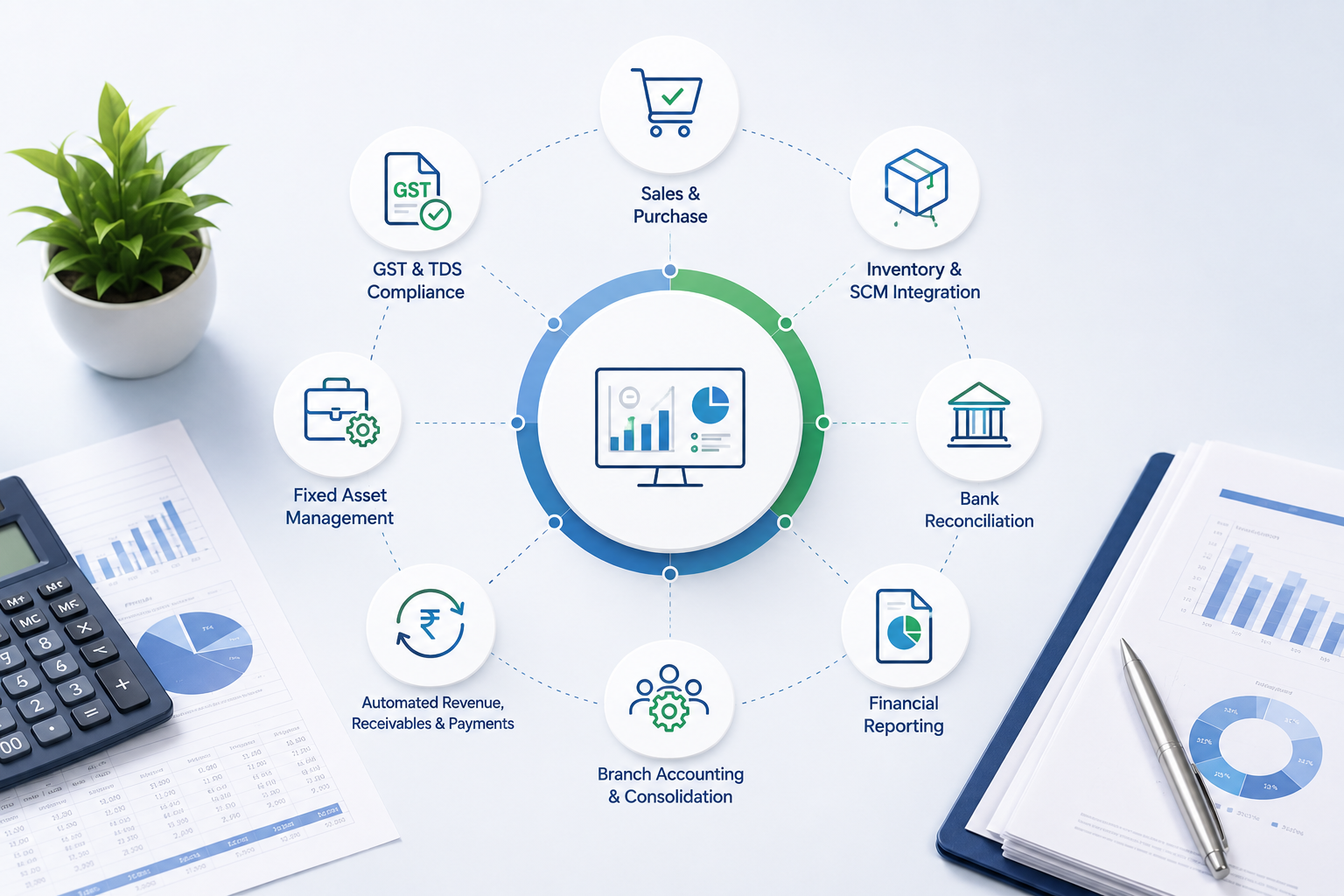
Zoho Books ERP, Inventory Management, Fixed Asset Management, GST & TDS Compliance, Bank Reconciliation, Financial Reporting, SCM-Finance Integration
Business Objective
The client sought to digitize and standardize accounting operations, eliminate Excel-based manual processes, and centralize financial operations across branches through a scalable ERP platform.
Key objectives included:
- Digitize and standardize accounting operations.
- Eliminate Excel-based manual accounting processes.
- Centralize financial operations across branches.
- Improve financial accuracy and compliance.
- Automate accounting and revenue workflows.
- Integrate supply chain and finance processes.
- Improve inventory and asset visibility.
- Enable real-time financial reporting and insights.
Scope of services
BXI Technology implemented and integrated Zoho Books ERP across core finance, inventory, asset, compliance, and supply chain processes, including:
- Configuration of Sales, Purchase, Inventory, Asset, GST, and TDS modules.
- Branch accounting with inter-site transaction management.
- Automated revenue and receivables processes.
- SCM integration with finance, including PR, PO, and vendor management.
- Inventory and material accounting covering GRN, MIRO, and valuation.
- Fixed asset lifecycle and depreciation automation.
- GST and TDS compliance workflows.
- Bank reconciliation and financial controls.
- Real-time financial reporting dashboards.
- Financial process standardization across branches.
Benefits
- Eliminated manual accounting and Excel dependency.
- Reduced duplicate data entry.
- Improved financial accuracy.
- Centralized accounting operations across branches.
- Automated revenue and payment processes.
- Streamlined the procurement-to-payment cycle.
- Enhanced inventory visibility.
- Automated depreciation and compliance processes.
- Enabled faster financial closure through standardized reporting.
- Improved visibility across financial and inventory operations.
Impact
BXI Technology enabled the organization’s transition from fragmented accounting systems to a unified cloud-based ERP platform. The solution standardized financial operations across branches, improved audit readiness and compliance, reduced manual intervention, enhanced visibility into financial and inventory data, and established a scalable digital finance foundation to support future growth and operational expansion.
Customer
A leading digital infrastructure and technology solutions provider seeking to centralize IT service and asset management while improving operational efficiency through a unified service management platform.
Technology
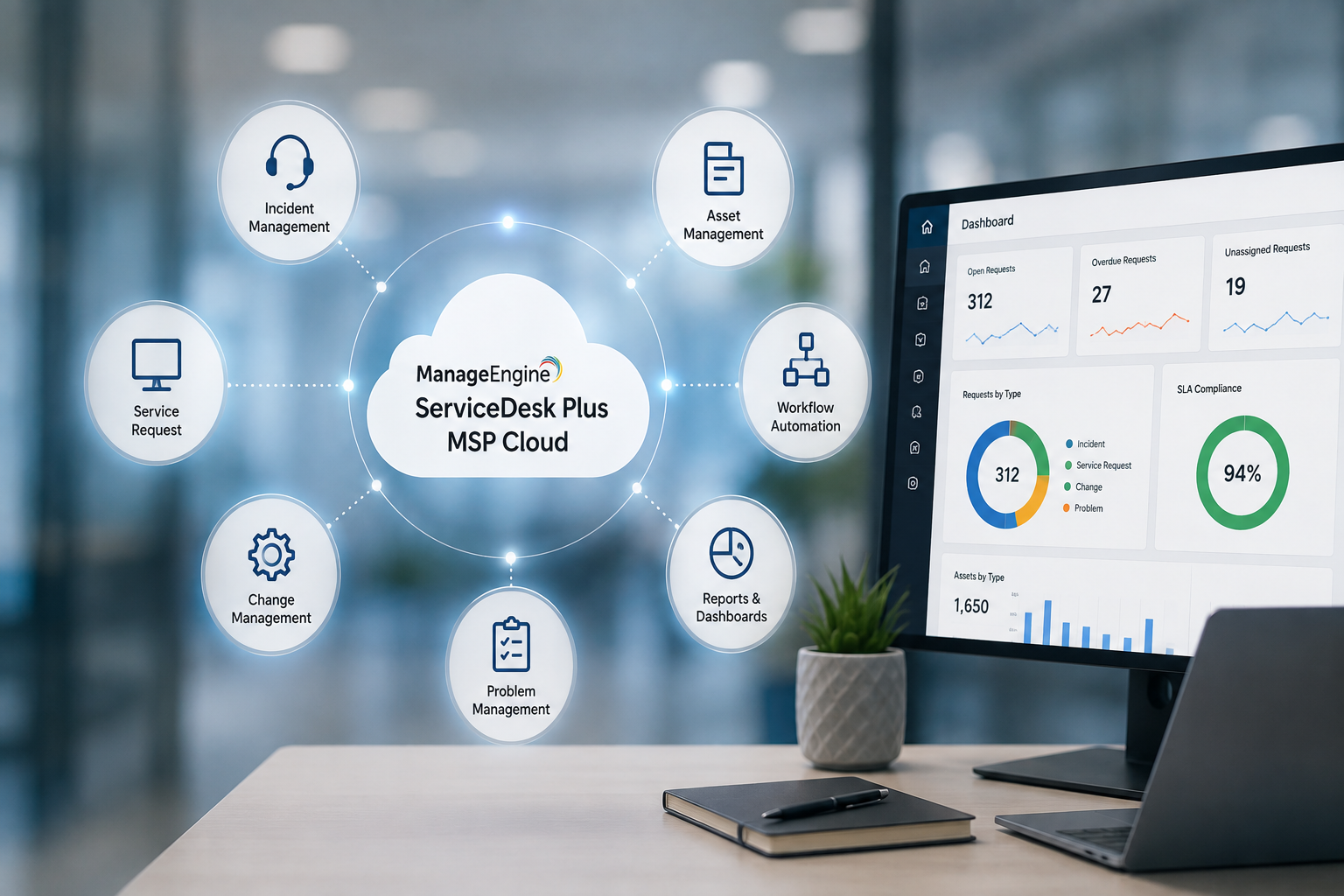
ManageEngine ServiceDesk Plus MSP Cloud (ITSM & ITAM)
Business Objective
The client sought to centralize IT Service Management (ITSM) and IT Asset Management (ITAM) through a unified cloud-based platform. Key objectives included:
- Standardize IT service delivery processes.
- Automate approvals and repetitive workflows.
- Improve IT asset visibility and lifecycle management.
- Enhance service request and incident management.
- Improve SLA compliance and operational efficiency.
- Establish centralized reporting and real-time operational visibility.
Scope of services
BXI Technology implemented and configured ITSM and ITAM capabilities across the organization, including:
- Incident, Service Request, Problem, Change, and Asset Management.
- Service catalogs and standardized request templates.
- SLA configuration and business rules.
- Approval workflows and automated notifications.
- Technician groups and request lifecycles.
- Reports and operational dashboards.
- Employee onboarding-to-asset allocation workflows.
- Employee offboarding automation.
- Purchase request automation.
- Customer solution provisioning.
- Order fulfilment workflows.
- Requester import and asset onboarding.
- User management integration.
- UAT and end-user training.
- Project documentation.
Benefits
- Streamlined IT service delivery.
- Automated repetitive service workflows.
- Improved SLA compliance.
- Accelerated ticket resolution.
- Enhanced asset lifecycle visibility.
- Centralized request tracking.
- Strengthened governance through standardized approval workflows.
- Real-time operational reporting and dashboards.
- Reduced manual intervention across IT service processes.
Impact
BXI Technology established a centralized cloud-based ITSM and ITAM platform that standardized IT operations and service delivery across the organization. The solution enhanced service quality, optimized asset lifecycle management, reduced manual intervention through workflow automation, and provided leadership with real-time dashboards and actionable insights for informed operational decision-making.
Customer
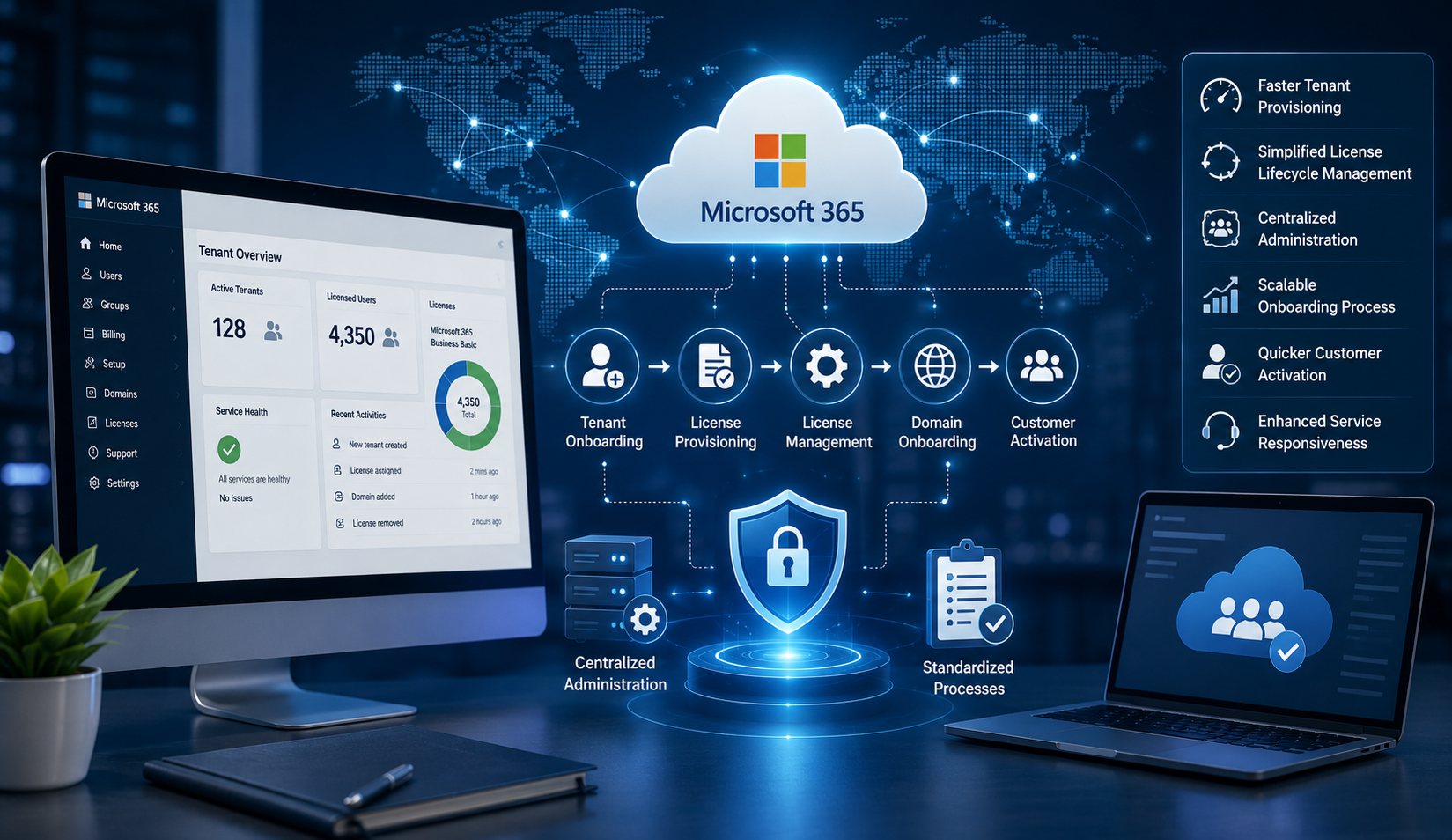
A leading global email infrastructure provider seeking to streamline Microsoft 365 provisioning, tenant onboarding, license administration, and customer domain management through a standardized and scalable service delivery model.
Technology
Microsoft 365 Business Basic, Microsoft 365 Administration, Tenant Management, License Management
Business Objective
The client sought to streamline Microsoft 365 license provisioning and lifecycle management while enabling faster tenant onboarding and customer activation.
Key objectives included:
- Accelerate Microsoft 365 tenant creation and onboarding.
- Simplify license provisioning, modification, and renewal management.
- Establish a centralized process for license administration.
- Standardize customer domain onboarding.
- Improve turnaround times through structured provisioning processes.
- Create a scalable operating model to support business growth.
Scope of services
BXI Technology delivered a standardized Microsoft 365 provisioning and license management framework covering:
- Procurement and provisioning of Microsoft 365 Business Basic licenses.
- Tenant creation and customer onboarding.
- Centralized ticket management for adding, deleting, and modifying licenses.
- Microsoft 365 license renewal management.
- Customer domain onboarding.
- Standardized provisioning workflows with defined service turnaround times.
Benefits
- Faster tenant provisioning and customer activation.
- Simplified Microsoft 365 license lifecycle management.
- Centralized license administration.
- Improved operational efficiency.
- Scalable customer onboarding processes.
- Faster service turnaround.
- Enhanced service responsiveness through structured ticket management.
Impact
BXI Technology established a standardized Microsoft 365 provisioning and license management framework that enabled the client to efficiently onboard customers, streamline license administration, and support business growth through a scalable and automated service delivery model.
Customer
A leading global digital engineering organization seeking to transform its sales operations through a structured, automation-driven CRM platform focused on recurring revenue.
Technology
Zoho CRM, Zoho Workflow Automation, Zoho Sales Orders, Zoho Quotes, Lead Scoring Engine, Approval Workflows, MRC (Monthly Recurring Cost) Pricing Model
Business Objective
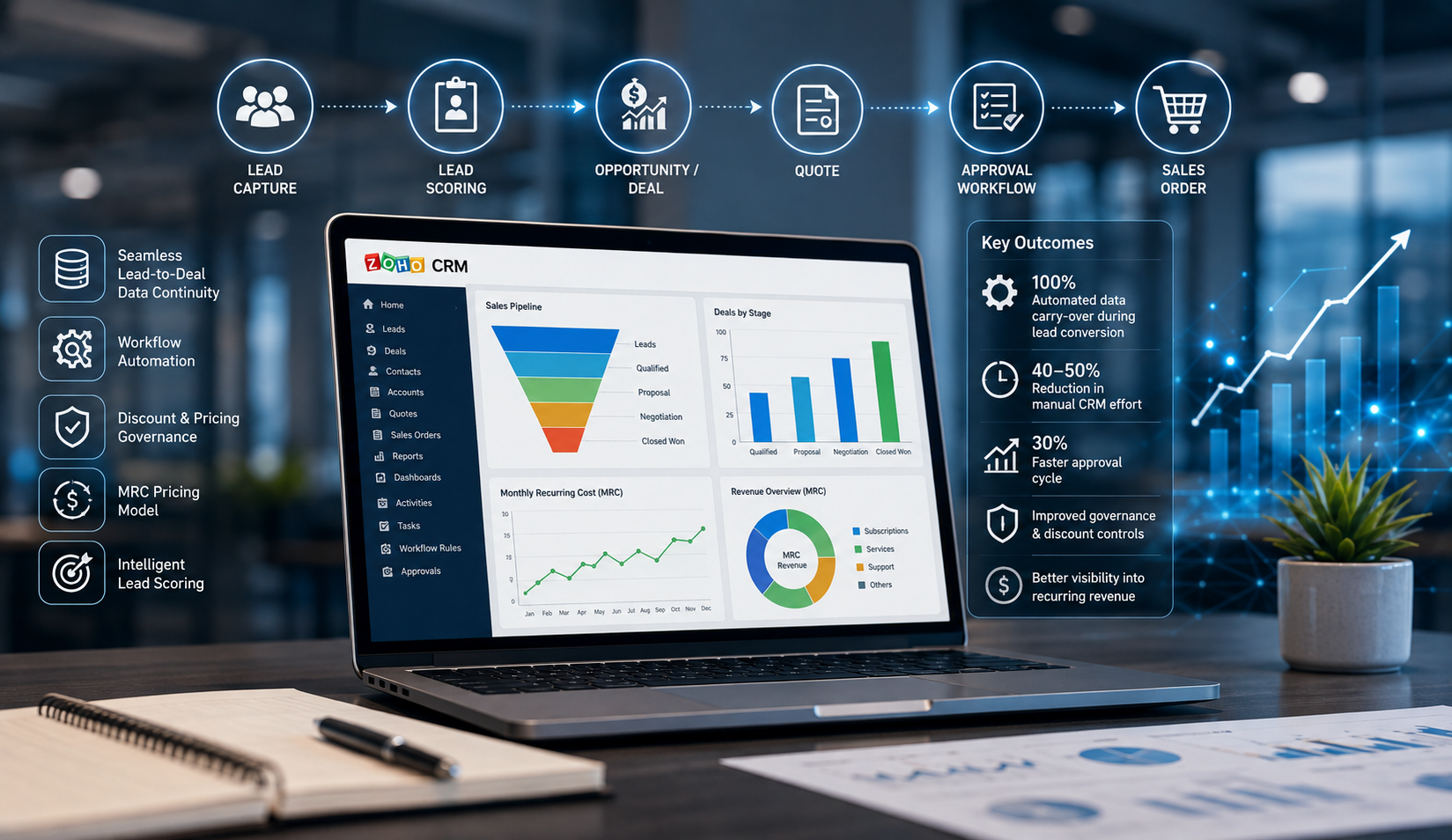
The client sought to transform its sales operations by creating a structured, recurring-revenue-focused CRM platform. Existing sales processes relied heavily on manual effort, resulting in inconsistent data, lengthy approval cycles, and limited visibility into recurring revenue.
Key objectives included:
- Ensure seamless Lead-to-Deal data continuity.
- Align pricing with a Monthly Recurring Cost (MRC) revenue model.
- Strengthen commercial governance and discount controls.
- Automate approval workflows.
- Improve lead qualification and prioritization.
- Reduce sales cycle delays and manual intervention.
Scope of services
BXI Technology implemented an end-to-end sales process transformation on Zoho CRM, including:
- Lead-to-Deal workflow automation with automated field mapping.
- CRM restructuring to support Monthly Recurring Cost (MRC) pricing.
- Standardized quote templates with configurable terms and discount governance.
- Threshold-based approval workflows with automated notifications and escalation.
- Sales Order standardization through commercial summary integration.
- Intelligent lead scoring using workflow-driven automation.
- End-to-end process optimization to improve sales efficiency.
Benefits
- 100% automated data carry-over during lead conversion.
- 40–50% reduction in manual CRM effort.
- 30% faster approval cycle.
- Improved commercial governance through standardized discount controls.
- Better visibility into recurring revenue through an MRC pricing model.
- Enhanced sales productivity through intelligent lead prioritization.
Impact
By redesigning the Lead-to-Quote process, BXI Technology helped the client establish a standardized, automation-driven sales platform that improved operational efficiency, accelerated deal approvals, strengthened pricing governance, and enabled better visibility into recurring revenue.
The transformed CRM environment empowered sales teams to focus on high-value opportunities while reducing manual effort and improving overall sales effectiveness.

Introduction
Organizations often rely on multiple disconnected tools for internal workflows, leading to inefficiencies and inconsistent processes. This case highlights how a unified application platform enabled rapid development of internal tools, improving productivity and operational consistency. The approach focused on creating a standardized environment where applications could be built, deployed, and managed efficiently.
Customer
A global technology company leveraging its own platform for internal operations. The organization manages multiple internal workflows across teams and functions, requiring scalable and consistent tools to support day-to-day operations.
Business Objective
- Replace manual and inconsistent workflows across teams
- Enable rapid application development using a unified platform
- Improve internal productivity through streamlined processes
- Standardize internal tools and operational workflows
Scope of Services
- Development of internal applications such as architecture builder and HVAC control tools
- Workflow automation and optimization across business processes
- Integration across internal systems for seamless data flow
- Real-time monitoring and control capabilities
Technology Used
- Application development platform (low-code) for rapid deployment
- SCADA + IoT integration for system connectivity
- Workflow automation tools for process efficiency
- Real-time monitoring systems for operational visibility
Key Challenges Addressed
- Inefficient manual workflows and inconsistent tools across teams
- Lack of standardized application development processes
Benefits
- Faster application development and deployment cycles
- Improved operational efficiency across internal workflows
- Consistent internal processes and system usage
- Reduced dependency on external tools and platforms
Impact
- Rapid deployment of internal tools across multiple teams
- Improved productivity and collaboration across functions
- Enhanced decision-making and better system control through real-time insights

Introduction
Product portfolio transformation is critical for global software companies managing multiple acquired products and fragmented offerings. Disconnected product lines often lead to inconsistent customer experiences, slower innovation cycles, and missed revenue opportunities. This case study highlights how a global software product company restructured its portfolio, modernized products with cloud-native and AI capabilities, and established a scalable innovation model. By aligning product strategy with customer needs and market opportunities, the organization improved monetization, accelerated releases, and strengthened its competitive positioning.
Customer
A global software product company with multiple acquired products, operating across diverse geographies and customer segments.
Business Objective
- Consolidate and rationalize fragmented product portfolio
- Monetize existing IP and software assets
- Accelerate product innovation and time-to-market
- Improve customer retention and engagement
- Enable scalable product engineering and delivery
Scope of Services
- IP acquisition and portfolio restructuring
- Product modernization using cloud-native architectures
- Infusion of AI/ML capabilities into product offerings
- Product roadmap definition and execution
- Customer success and lifecycle enablement
- Channel and partner ecosystem enablement
- API and integration framework standardization
Benefits
- Increased monetization of existing product assets
- Expanded solution portfolio and revenue streams
- Improved customer retention and renewal rates
- Faster innovation cycles and release velocity
- Scalable product engineering and delivery model
Impact
- Clear and scalable product roadmap established
- Improved customer engagement and retention
- Faster time-to-market for new product releases
- Stronger cross-sell and up-sell capabilities
- Sustainable innovation and engineering foundation

Introduction
Employee appraisal experience optimization helps organizations improve adoption, usability, and engagement in performance management systems. Many enterprises struggle with low adoption of complex appraisal platforms due to poor user experience and inefficient workflows. A global talent management solution provider faced similar challenges, where employees and managers found the system difficult to use, impacting engagement and satisfaction. By optimizing the appraisal experience, the organization simplified workflows, improved usability, and strengthened collaboration across HR and business teams.
Customer
A global talent management solution provider enabling collaboration between HR, management, and employees across multiple industries.
Business Objective
- Improve adoption of the appraisal system
- Enhance user experience and usability
- Increase employee engagement and satisfaction
- Simplify performance management workflows
- Strengthen collaboration across HR and business teams
Scope of Services
- Simplification of appraisal workflows and processes
- Enhancement of employee interaction and engagement
- Enablement of better collaboration between HR and business teams
- Optimization of user journeys across appraisal cycles
Benefits
- Improved usability and system adoption
- Enhanced employee interaction and engagement
- Simplified and intuitive appraisal workflows
- Better collaboration across HR and management
- Increased satisfaction with performance processes
Impact
- 5% improvement in employee NPS within the first quarter
- Increased adoption of appraisal platform
- Improved employee engagement and satisfaction
- More consistent performance evaluations

Introduction
An AI-driven HR analytics platform enables organizations to access real-time insights, reduce dependency on manual reporting, and improve decision-making efficiency. An organization in the Professional Services industry faced challenges in generating accurate HR metrics due to reliance on manual analysis and external analysts. This slowed decision-making and limited scalability. By implementing an AI-driven HR analytics platform, the organization enabled self-service reporting, automated insight generation, and improved accessibility to workforce data across functions.
Customer
An organization seeking faster, simpler, and more accurate HR analytics and reporting to support decision-making without increasing dependency on in-house or outsourced business analysts.
Business Objective
- Enable quick and accurate extraction of HR insights
- Reduce manual reporting and analysis effort
- Empower HR teams with self-service analytics
- Support data-driven decision-making
- Scale analytics without increasing analyst dependency
Scope of Services
- HR data ingestion and normalization
- Text analytics and multilingual language understanding
- AI-driven metric generation and insight automation
- Multi-tenant analytics platform enablement
- Self-service reporting and dashboard delivery
Benefits
- Reduced dependency on manual reporting and analysts
- Faster access to accurate HR insights
- Improved decision-making through real-time data
- Scalable analytics platform supporting multiple users
- Enhanced visibility into workforce performance
Impact
- Enabled tracking of key HR KPIs including:
- Time-to-Hire
- Time-to-Fill
- Recruiting Channel Efficiency
- Applications per Vacancy
- Interview-to-Offer Ratio
- Offer Acceptance Rate
- Improved efficiency in HR analytics and reporting
- Stronger data-driven workforce decisions

Introduction
HR lifecycle automation platforms enable organizations to streamline employee onboarding, movement, and offboarding while improving efficiency and compliance. An organization in the Professional Services industry faced challenges with manual processes, access management errors, and delays during employee lifecycle transitions. These inefficiencies impacted employee experience and increased operational overhead. By implementing HR lifecycle automation, the organization created a seamless, audit-ready, and scalable system that improved process efficiency and reduced manual intervention.
Customer
An organization aiming to modernize and automate employee onboarding, movement, and offboarding processes to improve efficiency, compliance, and employee experience.
Business Objective
- Reduce time and effort in employee lifecycle processes
- Eliminate manual errors in access and asset management
- Improve employee experience during transitions
- Ensure auditability and compliance
- Lower operational costs through automation
Scope of Services
- Automation of onboarding, transfer, and offboarding workflows
- Integration between HRMS and ITSM platforms (e.g., ServiceNow)
- Access control and asset lifecycle management
- Approval workflow automation
- Audit-ready process execution and tracking
Benefits of HR Lifecycle Automation Platform
- Reduced manual effort across HR and IT processes
- Improved accuracy in access and asset management
- Faster employee onboarding and transition processes
- Enhanced compliance and audit readiness
- Consistent and standardized lifecycle workflows
Impact
- End-to-end self-service automation of HR and IT tasks
- Single-click approvals via email or SMS
- Improved cost efficiency through reduced manual effort
- Strong audit trail and compliance readiness
- Significantly improved employee experience

Introduction
HR lifecycle automation platforms enable organizations to streamline employee onboarding, movement, and offboarding while improving efficiency and compliance. An organization in the Professional Services industry faced challenges with manual processes, access management errors, and delays during employee lifecycle transitions. These inefficiencies impacted employee experience and increased operational overhead. By implementing HR lifecycle automation, the organization created a seamless, audit-ready, and scalable system that improved process efficiency and reduced manual intervention.
Customer
An organization aiming to modernize and automate employee onboarding, movement, and offboarding processes to improve efficiency, compliance, and employee experience.
Business Objective
- Reduce time and effort in employee lifecycle processes
- Eliminate manual errors in access and asset management
- Improve employee experience during transitions
- Ensure auditability and compliance
- Lower operational costs through automation
Scope of Services
- Automation of onboarding, transfer, and offboarding workflows
- Integration between HRMS and ITSM platforms (e.g., ServiceNow)
- Access control and asset lifecycle management
- Approval workflow automation
- Audit-ready process execution and tracking
Benefits of HR Lifecycle Automation Platform
- Reduced manual effort across HR and IT processes
- Improved accuracy in access and asset management
- Faster employee onboarding and transition processes
- Enhanced compliance and audit readiness
- Consistent and standardized lifecycle workflows
Impact
- End-to-end self-service automation of HR and IT tasks
- Single-click approvals via email or SMS
- Improved cost efficiency through reduced manual effort
- Strong audit trail and compliance readiness
- Significantly improved employee experience