Customer
A leading multinational FMCG and trading enterprise operating across multiple regions.
Technology
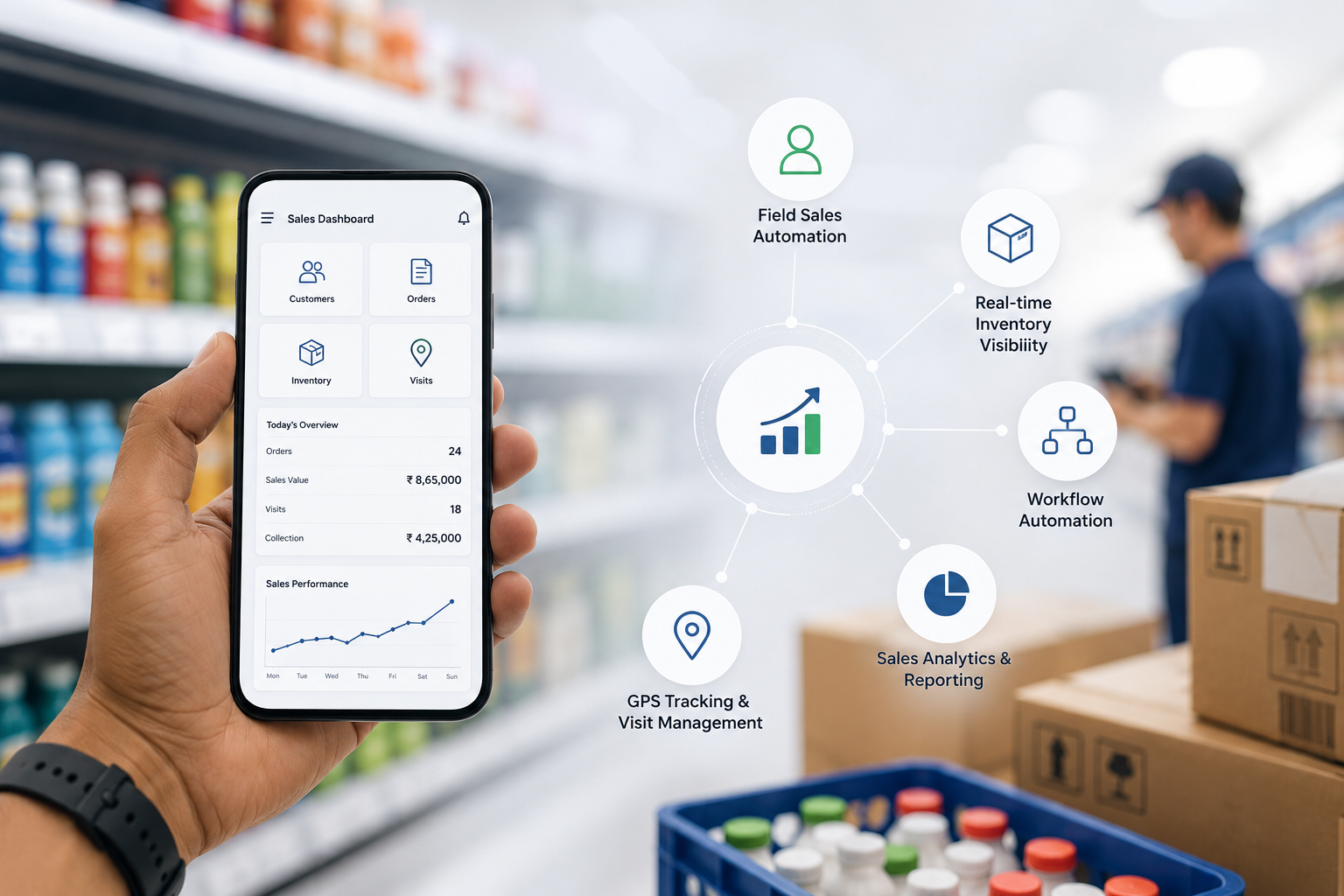
Zoho CRM, Zoho Inventory, Mobile Sales Application, GPS Tracking, Workflow Automation, Sales Analytics
Business Objective
The client sought to digitize and automate its end-to-end sales operations while improving field sales productivity, inventory visibility, order management, and sales performance.
Key objectives included:
- Digitize and automate the end-to-end sales process.
- Improve field sales productivity.
- Provide real-time inventory visibility to sales teams.
- Streamline order management and processing.
- Automate approval workflows and credit controls.
- Improve sales performance monitoring.
- Enable actionable reporting and analytics for data-driven decision-making.
Scope of services
BXI Technology implemented an integrated sales automation ecosystem covering:
- Zoho CRM implementation with a multilingual mobile sales application.
- Automated sales order processing.
- CRM integration with inventory and finance systems.
- GPS-based attendance and customer visit tracking.
- Approval workflow and credit control configuration.
- Sales dashboards and reporting.
- User training and adoption support.
- Post-go-live support and maintenance.
Benefits
- Increased visibility into field sales operations.
- Accelerated sales order processing.
- Improved inventory availability and visibility for sales teams.
- Reduced manual approval effort.
- Strengthened credit governance and controls.
- Enhanced sales performance monitoring.
- Enabled data-driven decision-making through real-time reporting and analytics.
Impact
BXI Technology delivered a unified sales automation platform connecting field sales, inventory, and finance within a single digital ecosystem. The solution streamlined sales operations, improved customer responsiveness, enhanced operational transparency, and established a scalable CRM foundation to support business growth across multiple regions.
Customer
A leading industrial safety equipment manufacturer seeking to modernize and standardize its finished goods supply chain across multiple manufacturing units.
Technology
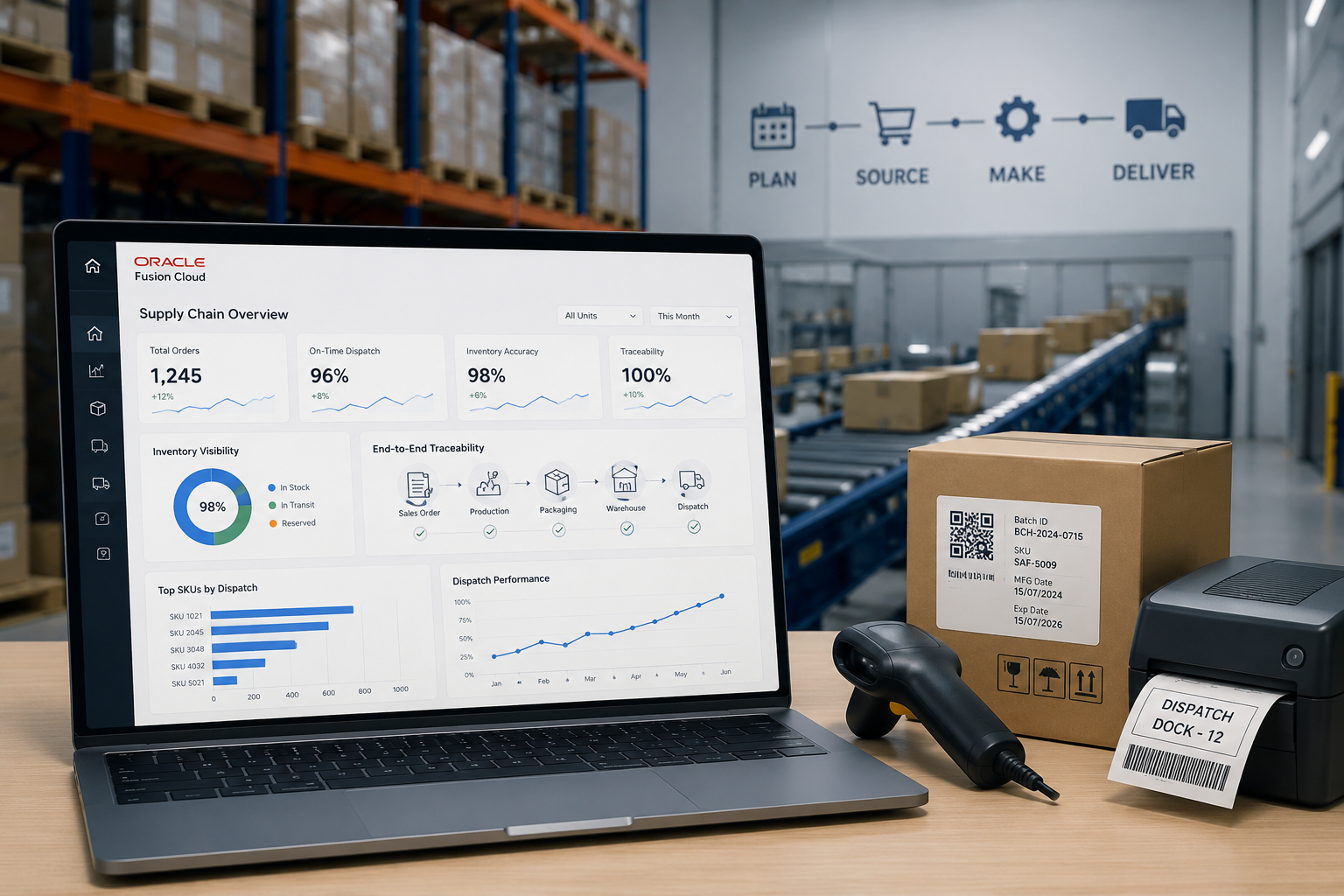
Oracle Fusion, Supply Chain Digitization, Barcode & QR Code Traceability, Warehouse Management, Business Process Mapping
Business Objective
The client sought to digitize finished goods supply chain operations and establish a standardized, traceable process across manufacturing units.
Key objectives included:
- Digitize finished goods supply chain operations.
- Eliminate manual planning processes.
- Standardize packaging workflows across manufacturing units.
- Improve inventory visibility.
- Enable end-to-end batch traceability.
- Streamline warehouse and dispatch operations.
- Establish a scalable foundation for digital supply chain transformation.
Scope of services
BXI Technology conducted detailed process discovery and supply chain transformation activities across two manufacturing units, including:
- Detailed process discovery across manufacturing units.
- End-to-end workflow mapping from sales order to dispatch.
- Business requirement documentation.
- Current-state gap analysis.
- Future-state supply chain process design.
- Oracle Fusion integration strategy.
- Warehouse, packaging, planning, and dispatch process definition.
- Barcode and QR-based traceability framework.
- Business process mapping and standardization.
Benefits
- Standardized supply chain processes across manufacturing units.
- Reduced manual intervention in planning and operational workflows.
- Improved inventory and packaging visibility.
- End-to-end batch and pallet traceability.
- Enhanced warehouse and dispatch efficiency.
- Improved process governance and operational consistency.
- Established a scalable roadmap for digital supply chain transformation.
Impact
BXI Technology designed a future-ready digital supply chain framework integrated with Oracle Fusion, transforming fragmented manual operations into standardized, traceable, and digitally enabled processes. The solution strengthened operational visibility and process governance while establishing a scalable foundation for intelligent warehouse, packaging, and dispatch management.

Customer
A leading FMCG and hospitality group operating across the Middle East and Africa, with multiple business entities requiring a standardized and scalable HR management environment.
Technology
Zoho People Plus Enterprise, Zoho Recruit, Zoho Payroll, Zoho Learn, Zoho Connect, Microsoft 365, Biometric Integration, Oracle/Finance System Integration
Business Objective
The client sought to standardize HR operations across multiple countries and business entities while creating a unified digital platform for workforce management.
Key objectives included:
- Standardize HR operations across multiple countries.
- Digitize the end-to-end employee lifecycle.
- Automate payroll and attendance processes.
- Streamline recruitment and employee onboarding.
- Centralize employee records and HR information.
- Establish a unified HR platform with country-specific compliance.
- Improve visibility through HR analytics and reporting.
Scope of services
BXI Technology procured and implemented Zoho People Plus Enterprise across multiple entities, covering:
- Configuration of core HR and employee management.
- Recruitment and onboarding through Zoho Recruit.
- Payroll and attendance automation.
- Performance management and learning management.
- Employee self-service enablement.
- HR analytics and reporting.
- Integration with biometric devices.
- Microsoft 365 integration.
- Oracle/Finance system integration.
- Employee data migration.
- User training and UAT management.
- Long-term support and maintenance.
Benefits
- Centralized HR management across multiple countries.
- Standardized HR processes and governance.
- Automated employee lifecycle workflows.
- Improved payroll accuracy and compliance.
- Enhanced employee self-service.
- Real-time HR analytics and reporting.
- Simplified multi-country HR administration.
- Scalable support for future expansion.
Impact
BXI Technology delivered a unified cloud-based HR ecosystem that modernized workforce management across multiple countries and business entities. The solution improved operational efficiency, strengthened compliance, enhanced employee experience, and established a scalable digital HR foundation to support continued business growth and global operations.
Customer
A leading global manufacturer of industrial safety products.
Technology
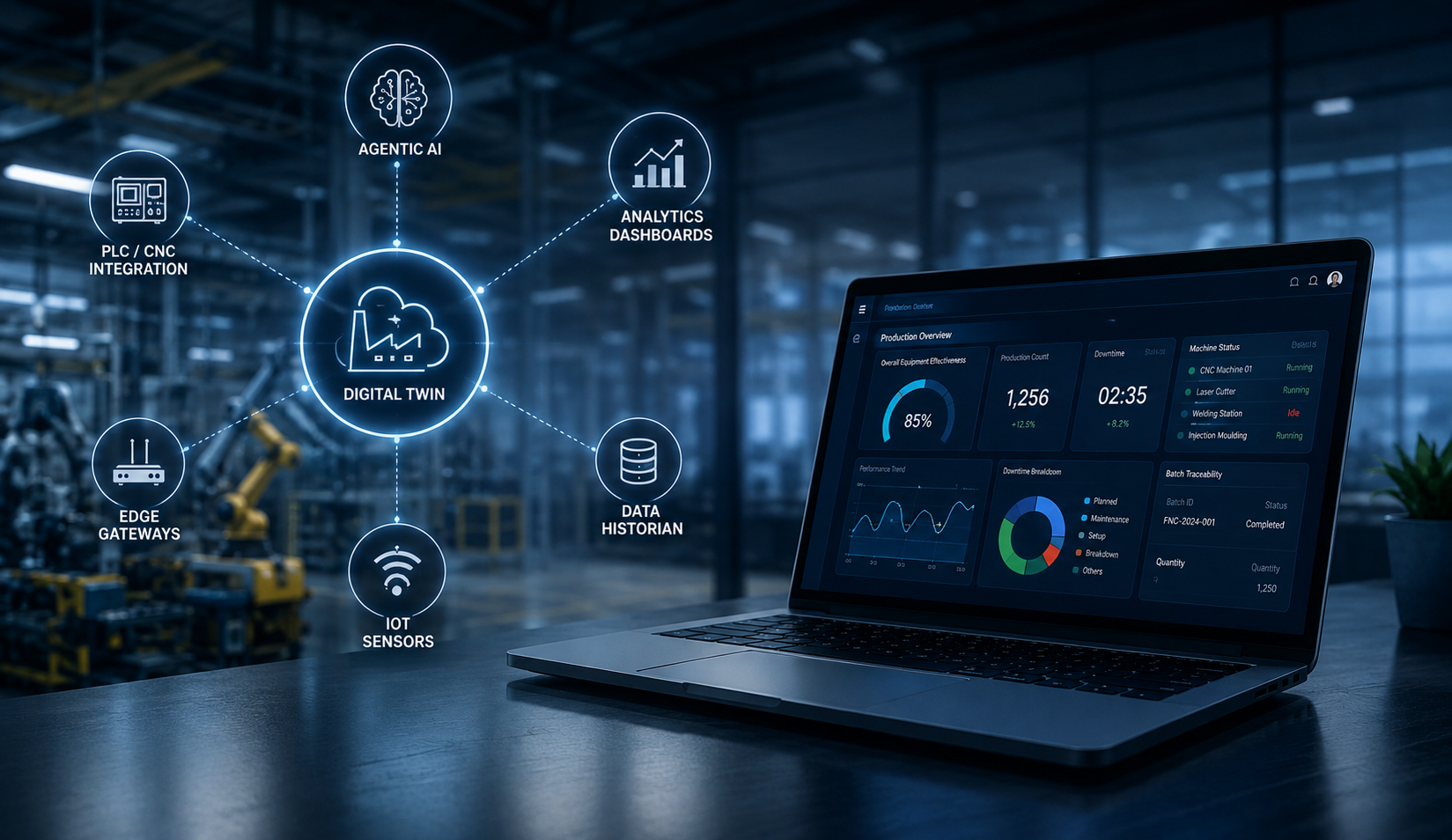
Digital Twin, Agentic AI, Zoho IoT, PLC/CNC Integration, SCADA, Edge Gateways, Industrial Sensors, Data Historian, Analytics Dashboards
Business Objective
The client sought to create a scalable digital manufacturing environment by improving shop-floor visibility, machine utilization monitoring, production tracking, and operational intelligence.
Key objectives included:
- Improve real-time shop-floor visibility.
- Accurately monitor machine utilization and production counts.
- Automate downtime classification.
- Strengthen batch-to-furnace traceability.
- Enhance Overall Equipment Effectiveness (OEE).
- Establish an Industry 5.0-ready digital manufacturing environment.
Scope of services
BXI Technology designed and implemented a Digital Twin and Agentic AI architecture integrated with Zoho IoT across diverse manufacturing equipment and processes.
The engagement included:
- PLC and CNC machine integration.
- Integration with furnaces, laser cutting, grinding, drilling, stamping, welding, and injection moulding equipment.
- Sensor retrofits and edge gateway implementation.
- Industrial protocol integration and real-time data acquisition.
- KPI dashboards and operational analytics.
- Predictive analytics and AI-driven monitoring.
- Batch traceability and batch-to-furnace tracking.
- Standardized IoT architecture across diverse machines.
- Implementation without disrupting existing machine operations.
Benefits
- Real-time visibility into machine status, production counts, downtime, rejects, and cycle times.
- Improved batch-to-furnace traceability.
- Enhanced OEE monitoring.
- Automated operational insights.
- Standardized IoT architecture across diverse manufacturing equipment.
- Scalable foundation for predictive manufacturing.
- Readiness for Industry 5.0 initiatives.
Impact
BXI Technology established a unified Digital Twin and Industrial IoT framework that transformed fragmented shop-floor data into actionable operational intelligence. The solution enabled centralized monitoring, improved production transparency, strengthened quality traceability, and created a scalable foundation for AI-driven manufacturing optimization across multiple production processes.
Customer
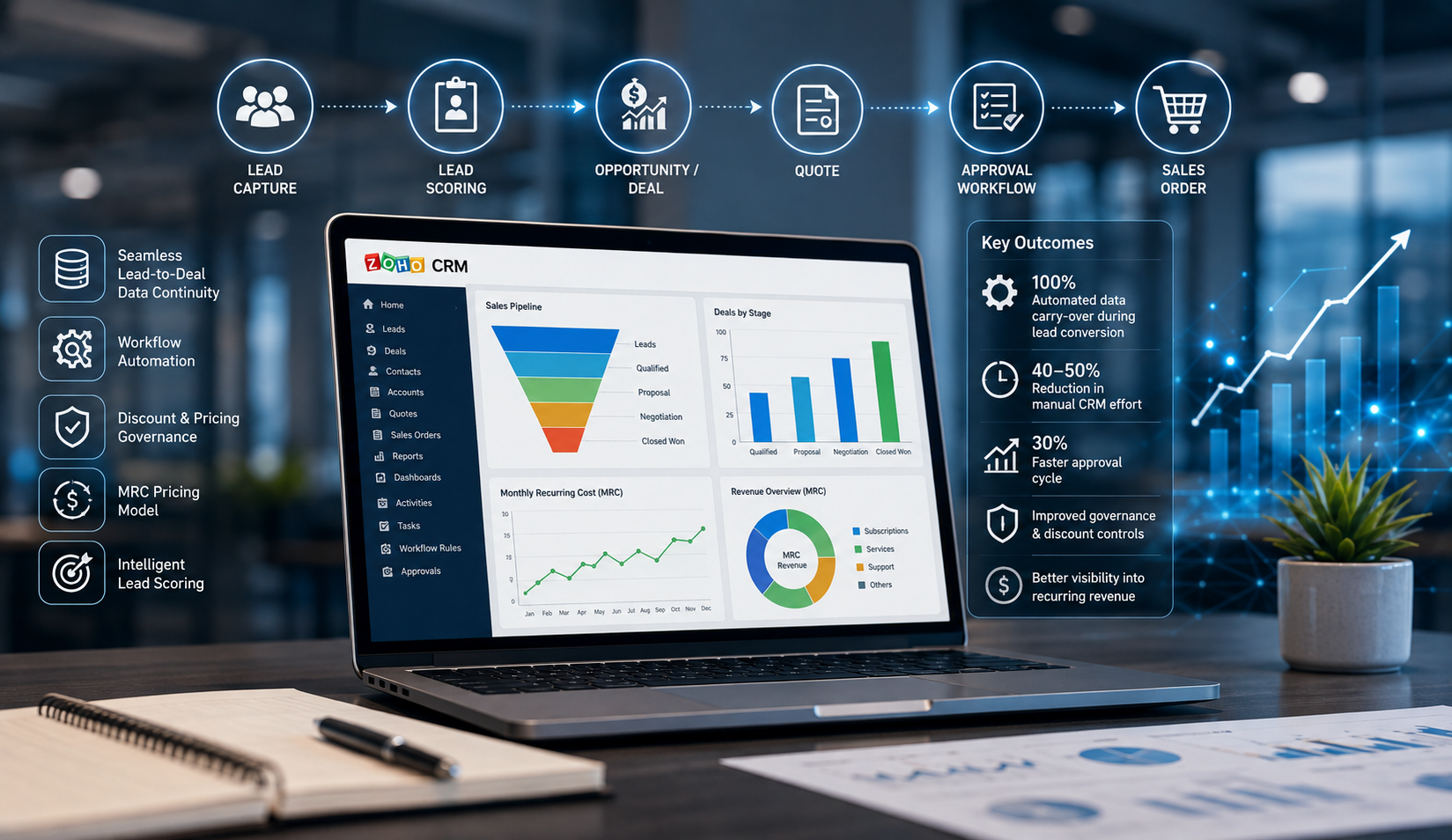
A leading global digital engineering organization seeking to transform its sales operations through a structured, automation-driven CRM platform focused on recurring revenue.
Technology
Zoho CRM, Zoho Workflow Automation, Zoho Sales Orders, Zoho Quotes, Lead Scoring Engine, Approval Workflows, MRC (Monthly Recurring Cost) Pricing Model
Business Objective
The client sought to transform its sales operations by creating a structured, recurring-revenue-focused CRM platform. Existing sales processes relied heavily on manual effort, resulting in inconsistent data, lengthy approval cycles, and limited visibility into recurring revenue.
Key objectives included:
- Ensure seamless Lead-to-Deal data continuity.
- Align pricing with a Monthly Recurring Cost (MRC) revenue model.
- Strengthen commercial governance and discount controls.
- Automate approval workflows.
- Improve lead qualification and prioritization.
- Reduce sales cycle delays and manual intervention.
Scope of services
BXI Technology implemented an end-to-end sales process transformation on Zoho CRM, including:
- Lead-to-Deal workflow automation with automated field mapping.
- CRM restructuring to support Monthly Recurring Cost (MRC) pricing.
- Standardized quote templates with configurable terms and discount governance.
- Threshold-based approval workflows with automated notifications and escalation.
- Sales Order standardization through commercial summary integration.
- Intelligent lead scoring using workflow-driven automation.
- End-to-end process optimization to improve sales efficiency.
Benefits
- 100% automated data carry-over during lead conversion.
- 40–50% reduction in manual CRM effort.
- 30% faster approval cycle.
- Improved commercial governance through standardized discount controls.
- Better visibility into recurring revenue through an MRC pricing model.
- Enhanced sales productivity through intelligent lead prioritization.
Impact
By redesigning the Lead-to-Quote process, BXI Technology helped the client establish a standardized, automation-driven sales platform that improved operational efficiency, accelerated deal approvals, strengthened pricing governance, and enabled better visibility into recurring revenue.
The transformed CRM environment empowered sales teams to focus on high-value opportunities while reducing manual effort and improving overall sales effectiveness.

Introduction
Manufacturing environments often rely on disconnected systems and manual data collection, leading to inefficiencies and limited visibility. This case highlights how a foundry implemented a digital platform to integrate systems, improve data collection, and enhance operational efficiency. The initiative focused on creating a unified data layer across production processes to enable better monitoring and control.
Customer
A manufacturing enterprise operating an iron foundry with complex production processes. The facility includes multiple stages of production and machinery that require coordination and continuous monitoring to ensure efficiency and consistency.
Business Objective
- Improve data visibility across manufacturing operations
- Integrate disconnected systems and machinery into a unified platform
- Enhance production efficiency across processes
- Enable data-driven decision-making for better control
Scope of Services
- Implementation of integrated SCADA platform across production systems
- Data collection and analysis enablement for operational insights
- Integration with existing machinery and legacy systems
- Dashboard and reporting development for visibility
Technology Used
- SCADA + IIoT platform for centralized monitoring
- Real-time data collection systems for production tracking
- Analytics and reporting tools for insights
- Machine integration frameworks for connectivity
Benefits
- Improved operational visibility across production processes
- Better production efficiency through real-time insights
- Reduced manual data handling and errors
- Enhanced decision-making capabilities
Impact
- Increased efficiency and competitiveness in manufacturing operations
- Improved data-driven production processes across the foundry
- Reduced operational inefficiencies and process gaps

Introduction
Oil and gas infrastructure operates across remote and harsh environments, requiring reliable data collection and real-time monitoring. Legacy systems often introduce complexity, high costs, and scalability challenges. This case highlights how a modern MQTT-based architecture transformed data flow, reduced complexity, and enabled scalable operations. The approach focused on simplifying communication layers while ensuring reliable and secure data transmission from distributed assets.
Customer
A US-based oil and gas infrastructure provider managing large-scale pipeline networks. The organization operates across geographically dispersed locations, requiring continuous monitoring and coordination to maintain operational safety and efficiency.
Business Objective
- Reduce network complexity and operational overhead across infrastructure
- Enable real-time data flow from remote and distributed assets
- Improve scalability of infrastructure to support expansion
- Reduce dependency on manual configuration and system updates
Scope of Services
- SCADA system modernization across pipeline monitoring systems
- MQTT-based data architecture implementation for efficient communication
- Edge device deployment across remote sites for data collection
- Centralized monitoring and control for operational visibility
Technology Used
- MQTT protocol for lightweight and efficient data transmission
- Edge gateways and IIoT architecture for remote connectivity
- SCADA + HMI systems for monitoring and control
- Real-time data analytics for operational insights
Key Challenges Addressed
- Complex VPN-based architecture and high maintenance effort
- Manual system updates across 100+ endpoints
- Lack of scalable and flexible data architecture
Benefits
- Simplified architecture and reduced system complexity
- Faster data transmission and processing across sites
- Improved scalability and flexibility for future expansion
- Reduced operational costs and maintenance effort
Impact
- Significant reduction in network complexity across infrastructure
- Faster deployment with processes reduced from hours to minutes
- Improved operational efficiency and scalable system performance

Introduction
SCADA modernization case studies demonstrate how legacy manufacturing environments can evolve into data-driven operations. Traditional distilleries, especially those operating in historic facilities, often face challenges such as limited historical data, disconnected systems, and restricted physical expansion. These limitations make it difficult to optimize production processes, forecast demand accurately, and maintain consistent product quality over time.
Customer
A North America–based premium distillery operating a historic production facility. The organization is known for maintaining traditional distillation processes while ensuring high product quality and consistency across batches. The facility includes multiple stages of production such as fermentation, distillation, aging, and packaging, all operating within a physically constrained environment due to the legacy nature of the infrastructure.
Business Objective
- Improve long-term production planning using historical data
- Enable real-time visibility into production processes
- Enhance operational efficiency within physical constraints
- Modernize legacy automation systems
Scope of Services
- SCADA system modernization and replacement
- Real-time data capture and historian implementation
- HMI redesign for improved usability
- Integration across production systems
Technology Used
- SCADA + IIoT platform
- Real-time data historian
- High-performance HMI systems
- Mobile-enabled dashboards
Key Challenges Addressed
- Lack of historical data impacting long-term planning
- Limited operational visibility across production processes
- Inefficient legacy SCADA system
Benefits
- Improved data-driven decision-making
- Better production forecasting and planning
- Enhanced operator experience through modern UI
- Increased operational efficiency
Impact
- Real-time and historical data enabled long-term production planning
- Improved operational efficiency across constrained facilities
- Faster decision-making through centralized visibility
Introduction
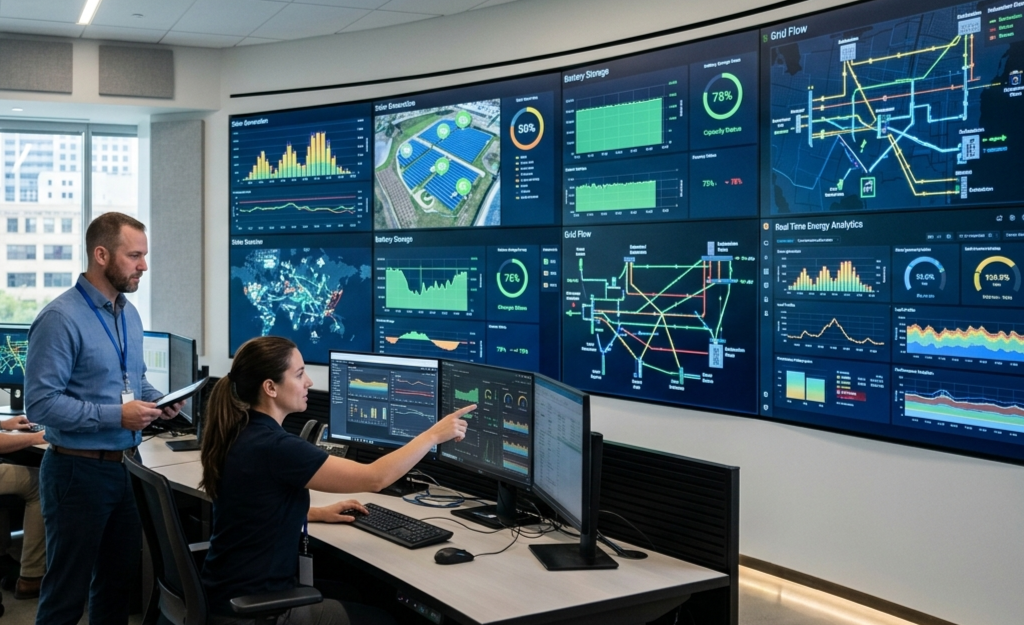
Modern energy ecosystems require intelligent orchestration of multiple energy sources, storage systems, and grid interactions. Traditional systems lack the flexibility to manage decentralized and hybrid energy environments. This case study highlights how a Digital Twin–driven energy management platform enabled real-time control, optimization, and scalability for a complex urban microgrid.
Customer
A Middle East–based renewable energy and infrastructure organization managing distributed energy assets.
Business Objective
- Enable real-time control of decentralized energy assets
- Optimize energy usage and storage across microgrid
- Improve grid resilience and independence
- Build scalable energy management architecture
Scope of Services
- Development of centralized energy management platform
- Integration of solar, battery storage, and grid systems
- Real-time monitoring and control of energy assets
- Dashboard and analytics implementation
- Multi-site energy optimization enablement
Technology Used
- Digital Twin–enabled energy management system
- SCADA + EMS platforms
- Real-time data ingestion and analytics
- IoT sensors and distributed energy integration
- Cloud-enabled scalable architecture
Key Challenges Addressed
- Managing decentralized and multi-source energy systems
- Integrating diverse hardware and protocols
- Ensuring real-time control and optimization
- Handling urban infrastructure constraints
Benefits
- Unified control across energy assets
- Improved energy optimization and efficiency
- Scalable and flexible architecture
- Enhanced operational visibility
Impact
- Real-time control of hybrid energy systems
- Ability to operate independently from main grid for limited duration
- Improved energy utilization and grid stability

Introduction
Traditional industrial monitoring systems are designed for static environments, but modern logistics and energy operations demand real-time visibility across highly dynamic and distributed assets. This case study demonstrates how a mobile energy provider implemented a scalable IIoT-driven platform to monitor, control, and optimize operations across a constantly moving fleet, enabling resilience, uptime, and real-time decision-making.
Customer
A North America–based mobile energy and logistics provider operating a large fleet of distributed assets.
Business Objective
- Enable real-time monitoring across mobile and remote assets
- Ensure high system uptime and resilience
- Improve visibility across distributed operations
- Support scalability with growing fleet size
Scope of Services
- Implementation of distributed SCADA and IIoT platform
- Real-time fleet monitoring and control
- Connectivity optimization across networks (cellular, WiFi, satellite)
- Centralized visibility dashboards for operations and management
Technology Used
- IIoT-enabled SCADA platform
- Real-time data streaming and telemetry
- Multi-network connectivity (cellular, WiFi, satellite)
- Edge computing for remote assets
- Centralized monitoring dashboards
Key Challenges Addressed
- Monitoring assets that are constantly moving across regions
- Connectivity variability across geographies
- Lack of centralized visibility across distributed operations
- Need for high uptime and resilience
Benefits
- Real-time visibility across mobile operations
- Improved uptime and operational reliability
- Better decision-making through centralized insights
- Scalable architecture supporting growth
Impact
- Real-time monitoring across hundreds of remote sites
- Improved operational control across dynamic fleet environments
- High uptime achieved through resilient architecture