
Technology Brilliance

Introduction

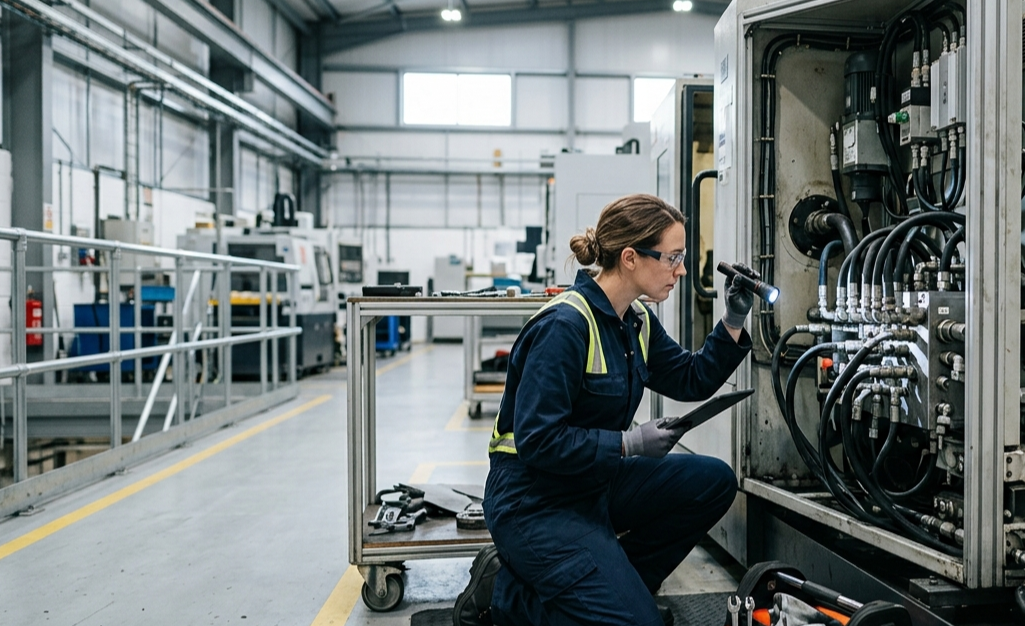
Predictive maintenance has become essential for asset-intensive manufacturing organizations where equipment reliability directly impacts productivity and project timelines. Frequent breakdowns not only increase maintenance costs but also disrupt operations and delay critical outputs. Traditional reactive maintenance approaches fail to provide the visibility needed to prevent failures in advance. This case study highlights how an asset-intensive manufacturing organization leveraged IoT sensors and AI-based analytics to predict equipment failures and optimize maintenance planning. By shifting from reactive to predictive maintenance, the organization improved asset availability, reduced downtime, and enhanced overall operational efficiency.

Customer

An asset-intensive manufacturing organization experiencing frequent equipment breakdowns impacting productivity and project timelines.

Business Objective

  • Reduce unplanned equipment downtime
  • Control rising maintenance costs
  • Improve asset availability and reliability
  • Minimize operational disruptions
  • Enable proactive maintenance strategies

Scope of Services

  • Implementation of predictive maintenance framework
  • Integration of IoT sensors for real-time equipment monitoring
  • Deployment of AI-based analytics for failure prediction
  • Optimization of maintenance schedules based on insights
  • Continuous monitoring and performance improvement

Benefits

  • Reduced unexpected equipment failures
  • Improved maintenance planning and scheduling
  • Lower operational disruptions and downtime
  • Increased asset reliability and lifespan
  • Better utilization of maintenance resources

Impact

  • Improved overall productivity
  • Reduced operational and maintenance expenses
  • Minimized project delays caused by breakdowns
Introduction

Global IT service delivery transformation is critical for manufacturing enterprises operating across multiple geographies, where uninterrupted IT support directly impacts production and workforce productivity. Fragmented service models often create inefficiencies, slow response times, and lack clear accountability. This case study highlights how a leading steel manufacturer centralized its IT service operations to improve efficiency, responsiveness, and governance. By implementing a unified service delivery model, the organization enhanced operational consistency and ensured reliable IT support across global manufacturing and business environments.

Customer

Europe’s second-largest steel producer operating in 26 countries, with a commercial presence in over 50 countries and a globally distributed workforce across five continents.

Business Objective

  • Improve service efficiency across global IT operations
  • Reduce operational friction and service delays
  • Establish a single-accountability service model
  • Enable consistent 24/7 IT support
  • Improve workforce productivity through reliable IT services

Scope of Services

  • 24/7 application and IT support across environments
  • On-premise IT support at manufacturing sites
  • Centralized operations hub for service coordination
  • Global service delivery management and governance
  • Optimization of IT service processes and workflows

Benefits

  • Faster operational processing across IT services
  • Improved issue resolution and response time
  • Better workforce productivity through reliable support
  • Reduced complexity in managing global IT operations
  • Stronger accountability across service delivery

Impact

  • 95% faster gate pass processing
  • 20% improvement in first call resolution
  • 60% workforce rebadging enabling single-accountability model

Introduction

Global IT Service Delivery Transformation plays a critical role for manufacturing enterprises that operate across regions, time zones, and production environments. In large steel organizations, uninterrupted IT support directly affects plant operations, workforce productivity, and business continuity.
As operations expand globally, fragmented service models often reduce responsiveness and accountability. Therefore, enterprises must shift toward centralized control and standardized delivery.
This case study explains how Global IT Service Delivery Transformation helped a multinational steel manufacturer centralize operations, establish clear ownership, and deliver consistent 24/7 IT support. As a result, the organization improved service efficiency, responsiveness, and employee experience across manufacturing and commercial locations.

Customer

The customer is a multinational steel manufacturing enterprise operating in 26 countries, with a commercial presence in more than 50 countries.
Additionally, employees work across five continents, supporting large-scale manufacturing and global business operations.
The organization is recognized as Europe’s second-largest steel producer and depends on reliable IT services to support critical production environments.

Business Objective

The customer aimed to standardize IT service delivery across its globally distributed enterprise.
First, the organization wanted to provide consistent 24/7 IT support across regions.
At the same time, it needed to coordinate support for more than 300 applications across multiple delivery sites.
In addition, the customer required reliable on-premise IT support at critical manufacturing locations.
Because of this, leadership sought centralized operational control with clear ownership and accountability, while also improving service efficiency through process and technology optimization.

Scope of Services

The engagement focused on transforming IT service delivery through a centralized operating model.
BXITech provided 24/7 service desk support for more than 300 applications across four delivery locations.
Meanwhile, on-premise IT support was delivered at three key manufacturing facilities to ensure operational continuity.
A dedicated Operations Management Centre in Mumbai enabled centralized coordination and governance.
Furthermore, multilingual support ensured effective service for a globally distributed workforce.
The scope also included service desk consolidation and workforce rebadging. As a result, the organization achieved single accountability.
Finally, process and tooling optimization improved resolution speed and overall service quality.

Benefits

As service delivery became centralized, operational workflows improved significantly.
Standardized practices enabled faster issue resolution and reduced complexity in managing global IT operations.
Moreover, a unified service delivery model improved accountability across teams.
Employees also experienced quicker and more reliable IT support, which improved day-to-day productivity.

Impact

  • Gate pass processing became 95% faster, reducing operational delays.

  • First Call Resolution (FCR) improved by 20%, increasing service efficiency.

  • 60% of staff were rebadged, enabling a single-accountability service model.

Customer

A global manufacturing enterprise operating across multiple geographies initiated an AI-driven cybersecurity modernization program to protect its production systems and global supply chain. As digital adoption increased across plants, frequent cyber incidents began disrupting operations, increasing costs, and impacting productivity. Therefore, the organization required a modern, intelligent security foundation capable of proactively identifying threats and safeguarding business continuity at scale.

Business Objective

The organization set out to:

  • Reduce escalating cybersecurity-related costs

  • Strengthen threat detection and incident response capabilities

  • Ensure uninterrupted production and supply chain operations

  • Shift from reactive security measures to proactive cyber risk management

  • Improve profit margins through greater operational resilience

Together, these objectives defined a roadmap for cybersecurity modernization aligned with business continuity and growth.

Scope of Services

BXI Technologies partnered with the client to modernize its cybersecurity environment end to end. The engagement focused on replacing fragmented, outdated security tools with an AI-driven, automated, and globally scalable security model.

The scope included:

  • Modernization of the cybersecurity architecture across IT and OT environments

  • Deployment of AI-driven, real-time threat detection and monitoring

  • Automation of incident response and resolution workflows

  • Predictive analytics for vulnerability identification and risk forecasting

  • Cloud-based managed security services to support global operations

  • Unified security operations across business units and geographies

This AI-driven cybersecurity modernization initiative established a unified, automated security operations model across all business units and geographies.

Benefits

As a result of the transformation, the organization realized:

  • Improved operational continuity across manufacturing and supply chain systems

  • Faster and more consistent threat detection and response

  • Reduced reliance on manual security interventions

  • Greater resilience against production disruptions caused by cyber incidents

  • Improved scalability and readiness to support global operations

  • A future-ready cybersecurity posture aligned with regulatory and compliance needs

  • Stronger foundation for safe digital transformation initiatives

Impact

  • 40% reduction in system downtime through automated incident response

  • 25% decrease in annual cybersecurity costs via tool consolidation and automation

  • Significant reduction in incident frequency through predictive risk identification

  • 15% improvement in profit margins due to fewer disruptions and faster recovery

  • Global, 24/7 security coverage enabled through managed security services


Customer

Intelligent Sourcing & Risk Hedging for a Leading Power & Industrial Equipment Producer
A global leader in transformers, heavy electrical systems, and industrial power equipment, heavily dependent on CRGO steel and other volatile raw materials. With market fluctuations accelerating and competitors adopting advanced forecasting, the customer needed a smarter, data-driven procurement approach. The goal was to build sourcing intelligence that could stabilize planning, reduce volatility exposure, and strengthen resilience across the production lifecycle.

Business Objective

The customer sought to:

  • Stabilize procurement planning despite extreme CRGO and raw-material volatility

  • Improve forecast accuracy for critical materials essential to production continuity

  • Strengthen sourcing decisions with deeper, data-backed insights

  • Reduce exposure to high-risk or unreliable suppliers

  • Improve negotiation leverage during volatile market cycles

  • Build proactive early-warning capabilities for shortages, spikes, and disruptions

Scope of Services

BXI Technologies addressed major procurement challenges, including:

  • Extreme price fluctuations in CRGO and other metals

  • Competitors adopting AI-driven forecasting, increasing market pressure

  • Manual procurement planning leading to delays, errors, and reactive decision-making

  • Limited supplier visibility and high-risk exposure

  • Lack of consolidated insight into market trends, risks, and alternatives

Our work included:

  • Implementing advanced forecasting models for raw-material trends

  • Integrating real-time market intelligence and volatility indicators

  • Building supplier risk scoring and sourcing alternatives

  • Automating alerts for price spikes, shortages, and disruption signals

  • Creating a unified procurement intelligence dashboard

Benefits

The customer achieved:

  • Faster procurement decisions backed by reliable data

  • Clear visibility into raw-material behaviors and market patterns

  • Improved negotiation leverage through stable forecasts

  • More predictable and stable production planning

Impact

  • 20–30% better forecast accuracy

  • 15–25% procurement cost savings

  • 30–40% fewer firefighting events (shortages/spikes)

  • Up to 20% reduced reliance on high-risk suppliers

Customer

Digital Twin–Enabled Scale-Up Acceleration for a Global Industrial Manufacturer
A multinational industrial manufacturing company operating complex production lines across multiple regions. The organization faced recurring delays, late-phase quality failures, and unpredictable performance during scale-up of new or modified production lines. To avoid costly capex overruns and ensure smoother commissioning, the company needed a digital-twin-driven approach that could validate behavior, simulate risks, and align engineering and operations before physical deployment.

Business Objective

The customer aimed to:

  • Minimize execution and quality risks during production scale-up

  • Validate production behavior virtually before real-world deployment

  • Avoid costly capital expenditure overruns caused by late-stage failures

  • Improve predictability of throughput, load, and quality metrics

  • Strengthen collaboration between engineering, operations, and process teams

  • Accelerate production readiness with higher confidence

Scope of Services

BXI Technologies delivered an end-to-end digital-twin modernization program, which included:

  • Production line scale-up planning and quality-risk assessment

  • Integration of a full digital twin environment mirroring physical production systems

  • Operational risk modeling and scenario simulation for “what-if” analysis

  • Validation of throughput, load, and equipment behavior prior to deployment

  • Cross-functional alignment between engineering and operations to ensure shared visibility and decision-making

Benefits

  • Early detection of quality risks before physical trials

  • Stronger collaboration between engineering and operations teams

  • Reduction in rework cycles and scale-up delays

  • Higher confidence in capex decisions backed by virtual validation

  • Improved readiness of production teams prior to real-world execution

Impact

  • 35–45% reduction in scale-up execution risk

  • 30–40% fewer quality defects during initial production runs

  • 25–35% faster production ramp-up time

Customer

An India headquartered multinational steel manufacturing giant and has operations in 26 countries and have a commercial presence in over 50 countries with employees across five continents. It is Europe’s 2nd largest steel producer.

Business Objective

  • Provide a scalable skilled resource pool
  • Innovation delivery model taking advantage of Automation, Self-Healing, and Auto healing.
  • Support Data & Analytics
  • Tool Rationalization
  • Infrastructure Modernization

Scope of Services

  • Multilingual Technology WPS
  • Application Service Desk – 24×7 Service desk support for 300+ applications delivered from 4 client locations in India.
  • On Premise Support in 3 client manufacturing locations across India
  • Dedicated Operations Management Centre at Mumbai office
  • Delivery Locations: 4
  • Volumetric Data: 29,000 tickets/ monthly; 40,000+ Users; 4 Contact mediums
  • English + Indian Languages support

Benefits

  • Dedicated Regional Service Delivery Model
  • Business aligned Smart Ops to focus on Self Service, Self-healing, and auto healing
  • Unified Operation Centre that Service Desk L1 & L1.5 and Tool Consolidation
  • SmartOps rollout for Monitor, Detect, and Resolve proactive events across tracks,
  • Digital Services Hub – Single Point of Accountability
  • Process Efficiency – through SOPs and improved FCR

Impact

  • 95% Reduction in time for gate pass
  • 20% Increase in First Call Resolution
  • Consolidation of two different Service Desks resulting in a Centralized service desk – giving the client a single source of accountability