Customer
A leading global digital engineering organization seeking to transform its sales operations through a structured, automation-driven CRM platform focused on recurring revenue.
Technology
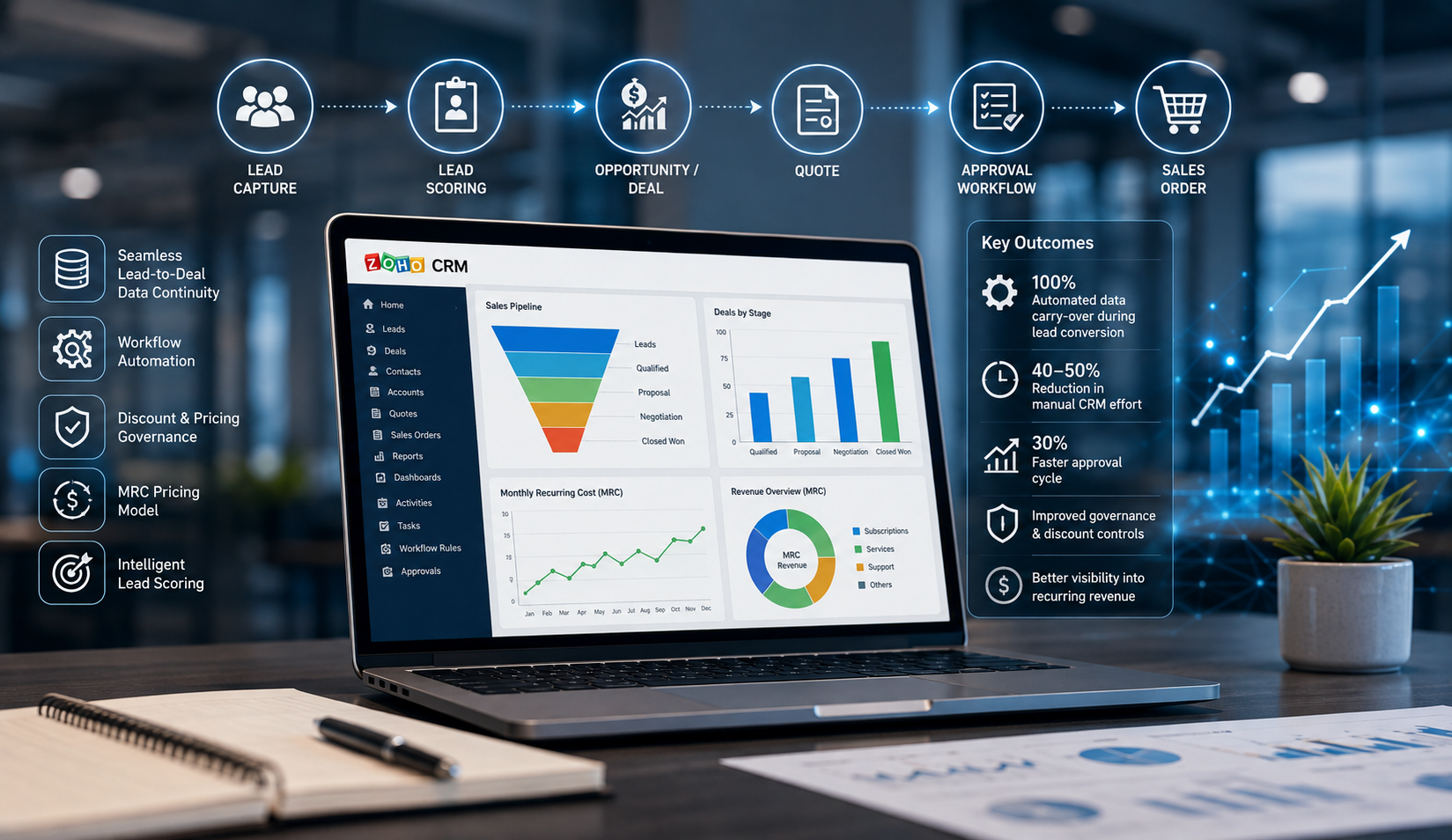
Zoho CRM, Zoho Workflow Automation, Zoho Sales Orders, Zoho Quotes, Lead Scoring Engine, Approval Workflows, MRC (Monthly Recurring Cost) Pricing Model
Business Objective
The client sought to transform its sales operations by creating a structured, recurring-revenue-focused CRM platform. Existing sales processes relied heavily on manual effort, resulting in inconsistent data, lengthy approval cycles, and limited visibility into recurring revenue.
Key objectives included:
- Ensure seamless Lead-to-Deal data continuity.
- Align pricing with a Monthly Recurring Cost (MRC) revenue model.
- Strengthen commercial governance and discount controls.
- Automate approval workflows.
- Improve lead qualification and prioritization.
- Reduce sales cycle delays and manual intervention.
Scope of services
BXI Technology implemented an end-to-end sales process transformation on Zoho CRM, including:
- Lead-to-Deal workflow automation with automated field mapping.
- CRM restructuring to support Monthly Recurring Cost (MRC) pricing.
- Standardized quote templates with configurable terms and discount governance.
- Threshold-based approval workflows with automated notifications and escalation.
- Sales Order standardization through commercial summary integration.
- Intelligent lead scoring using workflow-driven automation.
- End-to-end process optimization to improve sales efficiency.
Benefits
- 100% automated data carry-over during lead conversion.
- 40–50% reduction in manual CRM effort.
- 30% faster approval cycle.
- Improved commercial governance through standardized discount controls.
- Better visibility into recurring revenue through an MRC pricing model.
- Enhanced sales productivity through intelligent lead prioritization.
Impact
By redesigning the Lead-to-Quote process, BXI Technology helped the client establish a standardized, automation-driven sales platform that improved operational efficiency, accelerated deal approvals, strengthened pricing governance, and enabled better visibility into recurring revenue.
The transformed CRM environment empowered sales teams to focus on high-value opportunities while reducing manual effort and improving overall sales effectiveness.
Introduction
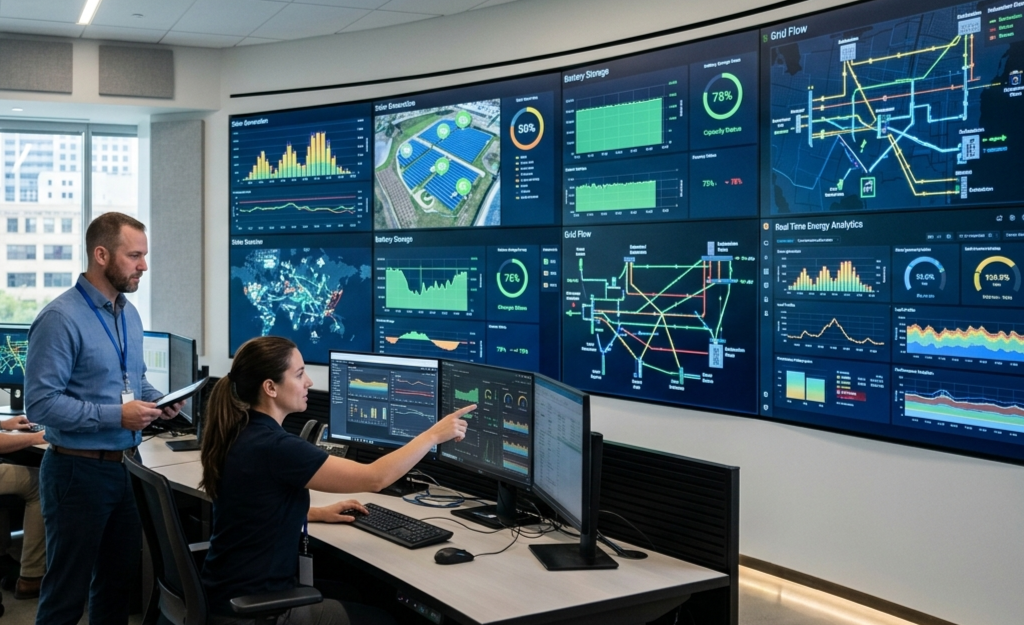
Modern energy ecosystems require intelligent orchestration of multiple energy sources, storage systems, and grid interactions. Traditional systems lack the flexibility to manage decentralized and hybrid energy environments. This case study highlights how a Digital Twin–driven energy management platform enabled real-time control, optimization, and scalability for a complex urban microgrid.
Customer
A Middle East–based renewable energy and infrastructure organization managing distributed energy assets.
Business Objective
- Enable real-time control of decentralized energy assets
- Optimize energy usage and storage across microgrid
- Improve grid resilience and independence
- Build scalable energy management architecture
Scope of Services
- Development of centralized energy management platform
- Integration of solar, battery storage, and grid systems
- Real-time monitoring and control of energy assets
- Dashboard and analytics implementation
- Multi-site energy optimization enablement
Technology Used
- Digital Twin–enabled energy management system
- SCADA + EMS platforms
- Real-time data ingestion and analytics
- IoT sensors and distributed energy integration
- Cloud-enabled scalable architecture
Key Challenges Addressed
- Managing decentralized and multi-source energy systems
- Integrating diverse hardware and protocols
- Ensuring real-time control and optimization
- Handling urban infrastructure constraints
Benefits
- Unified control across energy assets
- Improved energy optimization and efficiency
- Scalable and flexible architecture
- Enhanced operational visibility
Impact
- Real-time control of hybrid energy systems
- Ability to operate independently from main grid for limited duration
- Improved energy utilization and grid stability

Introduction
Traditional industrial monitoring systems are designed for static environments, but modern logistics and energy operations demand real-time visibility across highly dynamic and distributed assets. This case study demonstrates how a mobile energy provider implemented a scalable IIoT-driven platform to monitor, control, and optimize operations across a constantly moving fleet, enabling resilience, uptime, and real-time decision-making.
Customer
A North America–based mobile energy and logistics provider operating a large fleet of distributed assets.
Business Objective
- Enable real-time monitoring across mobile and remote assets
- Ensure high system uptime and resilience
- Improve visibility across distributed operations
- Support scalability with growing fleet size
Scope of Services
- Implementation of distributed SCADA and IIoT platform
- Real-time fleet monitoring and control
- Connectivity optimization across networks (cellular, WiFi, satellite)
- Centralized visibility dashboards for operations and management
Technology Used
- IIoT-enabled SCADA platform
- Real-time data streaming and telemetry
- Multi-network connectivity (cellular, WiFi, satellite)
- Edge computing for remote assets
- Centralized monitoring dashboards
Key Challenges Addressed
- Monitoring assets that are constantly moving across regions
- Connectivity variability across geographies
- Lack of centralized visibility across distributed operations
- Need for high uptime and resilience
Benefits
- Real-time visibility across mobile operations
- Improved uptime and operational reliability
- Better decision-making through centralized insights
- Scalable architecture supporting growth
Impact
- Real-time monitoring across hundreds of remote sites
- Improved operational control across dynamic fleet environments
- High uptime achieved through resilient architecture
Introduction
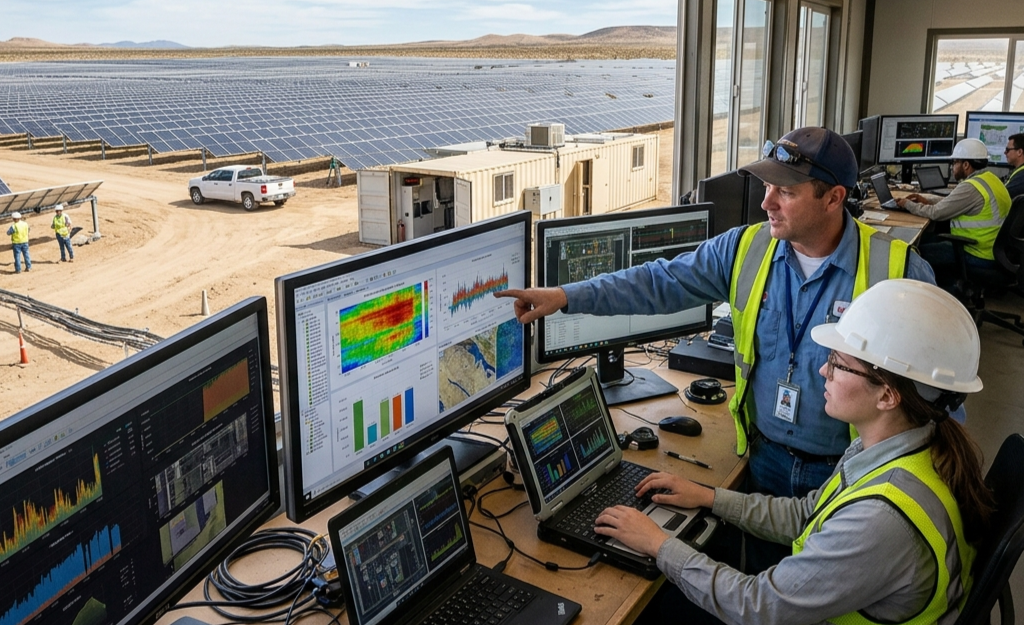
Large-scale renewable energy environments generate massive volumes of data from distributed assets, making real-time monitoring, interoperability, and analytics critical for performance optimization. However, fragmented systems and inconsistent data capture often limit visibility and slow decision-making. This case study highlights how a solar research and testing environment implemented a centralized Digital Twin framework to unify data, improve operational visibility, and enable real-time analytics. By integrating diverse systems into a single intelligent platform, the organization enhanced research accuracy, maintenance responsiveness, and scalability.
Customer
A North America–based renewable energy research organization managing a large-scale solar testing facility with thousands of distributed energy assets.
Business Objective
- Enable unified data capture across diverse solar assets and systems
- Improve real-time monitoring and operational visibility
- Enhance research accuracy through high-frequency data collection
- Reduce maintenance delays and improve response time
- Build a scalable platform for future expansion
Scope of Services
- Design and implementation of a centralized Digital Twin platform
- Integration of heterogeneous devices, systems, and protocols
- Real-time data ingestion and visualization enablement
- Development of analytics dashboards and KPI tracking
- Data consolidation into a unified database architecture
- Standardization of asset models for scalability and future onboarding
Key Challenges Addressed
- Lack of interoperability across multiple systems and vendors
- Limited visualization and absence of real-time monitoring
- Low-frequency data capture impacting research accuracy
- Fragmented data storage across platforms
- Difficulty in scaling and adding new assets
Benefits
- Unified visibility across all solar assets and systems
- Real-time monitoring enabling proactive decision-making
- Improved data accuracy and research insights
- Faster maintenance response and issue resolution
- Scalable architecture supporting future expansion
Impact
- Real-time data capture improved from low-frequency to near real-time intervals (every few seconds)
- Centralized platform enabled complete operational visibility across solar fields
- Faster maintenance response through real-time monitoring and alerts
- Scalable system design allowing seamless addition of new assets and devices

Introduction
Energy optimization has become a critical priority for manufacturing organizations facing rising fuel costs and increasing environmental regulations. Inefficient fuel usage and lack of visibility into energy consumption often lead to higher operational expenses and regulatory penalties. This case study highlights how an energy-intensive manufacturing organization improved efficiency and sustainability by implementing telematics and energy monitoring solutions. By gaining real-time visibility into fuel consumption and optimizing equipment utilization, the organization reduced costs, improved environmental compliance, and enhanced overall operational performance.
Customer
An energy-intensive manufacturing organization facing rising fuel costs and environmental penalties across its operations.
Business Objective
- Reduce fuel consumption across operations
- Improve overall energy efficiency
- Minimize environmental impact and penalties
- Enhance visibility into energy usage patterns
- Support sustainability and cost optimization goals
Scope of Services
- Implementation of energy usage monitoring systems
- Integration of telematics for fuel and equipment tracking
- Deployment of energy optimization dashboards
- Analysis of fuel consumption and utilization patterns
- Continuous optimization of energy and operational efficiency
Benefits
- Improved visibility into fuel consumption and usage
- Better control over energy utilization across operations
- Reduced waste and inefficiencies in fuel usage
- Enhanced sustainability and environmental performance
- Improved decision-making through real-time insights
Impact
- Lower fuel expenses across operations
- Reduced environmental penalties
- Improved overall profitability
Introduction
An IoT analytics platform is essential for energy organizations to monitor consumption and improve efficiency using real-time data. An organization operating in the Energy & Utilities industry faced challenges in utilizing large volumes of sensor data effectively. Disconnected systems limited visibility into energy usage and slowed decision-making. By implementing an IoT analytics platform, the organization enabled real-time insights, improved operational efficiency, and built a scalable foundation for energy optimization initiatives.
Customer
An organization in the Energy & Utilities industry operating IoT systems to optimize energy consumption through advanced analytics.
Business Objective
- Capture and process large volumes of IoT sensor data
- Build an analytics solution for energy monitoring
- Enable data-driven energy optimization
- Support scalable ingestion and analytics
- Establish a future-ready analytics foundation
Scope of Services
- Integration of sensor data into a centralized analytics platform
- Design and implementation of IoT analytics solution on CGP
- Real-time and batch processing of sensor data
- Enablement of analytics to identify usage patterns
- Optimization for scalability and reliability
Benefits
- Improved visibility into energy consumption patterns
- Identification of optimization opportunities
- Better utilization of IoT data for decision-making
- Scalable platform supporting growing deployments
- Strong foundation for smart energy initiatives
Impact
- Reduced energy consumption through analytics insights
- Improved operational efficiency
- Enhanced scalability of IoT-based energy solutions

Introduction
IoT analytics is transforming how energy-intensive organizations monitor and optimize consumption. An organization operating IoT systems in the energy sector faced challenges in leveraging large volumes of sensor data effectively. Without a unified IoT analytics approach, energy usage insights remained fragmented and underutilized. By implementing an IoT analytics solution, the organization enabled real-time visibility, improved decision-making, and built a scalable foundation for energy optimization across operations.
Customer
An organization operating IoT systems in the energy sector, focused on improving energy efficiency through advanced analytics.
Business Objective
- Capture and process high-volume IoT sensor data
- Build an IoT analytics solution for energy monitoring
- Enable data-driven energy optimization
- Support scalable IoT data ingestion and analytics
- Establish a future-ready energy analytics foundation
Scope of Services – IoT Analytics Implementation
- Integration of sensor data into a centralized IoT analytics platform
- Design and deployment of IoT analytics solution on CGP
- Real-time and batch processing of sensor data
- Analytics enablement to identify energy usage patterns
- Optimization of data pipelines for scalability and reliability
Benefits of IoT Analytics
- Improved visibility into energy consumption patterns
- Identification of energy optimization opportunities
- Better utilization of IoT sensor data
- Scalable platform for growing IoT workloads
- Strong foundation for smart energy initiatives
Impact
- Reduced energy usage using IoT analytics insights
- Improved operational efficiency in energy monitoring
- Enhanced scalability of IoT-based energy solutions
Introduction
Large power and energy enterprises often struggle with fragmented financial systems, manual controls, and inconsistent global processes. This case study highlights how Global SAP C/4HANA Financial Transformation enabled a US-headquartered multinational energy company to unify financial operations, improve audit readiness, accelerate decision-making, and establish a single global operating model across brands and regions.
Customer
A US-headquartered multinational power and energy enterprise operating across 26 countries, with 20,000 employees, delivering diversified power generation, distribution, and utility services. The organization required a standardized global financial platform to support scale, compliance, and operational efficiency across multiple brands and geographies.
Business Objectives
The customer launched a Global SAP C/4HANA Financial Transformation initiative to simplify and standardize financial operations across the enterprise. Key objectives included:
-
Replace fragmented financial systems with a single global solution
-
Improve user experience and operational efficiency
-
Enable audit readiness and regulatory compliance
-
Accelerate financial decision-making through real-time data
-
Establish a unified operating model across brands and regions
Scope of Services
BXI Tech partnered with the customer to address deep-rooted operational and financial challenges across global operations.
Financial Process Simplification
Compliance & Audit Enablement
Decision-Making & Data Visibility
Catalog & Brand Harmonization
Platform Consolidation & Automation
-
Reduced heavy reliance on manual workflows
-
Introduced automation across reporting, approvals, and data handling
Benefits
-
Standardized global financial operations across geographies
-
Improved user experience and operational efficiency
-
Automated reporting and approval workflows
-
Enabled real-time business insights and faster decisions
-
Reduced manual effort and operational risk
-
Established a single source of truth for financial and customer data
-
Improved audit readiness through controlled journal management
-
Streamlined catalog management across multiple brands
Impact
-
20% improvement in user efficiency and productivity
-
80% faster financial reporting through automation
-
85% improvement in user experience via global standardization
-
10% increase in overall operational efficiency
-
80% reduction in data retrieval time for decision-making

Customer
A global leader in energy flow measurement and optimization operating across 130+ countries undertook an energy industry digital transformation to modernize its technology landscape. The organization manages mission-critical systems for measuring and optimizing the flow of natural gas, electricity, and water at global scale. However, growing device complexity and operational demands required a more resilient, intelligent, and scalable digital foundation to support Industry 4.0 initiatives and real-time decision-making.
Business Objective
The client aimed to:
-
Improve product quality and significantly reduce equipment breakdowns
-
Modernize applications and infrastructure to support Industry 4.0 initiatives
-
Build real-time operational intelligence for proactive maintenance and performance monitoring
-
Enhance global support coverage with 24/7 operational reliability
-
Reduce IT and operational costs through automation and tool consolidation
Together, these objectives defined a transformation roadmap focused on resilience, intelligence, and scalable global operations.
Scope of Services
Quality Engineering & Testing
-
Automated testing and CMS validation
-
Capacity, load, and performance testing
-
Device connectivity and responsiveness testing
-
Enterprise quality assurance for major product releases
Data & Analytics Support
-
Real-time event monitoring and optimization
-
Data engineering and analytics enablement
-
Actionable insights to improve equipment maintenance and reliability
Application & Infrastructure Modernization
-
Legacy-to-cloud application modernization
-
SAP S/4HANA transformation and SAP mobility for field workers
-
Migration to low-code/no-code platforms
-
Rationalization of tools, applications, and legacy systems
Infrastructure & Operations
-
24/7 Service Desk (L1 & L2)
-
Server, storage, and data center management
-
Cloud operations (IaaS), VDI, and middleware support
-
Database administration and end-user computing
-
Managed network services, disaster recovery, and cybersecurity operations
This energy industry digital transformation program established a modern foundation for real-time monitoring, predictive maintenance, and scalable global operations.
Benefits
As a result of the transformation, the client realized:
-
Improved product quality and device reliability across global operations
-
Proactive maintenance enabled by real-time operational intelligence
-
Faster issue detection and resolution through automated diagnostics
-
More resilient and responsive connected device ecosystems
-
Streamlined global operations supported by a unified delivery and support model
-
Greater agility and scalability of IT and operational environments
-
Stronger cybersecurity posture and improved business continuity
Impact
-
51% cost optimization through automation, tool consolidation, and modernization
-
33% improvement in operational efficiency driven by testing-led optimization
-
Up to 80% reduction in equipment breakdowns
-
Significant reduction in OEM MTTR (Mean Time to Repair)
-
24/7 operational support coverage across 130+ countries
-
End-to-end visibility enabled across global operational infrastructure