Introduction
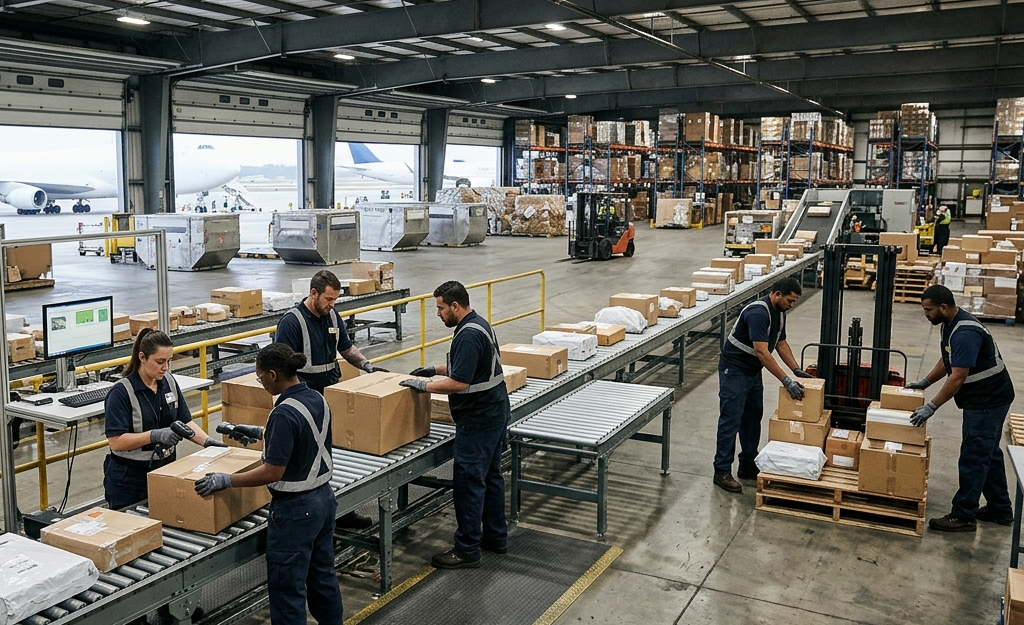
AI-driven customs clearance optimization enables logistics companies to reduce delays, improve compliance accuracy, and enhance international shipment efficiency. Customs processing is often a major bottleneck due to manual documentation, regulatory complexity, and risk assessment challenges. This case study highlights how a global courier and express logistics company transformed customs clearance into a competitive advantage by leveraging AI, image recognition, and analytics. By automating classification, predicting risks, and enabling real-time workflows, the organization significantly improved clearance speed and accuracy.
Customer
A US-based global courier and express logistics company handling large volumes of international shipments and customs operations.
Business Objective
- Transform customs clearance into a competitive differentiator
- Predict shipment caging risks proactively
- Reduce manual documentation errors
- Improve accuracy and speed of clearance processes
- Enhance international shipment efficiency
Scope of Services
- HS code prediction using AI/ML models
- Risk scoring models for shipment evaluation
- Document and image processing automation
- Real-time workflow enablement for customs operations
- Integration with logistics and compliance systems
Benefits
- Reduced customs delays and processing time
- Improved accuracy in classification and documentation
- Lower risk of compliance errors and penalties
- Faster clearance workflows
- Enhanced operational efficiency in international logistics
Impact
- 94–97% success rate in caging identification
- Reduced revenue leakage from classification errors
- Faster international shipment processing
- Improved compliance and clearance accuracy

Introduction
Connected fleet platforms enable logistics providers to leverage real-time telematics data for operational efficiency, predictive maintenance, and new revenue streams. Traditional fleet operations often lack integrated visibility across vehicles, leading to reactive maintenance, inaccurate ETAs, and limited ability to monetize data. This case study highlights how a leading trucking and logistics provider transformed its fleet operations by implementing a connected telematics platform. By integrating IoT data, predictive analytics, and route optimization, the organization improved operational predictability, enhanced customer experience, and unlocked new monetization opportunities.
Customer
A leading US-based trucking and logistics provider operating a fleet of approximately 0.5 million vehicles across large-scale transportation networks.
Business Objective
- Monetize telematics and fleet data
- Enable predictive maintenance across vehicles
- Improve ETA accuracy and customer experience
- Enhance operational visibility and efficiency
- Prepare for electric and autonomous vehicle integration
Scope of Services
- Design of connected fleet platform architecture
- Real-time ingestion of telematics and vehicle data
- Predictive maintenance analytics implementation
- Route optimization and ETA prediction logic
- Development of data monetization frameworks
- Integration with OEMs and service providers
Benefits
- Reduced maintenance costs through predictive insights
- Improved compliance through digital inspection (eDVIR)
- Better operational predictability across fleet operations
- Enhanced visibility into vehicle performance
- Scalable platform for future mobility innovations
Impact
- Improved customer satisfaction through accurate ETAs
- Enabled value-added services through data monetization
- Proactive maintenance reducing downtime risks
- Enhanced efficiency in large-scale fleet operations

Introduction
Application support transformation is critical for insurance providers managing high volumes of customer-facing service requests across multiple channels. Traditional support models relying heavily on L2/L3 teams often lead to delays, SLA breaches, and inconsistent customer experiences. This case study highlights how an insurance provider transformed its application support operations by implementing self-service, automation, and a shift-left strategy. By optimizing ticket handling and enabling multi-channel support automation, the organization improved service efficiency, reduced operational effort, and enhanced customer satisfaction.
Customer
An insurance provider delivering application-based services across operations, finance, HR, and technology domains, handling high-volume support requests through web, voice, email, and alert-based channels.
Business Objective
- Improve customer experience through faster resolution
- Reduce SLA violations in response and resolution
- Shift workload from L2/L3 to L1 through automation
- Optimize operational effort and resource utilization
- Enable scalable multi-channel support
Scope of Services
- Ticket volume analysis and baseline assessment
- Incident vs service request classification
- SLA performance and compliance analysis
- Skill-wise workload and resource optimization
- Automation opportunity identification across applications
- Self-service and BOT-driven support enablement
- Shift-left strategy implementation across L1/L2/L3
Benefits
- Reduced dependency on manual ticket handling
- Faster response and resolution through automation
- Improved SLA compliance across service operations
- Better utilization of L1 support resources
- Enhanced consistency across multi-channel support
Impact
- ~48% of tickets identified for automation
- ~37% effort optimization potential
- Streamlined high-volume incident categories
- Improved customer experience through faster resolution
- Optimized workload distribution across support tiers

Introduction
AI-driven self-healing IT operations enable manufacturing organizations to reduce downtime, improve service efficiency, and optimize IT support at scale. A cement manufacturing company operating large-scale plants faced high volumes of IT service tickets across EUC, SAP, network, and application environments. Manual handling led to delays, SLA breaches, and operational inefficiencies that directly impacted plant uptime. By implementing self-healing IT operations and ITSM automation, the organization transformed its IT support model, reduced manual effort, and improved service reliability across critical systems.
Customer
A cement manufacturing company managing large-scale plant operations with high IT service ticket volumes across multiple technology environments.
Business Objective
- Reduce IT incidents and SLA breaches
- Improve turnaround time (TAT) for issue resolution
- Minimize manual effort in IT support operations
- Enhance plant uptime and operational efficiency
- Enable automation-driven IT service management
Scope of Services
- ITSM process alignment and event categorization
- Ticket classification for incidents and service requests
- Automation across EUC, SAP, applications, and network
- Proactive monitoring and automated ticket handling
- Service catalogue digitization and rationalization
- Identification and implementation of automation opportunities
Benefits
- Reduced turnaround time and SLA impact
- Improved service quality through automated resolution
- Lower manual dependency and fewer operational errors
- Faster incident prioritization and response
- Improved efficiency across IT support functions
Impact
- 11,586 tickets analyzed (Jan–Aug 2025)
- 1.32M+ transactions automated annually
- 97,000+ FTE hours saved annually
- 49 bots deployed in production
- 16 processes automated
- 48.33% automation potential identified
- Significant reduction in EUC, SAP, and process-related incidents

Introduction
Data integration and reporting modernization are critical for manufacturing enterprises dealing with fragmented systems and inconsistent data. Siloed data and manual reporting processes often lead to delays, errors, and poor decision-making. This case study highlights how a manufacturing enterprise transformed its data landscape by implementing centralized reporting and analytics frameworks. By integrating legacy systems and consolidating data, the organization improved visibility, reduced manual effort, and enabled faster, more reliable decision-making across business units.
Customer
A manufacturing enterprise operating with siloed data, manual reporting processes, and outdated legacy systems limiting operational visibility.
Business Objective
- Enable accurate and timely decision-making
- Eliminate data silos across systems
- Reduce dependency on manual reporting
- Improve accessibility of enterprise data
- Establish a unified data foundation
Scope of Services
- Data consolidation across multiple systems
- Integration of legacy applications into a unified platform
- Implementation of centralized reporting frameworks
- Modernization of analytics and reporting processes
- Enablement of consistent enterprise-wide data access
Benefits of Data Integration and Reporting
- Improved visibility into business operations
- Reduced manual reporting effort and errors
- Consistent and reliable enterprise insights
- Faster access to analytics and reports
- Better alignment across business units
Impact
- Faster and more informed decision-making across the organization

Introduction
Safety and compliance automation is critical for industrial organizations operating in regulated environments where adherence to standards directly impacts workforce safety and business continuity. Manual compliance processes often lead to delays, audit challenges, and increased risk of incidents or penalties. This case study highlights how an industrial organization improved safety governance and compliance efficiency by implementing automated workflows and digital monitoring systems. By digitizing safety processes and enabling real-time tracking, the organization reduced risk exposure and strengthened its compliance posture across operations.
Customer
An industrial organization operating in highly regulated environments with strict safety and compliance requirements across its operations.
Business Objective
- Minimize safety incidents and operational risks
- Avoid regulatory penalties and non-compliance
- Protect organizational reputation
- Improve compliance tracking and reporting
- Enable standardized safety processes across operations
Scope of Services
- Implementation of compliance reporting automation
- Enablement of digital safety workflows and checklists
- Regulatory tracking and monitoring system deployment
- Integration of safety reporting across operations
- Optimization of audit and compliance processes
Benefits of Safety and Compliance Automation
- Improved adherence to safety and regulatory standards
- Streamlined compliance reporting processes
- Reduced dependency on manual audits
- Better visibility into safety performance
- Faster identification of compliance gaps
Impact
- Lower accident rates across operations
- Reduced regulatory fines and penalties
- Improved overall compliance posture

Introduction
Predictive maintenance has become essential for asset-intensive manufacturing organizations where equipment reliability directly impacts productivity and project timelines. Frequent breakdowns not only increase maintenance costs but also disrupt operations and delay critical outputs. Traditional reactive maintenance approaches fail to provide the visibility needed to prevent failures in advance. This case study highlights how an asset-intensive manufacturing organization leveraged IoT sensors and AI-based analytics to predict equipment failures and optimize maintenance planning. By shifting from reactive to predictive maintenance, the organization improved asset availability, reduced downtime, and enhanced overall operational efficiency.
Customer
An asset-intensive manufacturing organization experiencing frequent equipment breakdowns impacting productivity and project timelines.
Business Objective
- Reduce unplanned equipment downtime
- Control rising maintenance costs
- Improve asset availability and reliability
- Minimize operational disruptions
- Enable proactive maintenance strategies
Scope of Services
- Implementation of predictive maintenance framework
- Integration of IoT sensors for real-time equipment monitoring
- Deployment of AI-based analytics for failure prediction
- Optimization of maintenance schedules based on insights
- Continuous monitoring and performance improvement
Benefits
- Reduced unexpected equipment failures
- Improved maintenance planning and scheduling
- Lower operational disruptions and downtime
- Increased asset reliability and lifespan
- Better utilization of maintenance resources
Impact
- Improved overall productivity
- Reduced operational and maintenance expenses
- Minimized project delays caused by breakdowns

Introduction
Real-time cardiovascular risk prediction enables healthcare providers to detect critical events such as heart attacks and strokes before they occur. Hospitals and emergency care providers often face challenges in identifying high-risk patients in time, especially in fast-paced clinical environments. Delayed detection can lead to severe complications and increased mortality. By leveraging real-time analytics and predictive modeling, healthcare organizations can continuously monitor patient data, identify risk patterns, and alert clinicians proactively for timely intervention.
Customer
Hospitals and emergency care providers managing cardiovascular patients.
Business Objective
- Predict heart attacks and strokes in advance
- Enable real-time alerts for clinicians
- Improve response time in emergency situations
- Enhance patient monitoring and care quality
- Reduce risk of severe complications
Scope of Services
- Real-time patient monitoring using streaming analytics
- Short-term and long-term cardiovascular risk prediction
- Integration of predictive models into clinical workflows
- Continuous data processing for early risk detection
- Alert systems for proactive clinical intervention
Benefits
- Improved patient care through proactive monitoring
- Reduced emergency incidents and critical events
- Faster clinical response to high-risk situations
- Better visibility into patient health conditions
- Enhanced decision-making for clinicians
Impact
- Early intervention in high-risk cardiovascular cases
- Reduced complications and emergency escalations
- Improved patient outcomes
- More effective management of chronic conditions

Introduction
DevOps-enabled platform transformation helps financial institutions accelerate product delivery, improve code quality, and streamline global operations. A US-based investment firm managing over $171B in assets faced challenges in maintaining consistency across its US and UK index operations. Fragmented processes, delayed releases, and limited automation slowed down time-to-market for new investment products. By implementing a DevOps-driven platform transformation, the organization unified operations, automated delivery pipelines, and established a scalable foundation for future growth.
Customer
A US-based investment firm managing US$171B+ in assets, operating both US and global (UK) investment indexes.
Business Objective
- Create a unified index operations platform
- Consolidate processes, reporting, and analytics
- Improve time-to-market for new investment products
- Enable scalable and efficient delivery across geographies
- Strengthen collaboration across distributed teams
Scope of Services
- Design of unified index operations platform
- Consolidation of business processes, reporting, and analytics
- Agile DevOps enablement across global teams
- Implementation of automated testing frameworks
- Setup of continuous delivery pipelines
Benefits
- Standardized and unified index operations
- Faster and more reliable deployment cycles
- Improved collaboration across distributed teams
- Enhanced code quality and release predictability
- Scalable platform for future investment products
Impact
- Faster and more reliable deployments
- Improved code quality and delivery predictability
- Reduced operational costs
- Better collaboration across global teams
- Strong foundation for scalable index services

Introduction
Private cloud infrastructure transformation enables enterprises to reduce costs, improve operational efficiency, and modernize legacy IT environments. A leading U.S.-based real estate corporation operating across 49 countries faced rising infrastructure costs, fragmented systems, and inefficient operations. With a large multi-site footprint and heavy dependency on legacy infrastructure, the organization needed a scalable and cost-efficient model. By adopting private cloud infrastructure, hyperconverged systems, and automation-driven operations, the enterprise streamlined its IT landscape, reduced costs, and improved agility across global operations.
Customer
A leading U.S.-based real estate enterprise in the Real Estate & Infrastructure industry, managing $14 billion in assets across 49 countries.
Business Objective
- Reduce IT and facility operating costs
- Consolidate infrastructure footprint across locations
- Enable private cloud adoption
- Improve operational efficiency through automation
- Accelerate application delivery cycles
Scope of Services
- Infrastructure and data center consolidation
- Implementation of private cloud and hyperconverged infrastructure
- DevOps-driven automation for application delivery
- Service management and operations transformation
- AWS-based disaster recovery enablement
Benefits of Private Cloud Infrastructure
- Reduced infrastructure footprint and operational costs
- Faster and more reliable application delivery
- Improved operational efficiency and agility
- Simplified infrastructure management
- Optimized licensing and tooling usage
Impact
- 50% reduction in facility costs through site consolidation
- 30% reduction in hardware costs
- 2× faster time-to-market for applications
- Improved cost control and operational efficiency