Introduction
Centralized collaboration platforms are essential for healthcare providers operating across multiple facilities where timely data access and coordination directly impact patient care. Disconnected systems often create data silos, slow down communication, and limit decision-making efficiency. This case study highlights how a healthcare provider improved collaboration and operational alignment by implementing a centralized digital platform. By integrating systems and enabling seamless data sharing, the organization enhanced productivity, accelerated decision-making, and built a scalable foundation for expanding its healthcare network.
Customer
A healthcare provider managing 20 facilities across multiple regions, requiring improved collaboration and data sharing across clinical and administrative teams.
Business Objective
- Improve collaboration across facilities
- Enhance data sharing and accessibility
- Enable faster clinical and operational decision-making
- Reduce system fragmentation
- Support scalable expansion of healthcare operations
Scope of Services
- Implementation of a centralized collaboration platform
- Integration of clinical and administrative systems
- Enablement of unified data access across facilities
- Deployment of scalable digital network infrastructure
- Optimization of workflows for real-time collaboration
Benefits of Centralized Collaboration Platform
- Improved productivity across healthcare teams
- Faster and more informed decision-making
- Seamless onboarding of new facilities
- Reduced operational silos and inefficiencies
- Enhanced coordination in healthcare delivery
Impact
- 35% increase in productivity
- 10 facilities successfully onboarded onto the platform

Introduction
AI agentic automation enables healthcare organizations to transform operational workflows, reduce turnaround time, and improve service quality at scale. A major health provider managing large volumes of healthcare transactions faced challenges with manual processing, high error rates, and extended turnaround times. Traditional labor-driven models limited efficiency and scalability. By implementing AI agentic automation, the organization automated end-to-end workflows, improved accuracy, and established a scalable operating model across its healthcare ecosystem.
Customer
A major health provider specializing in network-enabled healthcare services and point-of-care mobile applications, supporting over 160,000 providers and 100 million patients globally.
Business Objective
- Reduce turnaround time for healthcare transactions
- Lower error rates and improve work quality
- Improve operational efficiency at scale
- Reduce dependency on manual processing
- Enable a shift from labor-driven to AI-driven operations
Scope of Services
- Implementation of AI agentic automation across workflows
- Automation of healthcare transaction processing
- Integration across multiple healthcare systems
- Deployment of bots for operational processes
- End-to-end workflow automation and orchestration
Benefits
- Reduced manual intervention in transaction processing
- Improved accuracy and consistency of operations
- Faster processing of healthcare workflows
- Scalable automation across enterprise operations
- Enhanced service delivery quality
Impact
- Reduced turnaround time and SLA improvements
- Significant FTE savings through automation
- Lower error rates across processes
- Improved operational efficiency
- Enhanced overall service quality

Introduction
AI-based cognitive health monitoring enables healthcare providers to detect early signs of mental and neurological conditions through non-invasive analysis. Traditional diagnostic methods for cognitive disorders often rely on delayed assessments and subjective evaluation, which can limit early intervention. Healthcare providers managing cognitive and mental health conditions require continuous monitoring and accurate insights to improve patient outcomes. By leveraging it using speech and language analysis, organizations can identify early indicators of cognitive decline and support proactive care strategies.
Customer
Healthcare providers managing cognitive and mental health conditions.
Business Objective
- Enable early detection of cognitive and mental disorders
- Improve monitoring of patient cognitive health
- Support proactive and preventive care
- Enhance diagnostic accuracy using speech analysis
- Provide continuous, non-invasive assessment methods
Scope of Services
- Speech and language pattern analysis using AI models
- Cognitive state assessment through NLP techniques
- Identification of early indicators of cognitive decline
- Integration with healthcare monitoring systems
- Continuous tracking of patient cognitive health
Benefits
- Faster diagnosis of cognitive disorders
- Improved quality of senior and mental healthcare
- Non-invasive and continuous monitoring approach
- Enhanced accuracy in cognitive assessment
- Better support for clinical decision-making
Impact
- Early detection of dementia-related conditions
- Improved monitoring of cognitive health
- More proactive treatment and intervention
- Enhanced patient care outcomes

Introduction
AI-powered cancer diagnosis and treatment optimization enables healthcare institutions to detect cancer earlier and improve treatment precision. Cancer care requires high accuracy in diagnosis and targeted treatment planning, where delays or inaccuracies can significantly impact patient outcomes. Healthcare institutions often face challenges in identifying tumors at early stages and delivering precise radiation therapy without affecting healthy tissue. By leveraging AI-powered cancer diagnosis using predictive algorithms and medical analytics, organizations can enhance detection accuracy, optimize treatment planning, and improve overall clinical outcomes.
Customer
Healthcare institutions focused on cancer diagnosis and treatment accuracy.
Business Objective
- Enable early detection of cancer
- Improve precision in treatment planning
- Enhance accuracy in tumor identification
- Support targeted radiation therapy
- Improve patient outcomes through advanced analytics
Scope of Services
- Image-based cancer detection using AI models
- Tumor volume identification and analysis
- Predictive analytics for treatment planning
- Support for targeted radiation therapy
- Integration with clinical imaging and analytics systems
Benefits
- Early detection of cancer cases
- Improved precision in radiation treatment
- Reduced risk of damage to healthy tissues
- Enhanced accuracy in tumor identification
- Better support for clinical decision-making
Impact
- Improved treatment outcomes
- Reduced impact of radiation on healthy cells
- Increased effectiveness of cancer therapies
- Enhanced quality of patient care

Introduction
Cognitive clinical decision support enables healthcare providers to enhance diagnostic accuracy and therapeutic decision-making through advanced reasoning and contextual understanding. Healthcare providers often face challenges in interpreting complex clinical data and making timely decisions, especially in cases requiring deep analysis and multiple data points. By leveraging cognitive AI with natural language processing and graph-based reasoning, organizations can augment clinician capabilities, improve diagnostic precision, and support better treatment outcomes.
Customer
Healthcare providers requiring cognitive decision support for diagnosis and treatment.
Business Objective
- Enhance diagnostic and therapeutic decision-making
- Improve clinician performance using AI-driven insights
- Enable faster interpretation of complex clinical data
- Support more accurate and consistent treatment decisions
- Reduce variability in clinical outcomes
Scope of Services
- Implementation of AI-based healthcare advisory systems
- NLP-driven clinical data interpretation
- Graph-based reasoning for diagnosis and treatment support
- Cognitive decision support integration into clinical workflows
- Enablement of intelligent diagnostic and therapeutic assistance
Benefits
- Faster and more accurate diagnostic outcomes
- Improved clinical decision-making consistency
- Enhanced interpretation of complex patient data
- Augmented clinician expertise through AI reasoning
- Improved efficiency in clinical workflows
Impact
- Enhanced clinician productivity
- Improved quality of care delivery
- Better diagnostic accuracy
- More informed therapeutic decisions

Introduction
Employee appraisal experience optimization helps organizations improve adoption, usability, and engagement in performance management systems. Many enterprises struggle with low adoption of complex appraisal platforms due to poor user experience and inefficient workflows. A global talent management solution provider faced similar challenges, where employees and managers found the system difficult to use, impacting engagement and satisfaction. By optimizing the appraisal experience, the organization simplified workflows, improved usability, and strengthened collaboration across HR and business teams.
Customer
A global talent management solution provider enabling collaboration between HR, management, and employees across multiple industries.
Business Objective
- Improve adoption of the appraisal system
- Enhance user experience and usability
- Increase employee engagement and satisfaction
- Simplify performance management workflows
- Strengthen collaboration across HR and business teams
Scope of Services
- Simplification of appraisal workflows and processes
- Enhancement of employee interaction and engagement
- Enablement of better collaboration between HR and business teams
- Optimization of user journeys across appraisal cycles
Benefits
- Improved usability and system adoption
- Enhanced employee interaction and engagement
- Simplified and intuitive appraisal workflows
- Better collaboration across HR and management
- Increased satisfaction with performance processes
Impact
- 5% improvement in employee NPS within the first quarter
- Increased adoption of appraisal platform
- Improved employee engagement and satisfaction
- More consistent performance evaluations

Introduction
AI-driven enterprise transformation helps organizations unify operations, automate workflows, and deliver intelligent, scalable engagement. A global agricultural company specializing in vegetable seeds faced increasing pressure from rising costs, evolving customer expectations, and rapid digital adoption. Traditional IT support models were not sufficient to deliver personalized, omnichannel experiences for farmers, distributors, and partners. By adopting AI-driven automation, data integration, and intelligent systems, the organization transformed its operations, improved productivity, and built a scalable digital foundation across enterprise functions.
Customer
A global agricultural enterprise in the Manufacturing & Resources industry specializing in vegetable seeds and innovative agricultural solutions.
Business Objective
- Enable a modern, data-driven operating model
- Improve omnichannel engagement for farmers and partners
- Increase operational efficiency through automation
- Unify enterprise data for better decision-making
- Enhance productivity across CRM, SCM, and HRMS systems
Scope of Services
- Implementation of self-healing IT operations and automation
- AI-driven customer engagement and advisory enablement
- Enterprise data unification and predictive analytics integration
- Transformation across CRM (Salesforce), SCM, and HRMS platforms
- Intelligent workflow orchestration across enterprise systems
Benefits of AI-Driven Transformation
- Significant improvement in operational efficiency
- Enhanced engagement through AI-powered advisory
- Better alignment across sales, customer success, and operations
- Real-time data-driven decision-making
- Scalable and future-ready digital foundation
Impact
- 51% improvement in operational efficiency
- Transformed customer engagement and advisory experience
- Integrated enterprise systems for seamless operations
- Accelerated analytics evolution toward AI-driven insights

Introduction
A digital engagement platform is essential for fertilizer companies to strengthen farmer relationships, improve brand positioning, and expand market reach. A fertilizer company in the Manufacturing & Resources industry faced challenges in engaging farmers effectively and differentiating its products in a competitive global market. Limited digital outreach and fragmented communication reduced brand recall. By implementing a digital engagement platform, the organization enhanced farmer interaction, enabled AI-driven advisory, and built a strong sustainability-led brand presence.
Customer
A fertilizer company in the Manufacturing & Resources industry focused on improving branding, farmer outreach, and sustainability positioning.
Business Objective
- Improve farmer engagement and brand recall
- Expand digital outreach and advisory channels
- Differentiate through sustainability-led positioning
- Increase market penetration and product adoption
- Strengthen competitiveness against global players
Scope of Services
- Design and deployment of farmer engagement applications
- AI-driven advisory and content delivery enablement
- Integration of sustainability messaging into digital experiences
- Expansion of digital touchpoints across channels
- Analytics-driven optimization of engagement strategies
Benefits of Digital Engagement Platform
- Stronger farmer engagement through digital-first outreach
- Improved brand differentiation using sustainability positioning
- Increased visibility across farming communities
- More effective communication of product value
- Enhanced competitiveness in global markets
Impact
- Improved farmer awareness and engagement
- Stronger market positioning and brand recall
- Increased adoption of fertilizer products
- Expanded reach into new and underserved markets
Introduction
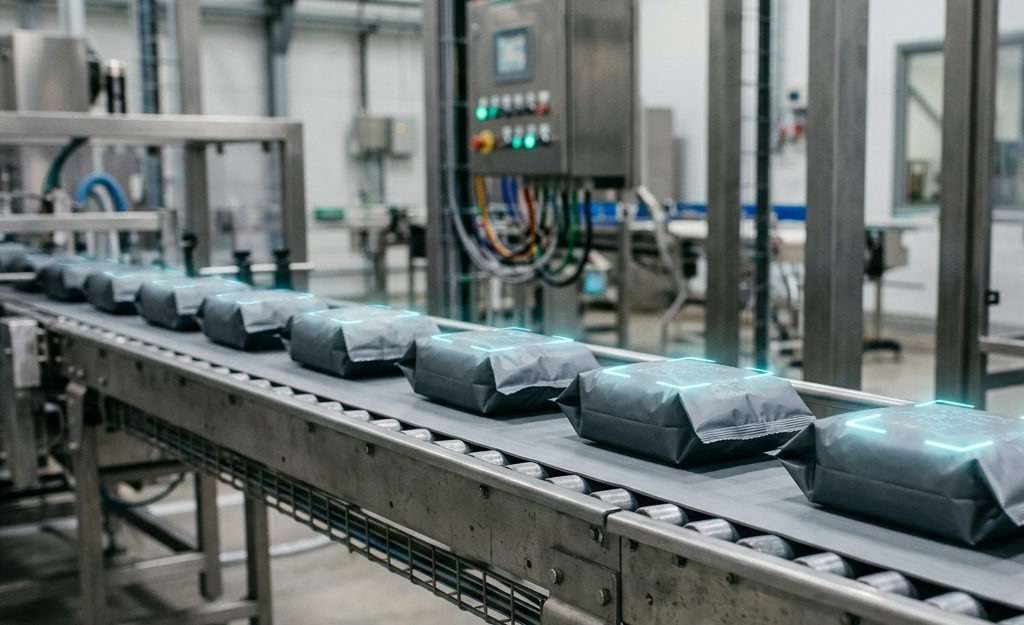
A blockchain traceability platform is critical for manufacturers to ensure product authenticity, regulatory compliance, and supply chain transparency. A fertilizer manufacturer in the Manufacturing & Resources industry faced challenges in preventing counterfeiting and maintaining trust across domestic and export markets. Limited visibility into packaging and distribution created risks in compliance and brand reputation. By implementing a blockchain traceability platform, the organization enabled end-to-end tracking, improved transparency, and strengthened trust across the fertilizer value chain.
Customer
A fertilizer manufacturer in the Manufacturing & Resources industry responsible for bagging, labeling, and regulatory compliance across multiple markets.
Business Objective
- Ensure end-to-end traceability of fertilizer products
- Prevent counterfeiting and unauthorized circulation
- Strengthen regulatory and ESG compliance
- Improve transparency across stakeholders
- Protect brand trust and market access
Scope of Services
- Design of blockchain-enabled traceability for packaging
- QR-code–enabled bagging systems for product tracking
- Integration with compliance and ESG reporting systems
- Deployment of cloud-based analytics for transparency
- Enablement of traceability across safety and quality metrics
Benefits of Blockchain Traceability Platform
- End-to-end visibility across packaged products
- Reduced risk of counterfeiting and unauthorized distribution
- Stronger compliance with regulatory standards
- Improved ESG reporting accuracy and transparency
- Increased trust among farmers and stakeholders
Impact
- Improved access to export markets
- Reduced brand and reputational risk
- Strengthened trust with regulators and customers
- Enhanced transparency across the supply chain

Introduction
A procurement analytics platform is critical for fertilizer manufacturers to manage input cost volatility and ensure regulatory compliance. An organization in the Chemicals & Fertilizers industry faced rising pressure from fluctuating natural gas prices, raw material costs, and evolving ESG regulations. Limited visibility into procurement risks impacted margins and operational planning. By implementing a procurement analytics platform, the organization enabled data-driven sourcing decisions, improved compliance tracking, and strengthened cost control across its upstream operations.
Customer
A fertilizer and chemicals manufacturer in the Chemicals & Fertilizers industry producing urea, ammonium nitrate, and specialty fertilizers.
Business Objective
- Manage volatility in raw material and energy inputs
- Optimize procurement decisions to protect margins
- Ensure compliance with regulatory and ESG requirements
- Improve affordability across the agricultural value chain
- Gain visibility into procurement risks and cost drivers
Scope of Services
- Analysis of feedstock and raw material volatility
- Design of procurement optimization frameworks
- Enablement of cloud-based compliance tracking and reporting
- Integration of cost, risk, and regulatory data into workflows
- Deployment of analytics for decision support
Benefits
- Improved control over procurement costs
- Better visibility into sourcing risks and volatility
- Stronger regulatory and ESG compliance posture
- Reduced margin pressure through optimized decisions
- More sustainable and resilient operations
Impact
- Reduced exposure to price volatility
- Improved margin stability
- Enhanced compliance and ESG risk management
- Better alignment between procurement efficiency and affordability