

Customer

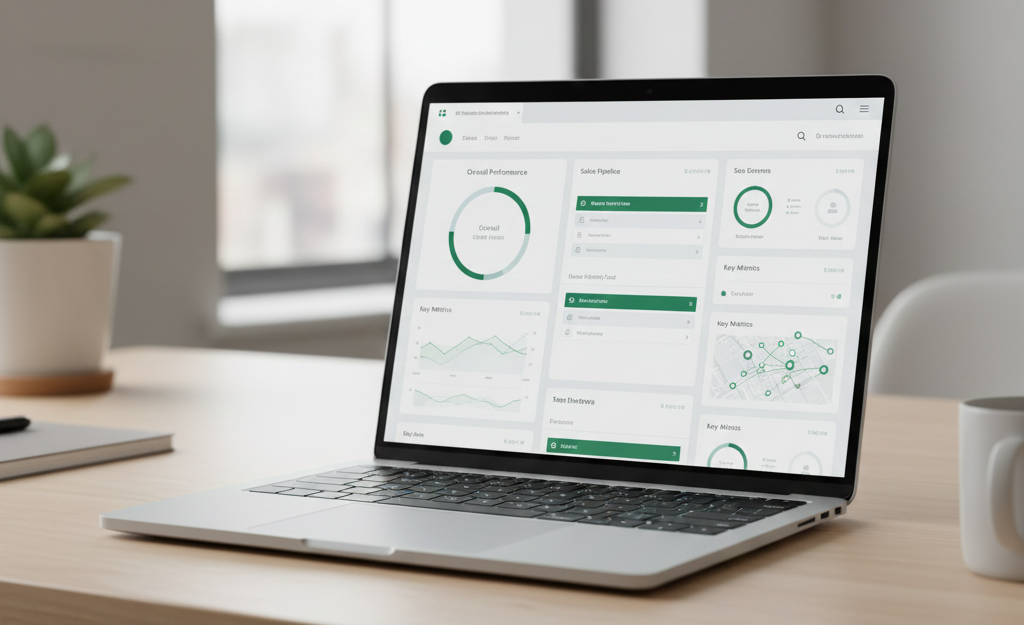
Power BI governance and enterprise BI modernization became a strategic priority for CSX Transportation, one of the largest freight railroad companies in the United States. Operating extensive rail, intermodal, and supply chain networks, CSX supports thousands of users who rely on analytics for operational planning, performance monitoring, and regulatory reporting. As BI usage expanded, the organization needed a governed, scalable approach to ensure data consistency, security, and cost efficiency across enterprise reporting.

Business Objective

The customer aimed to:

  • Standardize enterprise reporting by adopting Power BI

  • Rationalize and migrate existing BI inventories into a single platform

  • Increase self-service BI adoption without compromising governance

  • Establish clear Power BI roles, responsibilities, and usage guidelines

  • Optimize software usage, capacity, and total cost of ownership

  • Create curated datasets and semantic models for reuse

  • Strengthen compliance and audit readiness for analytics

Scope of Services

BXI Technologies partnered with CSX to implement a structured Power BI governance framework that included:

  • Design of an enterprise Power BI governance model

  • Definition of roles across business, IT, and data teams

  • Governance processes for dataset creation, report publishing, and workspace management

  • Guidelines for semantic modeling, dataset lifecycle, and certification standards

  • Monitoring of BI usage, capacity, performance, and compliance

  • Deployment of standardized templates, curated datasets, and certified data products

  • Execution of governance practices across technology and service layers

This approach balanced self-service flexibility with enterprise-grade control.

Benefits

The organization achieved:

  • Consistent and trusted reporting through certified datasets

  • Improved report quality using standardized templates

  • Better control over workspaces, permissions, and publishing

  • Increased reuse of enterprise datasets

  • Improved BI performance through usage and capacity monitoring

  • Stronger compliance posture embedded into analytics workflows

Impact

  • 30–40% increase in certified dataset reuse

  • 20–25% reduction in redundant or duplicate reports

  • 15–20% improvement in BI adoption across teams

  • 25–35% improvement in compliance and audit readiness
 

Customer

Siebel to Salesforce migration became a strategic priority for a leading Hi-Tech product vendor and system integrator based in the United States. The organization relied heavily on Siebel for core CRM operations but faced limitations in agility, scalability, and user experience. To modernize customer-facing processes and support global growth, the customer sought a trusted partner to lead a full-scale Siebel to Salesforce migration.

Business Objective

The customer aimed to:

  • Transition from Siebel to Salesforce to improve agility and scalability

  • Standardize CRM processes across global regions

  • Improve user experience and adoption for sales, service, and operations teams

  • Enable faster development, deployment, and integration cycles

  • Reduce long-term IT spend and CRM support overhead

  • Increase operational efficiency by consolidating tools and workflows

Scope of Services

BXI Tech was selected as the strategic transformation partner to execute the Siebel to Salesforce migration through a multi-phase modernization program:

  • Migrated legacy Siebel CRM processes to Salesforce.com using a high-speed development model

  • Consolidated fragmented workflows into simplified, optimized Salesforce processes

  • Deployed Salesforce across multiple countries with region-specific configurations

  • Integrated Salesforce with enterprise systems, including:

    • PeopleSoft HRMS

    • Enterprise Data Warehouse

    • SharePoint

    • AppExchange tools such as Conga Merge, DealMaker, Timba Surveys, InsideView, Eloqua, and ClickTools

  • Established a managed services model to support continuous enhancement and operational stability

  • Streamlined CRM services and support structures for long-term maintainability

Benefits

The modernization initiative delivered measurable improvements across CRM operations:

  • Consolidated and standardized CRM processes across regions

  • Faster rollout of CRM capabilities in new markets

  • Stronger integration with enterprise applications and business workflows

  • Improved usability, driving higher user confidence and adoption

  • Reduced complexity through platform consolidation

Impact

  • 35–40% reduction in overall IT spend

  • 60% increase in Salesforce user adoption

  • 8% year-on-year reduction in CRM support team size

  • Service request backlog reduced from 30,000 to 500 over five years


Customer

Parcel ecosystem digital transformation for retail logistics became critical for a multinational retailer struggling with legacy, fragmented systems. Frequent outages during peak demand, high operational costs, and limited real-time visibility were impacting customer satisfaction and revenue growth. To compete with digital-first players, the retailer needed a modern, scalable platform that could digitize parcel operations end to end while improving reliability, speed, and customer experience.

Business Objective

The retailer aimed to:

  • Modernize IT infrastructure for agility and resilience

  • Reduce maintenance and scaling costs

  • Improve system performance during peak demand

  • Enhance customer experience through real-time visibility

  • Enable faster market expansion and digital innovation

  • Transition to a scalable, cloud-ready architecture

Scope of Services

BXI Technologies partnered with the retailer to deliver a comprehensive parcel ecosystem transformation.

Parcel Digitization

  • Enabled end-to-end digital capture for every parcel event (scan → sort → route → deliver)

  • Replaced legacy workflows with real-time digital processes

Integration Modernization

  • Modernized the enterprise integration landscape

  • Built unified integrations across Parcel Systems, Sortation Hubs, and Route Planning

  • Implemented enterprise-grade event-driven architecture

Customer Experience Transformation

  • Introduced real-time in-flight delivery change capability

  • Enabled doorstep collection and enhanced task assignment

  • Improved track-and-trace visibility and customer notifications

Operational Intelligence & Monitoring

  • Deployed enterprise monitoring, alerting, and observability

  • Implemented Solution Manager, WILY, HAWK alerting, and EEM

  • Enabled real-time insight into integration health and customer experience

Services Delivered

  • Event Processing System (EPS) on TIBCO to unify parcel workflows

  • Smart Rules–based automation for predictive alerting and incident prevention

  • PDA-integrated task execution for faster field response

Benefits

The retailer achieved:

  • Complete parcel digitization across the delivery lifecycle

  • Real-time delivery flexibility for customers

  • Higher operational efficiency through automation

  • Improved routing and sortation intelligence

  • Reduced incident frequency through predictive operations

  • Stronger customer engagement and retention

This parcel ecosystem digital transformation for retail logistics created a scalable foundation for long-term growth.

Impact

  • 100% parcel digitization across the delivery lifecycle

  • 60% reduction in EPS-related incidents

  • Significant improvement in customer onboarding and retention

  • Reduced operational overhead in sortation and final-mile delivery

  • Faster, data-driven decision-making for operations teams


The hospitality industry is undergoing a fundamental shift. Guest expectations are evolving faster than traditional systems can adapt, and hotels are no longer competing on service alone — they are competing on experience orchestration, digital maturity, and operational intelligence.

At BXI Technology, our Hospitality Center of Excellence (COE) is built to solve this exact challenge.
We don’t just modernize systems — we integrate products, data, and experiences into one connected ecosystem that enables hotels to operate smarter, personalize at scale, and create differentiated value for guests.

Why Hospitality Needs a COE Today

Despite large investments in technology, most hotels still face the same structural problems:

  • Fragmented guest journeys

  • Disconnected backend systems

  • Rigid legacy platforms

  • Slow personalization capabilities

  • Minimal real-time intelligence

  • Limited actionable insights for decision-making

A Hospitality COE provides a unified framework that connects these scattered layers and accelerates digital transformation across the entire guest lifecycle — from booking to checkout, and beyond.

Core Hospitality Products: The Foundation of Modern Operations

Hotels rely on a complex stack of operational platforms. BXI Technology strengthens this foundation through modernization, integration, and composability across:

  • Property Management Systems (PMS)

  • Central Reservation Systems (CRS)

  • Point of Sale (POS)

  • IBE and Web Platforms

By transforming these core systems into flexible, microservices-driven components, hotels gain the ability to scale seamlessly, automate routine functions, and unlock richer guest insights.

Disruption in Customer Experience: Engineering the Next Era of Hospitality

Guest experience is no longer about touchpoints — it’s about intelligent continuity.
Our COE introduces customer experience technologies that help hotels shift from service delivery to experience engineering:

Composable Architecture

Build, extend, and innovate without being trapped in monolithic systems.

Chatbots & Conversational AI

Enable instant, personalized support across languages and channels.

Omni-Channel Digitization

Connect guests across mobile, web, kiosk, social, and in-stay platforms.

Sentiment Analytics

Understand guest emotions in real time and act before issues escalate.

These capabilities transform every interaction into a meaningful, data-driven experience.

Transformation Services: Turning Vision into Scalable Reality

Technology alone doesn’t drive transformation — execution does.
Our Hospitality COE provides a full suite of transformation services to help hotels build the future with confidence:

  • Digital Consulting & Transformation Strategy

  • Application Engineering & System Integration

  • Customer Engagement & Experience Design

  • Data Management & Actionable Insight Services

From modernization programs to AI-led operational redesign, we help hospitality brands transition from reactive to proactive operations.

The Outcome: Smarter Operations, Happier Guests, Stronger Business

A connected hospitality ecosystem powered by BXI Technology’s COE delivers measurable impact:

  • Higher guest satisfaction through personalization

  • Reduced operational friction

  • Faster decision-making powered by real-time data

  • Scalable digital platforms for future growth

  • Improved revenue through targeted engagement

  • Consistent, integrated experiences across every touchpoint

In a market where expectations shift daily, the ability to operate intelligently is no longer an advantage — it’s a necessity.

Looking Ahead: Hospitality in 2026 and Beyond

The next phase of hospitality transformation won’t be defined by isolated tools.
It will be defined by connected intelligence, composable platforms, and experiences that feel effortless.

BXI Technology’s Hospitality COE is built to help hotels lead that future — not chase it.

Customer

As part of an omni-channel digital transformation for logistics, a leading integrated logistics service provider based in APAC set out to unify its customer experience and operations. Rapid growth driven by mergers and acquisitions had resulted in a fragmented digital ecosystem with dozens of disconnected touchpoints. Customers encountered inconsistent journeys across transportation, warehousing, fulfillment, and cross-border services, while internal teams operated in silos with limited visibility. The organization needed a single, scalable digital platform to restore consistency, transparency, and growth.

Business Objective

As part of an omni-channel digital transformation for logistics, a leading integrated logistics service provider based in APAC set out to unify its customer experience and operations. Rapid growth driven by mergers and acquisitions had resulted in a fragmented digital ecosystem with dozens of disconnected touchpoints. Customers encountered inconsistent journeys across transportation, warehousing, fulfillment, and cross-border services, while internal teams operated in silos with limited visibility. The organization needed a single, scalable digital platform to restore consistency, transparency, and growth.

Scope of Services

BXI Technologies partnered with the customer to deliver a consolidated digital business platform.

  • Launched a One Digital Business Platform unifying 30+ customer channels

  • Standardized workflows and created a single digital entry point for all services

  • Implemented Data Event Management for real-time shipment visibility

  • Built cloud infrastructure using Infrastructure as Code (IaC):

    • AWS EC2, RDS, S3, SQS, EMR, Kinesis

    • AWS CLI automation via Ansible

    • CI/CD pipelines on AWS Cloud

    • iPaaS-based backend integrations

    • Backup and disaster recovery setup

  • Adopted an MVP-first approach starting with Track & Trace

  • Refactored backend systems to unify routing, pricing, and fulfillment logic

This omni-channel digital transformation for logistics eliminated silos while enabling faster innovation.

Benefits

  • Unified omni-channel experience through a single digital platform

  • Consistent customer journeys across all logistics services

  • Improved shipment visibility and faster issue resolution

  • Stronger customer engagement through a consolidated interface

  • Increased cross-sell opportunities across transport and logistics offerings

  • Streamlined backend operations with standardized workflows

Impact

  • 20% reduction in customer churn

  • 28% reduction in call center volume for shipment tracking

  • 30+ customer channels consolidated into a single platform

  • 72 fragmented customer journeys eliminated


Customer

As part of a GRC automation for retail banking initiative, the consumer division of a leading multinational retail banking group set out to modernize operations across insurance, credit cards, and investment products. Operating at scale across regions, the organization faced rising IT costs, legacy system constraints, and increasing regulatory complexity. To support growth and compliance, the client needed a unified, automated governance and operational model.

Business Objective

The client aimed to:

  • Reduce the high cost of maintaining ERP, non-ERP, and middleware applications

  • Improve service quality, consistency, and predictability

  • Consolidate procurement and standardize pricing across business units

  • Eliminate operational waste and better utilize spare capacity

  • Accelerate time-to-market for new banking and insurance products

  • Enable innovation for new digital banking offerings

  • Improve cross-functional collaboration and reuse of best practices

  • Strengthen application, technology, and compliance risk management

  • Ensure adherence to evolving regulatory and privacy mandates

  • Increase agility for expansion into new markets and geographies

  • Drive service consolidation as a strategic operating model

  • Accelerate digitization without disrupting existing business operations

Scope of Services

BXI Technology delivered a comprehensive GRC-led digital modernization program covering cost, operations, compliance, and agility.

Legacy Rationalization & Cost Optimization

  • Assessment of ERP, middleware, and business applications

  • Retirement of redundant systems and consolidation of overlapping capabilities

  • Optimization of licensing, infrastructure, and operational spend

Service Standardization & Operational Excellence

  • Standardized service delivery across banking, insurance, and investment portfolios

  • Consistent service-level definitions and performance metrics

  • Shared operating frameworks across previously siloed teams

Procurement & Pricing Consolidation

  • Unified procurement processes and vendor negotiations

  • Harmonized pricing structures across business units

  • Centralized dashboards for spend transparency

Risk & Compliance Transformation

  • GRC automation across 50+ regulatory and compliance frameworks

  • Integrated risk monitoring for privacy and regulatory adherence

  • Automated workflows for remediation and audit readiness

Agility & Digital Acceleration

  • Platform modernization to support rapid market entry

  • Value-stream-aligned delivery for faster realization of business value

  • Alignment of innovation initiatives with enterprise roadmaps

This GRC automation for retail banking program enabled standardized services, automated compliance, and scalable digital operations across the enterprise.

Benefits

  • Lower and more predictable IT operating costs

  • Faster product launches enabled by standardized services

  • Improved regulatory compliance with reduced manual effort

  • Greater operational transparency across the enterprise

  • Stronger collaboration between business and technology teams

  • Increased organizational agility without business disruption

  • Scalable foundation for long-term digital banking innovation

Impact

  • 20% revenue growth driven by faster launches and compliance-led acceleration

  • Significant reduction in recurring IT and application maintenance costs

  • Automation of compliance across 50+ regulatory frameworks

  • Consolidated service operations across banking, insurance, and investments

  • Reduced organizational risk and improved audit readiness

  • Faster expansion into new regions and product categories


Customer

Global transportation management transformation became a strategic priority for a leading global shipping company operating across ocean freight, land transport, and multimodal logistics. Managing large-scale transportation networks worldwide, the organization faced increasing complexity across systems, processes, and data flows. Fragmented visibility across transport modes and regions limited decision-making and slowed progress toward next-generation logistics capabilities. The customer required a unified digital strategy to modernize operations, harmonize processes, and enable global visibility.

Business Objective

The customer aimed to:

  • Transform complex, multimodal transportation operations

  • Build a single global visibility platform for transport data

  • Create a future-ready roadmap for logistics capabilities

  • Harmonize processes across business units and geographies

  • Evaluate Tier 1 Transportation Management Systems (TMS) for modernization readiness

  • Improve operational consistency, data synchronization, and planning

  • Enable an integrated approach to global logistics management

Scope of Services

BXI Technologies partnered with the customer to deliver a comprehensive assessment and transformation blueprint.

Enterprise Assessment & Discovery

  • Conducted discovery across four business units in three global regions

  • Mapped transportation workflows across Road, Rail, Barge, Ocean, and Intermodal modes

  • Analyzed existing systems, integrations, dependencies, and operational gaps

Analysis, Evaluation & Recommendations

  • Assessed the existing Tier 1 TMS landscape

  • Identified redundancies, capability gaps, and improvement opportunities

  • Recommended process harmonization and data architecture enhancements

  • Defined a future-state capability roadmap aligned with global logistics operations

Blueprinting & Transformation Platform

  • Delivered a blueprint for a One Transportation Management Platform enabling:

    • Unified global visibility

    • Process harmonization

    • Data synchronization

    • Interoperability across transport modes

  • Established a transformation governance and deployment framework

Benefits

The organization achieved:

  • A unified strategic blueprint for global transportation transformation

  • Clear visibility into future logistics capabilities and investments

  • Standardized processes across regions and business units

  • Improved data consistency across multimodal operations

  • Stronger decision-making through system and TMS evaluation

  • Reduced operational fragmentation across transport networks

This global transportation management transformation established a scalable foundation for unified visibility, harmonized processes, and future-ready logistics operations.

Impact

  • 25–30% improvement in process standardization

  • 40–50% faster access to unified transportation insights

  • 20–25% reduction in duplicated transport workflows

  • 30–35% improvement in readiness for TMS modernization


Customer

As part of a GPT-4 to LLaMA2 migration, Neo Analyst—an Antler-backed enterprise SaaS analytics startup, set out to modernize its AI architecture for large-scale enterprise adoption. The platform delivered NLP-driven analytics and recommendations but faced growing resistance from enterprise customers due to reliance on proprietary LLMs, high inference costs, and strict compliance requirements. To unlock enterprise growth, Neo Analyst needed an open, compliant, and scalable AI foundation without compromising performance.

Business Objective

Neo Analyst aimed to:

  • Replace GPT-4 with an enterprise-compliant open LLM (LLaMA2)

  • Maintain or exceed GPT-4-level accuracy and reasoning quality

  • Meet strict GDPR and SOC2 compliance requirements

  • Reduce AI inference and infrastructure costs at scale

  • Enable multi-agent orchestration for advanced analytics workflows

  • Build a serverless, scalable AWS-native architecture

  • Accelerate AI adoption across enterprise customer workflows

Together, these goals defined the roadmap for a GPT-4 to LLaMA2 migration aligned with enterprise readiness.

Scope of Services

BXI Technologies partnered with Neo Analyst to execute an end-to-end AI platform transformation.

Enterprise Compliance Readiness

  • Implemented GDPR-aligned data governance and privacy controls

  • Established SOC2 alignment across security, availability, and confidentiality

  • Secured AI workflows and agent communication channels

GPT-4 to LLaMA2 Migration

  • Replaced all GPT-4 modules with hosted LLaMA2 7B models

  • Performed instruct-tuning and fine-tuning to replicate GPT-style reasoning

  • Benchmarked accuracy and output quality to meet or exceed GPT-4 performance

Multi-Agent AI Architecture

  • Designed agent-based orchestration supporting:

    • AI data analyst

    • Recommendation engine

    • Query interpreter

    • Insights generator

  • Enabled real-time coordination between agents for coherent analytics

AWS-Native, Serverless Architecture

  • Rebuilt the platform using AWS Lambda-based microservices

  • Enabled auto-scaling, fault tolerance, and high availability

  • Applied native AWS IAM, encryption, and security policies

This GPT-4 to LLaMA2 migration delivered a cost-efficient, enterprise-ready AI platform.

Benefits

  • Open-source AI architecture aligned with enterprise expectations

  • Strong compliance posture supporting regulated customers

  • Reduced AI inference and infrastructure costs

  • Improved platform reliability and scalability

  • Advanced analytics powered by coordinated AI agents

  • Faster onboarding of enterprise customers

Impact

  • Full migration and AWS hosting completed in 8 weeks

  • System uptime increased from 80% to 99%

  • 30% reduction in AI inference and cloud costs

  • SOC2 and GDPR compliance achieved for enterprise deployment

  • Performance matched or exceeded GPT-4 for analytics use cases

  • Enabled enterprise deals previously blocked by GPT-based architecture

Customer

Global SAP C/4HANA transformation for energy and utilities became a strategic priority for a U.S.-headquartered multinational power and energy giant operating across 26 countries with more than 20,000 employees. The organization delivers diversified power generation, distribution, and utility services across multiple brands and regions. However, fragmented financial and operational systems created complexity, slowed decision-making, and increased compliance risk. The customer required a unified digital backbone to standardize operations and support global scale.

Business Objective

The customer aimed to:

  • Simplify global financial operations using a single standardized platform

  • Replace fragmented systems across regions and brands

  • Improve user experience and operational efficiency

  • Enable real-time visibility for faster decision-making

  • Strengthen audit readiness and regulatory compliance

  • Create a unified operating model across geographies

  • Reduce manual workflows and approval delays

These objectives defined the roadmap for a global SAP C/4HANA transformation for energy and utilities.

Scope of Services

BXI Technologies partnered with the customer to modernize and centralize financial and operational processes.

  • Assessed fragmented financial and operational systems across geographies

  • Addressed manual journal creation and recordkeeping challenges

  • Eliminated slow approval cycles caused by disconnected workflows

  • Standardized catalog management across multiple brands

  • Reduced reliance on manual processes through automation

  • Implemented a single global SAP C/4HANA platform

  • Created a unified digital backbone supporting finance, customers, and operations

This transformation replaced siloed applications with a consistent, enterprise-wide operating model.

Benefits

The unified SAP C/4HANA platform enabled the organization to:

  • Standardize financial operations globally

  • Improve productivity and user experience

  • Automate reporting and approval workflows

  • Access real-time business insights

  • Reduce manual effort and operational risk

  • Establish a single source of truth for financial and customer data

  • Strengthen audit readiness through controlled journal management

  • Simplify catalog management across brands

Impact

  • 20% improvement in user efficiency and productivity

  • 80% faster financial reporting through automation

  • 85% improvement in user experience via global standardization

  • 10% increase in operational efficiency

  • 80% reduction in data retrieval time for decision-making


Customer

As part of an infrastructure & application security strengthening initiative, a leading multinational insurance firm set out to protect its business-critical systems against rising cyber threats and regulatory pressure. Operating across regions with customer-facing and core insurance platforms, the organization needed a structured, expert-led security assessment program to identify vulnerabilities, reduce risk exposure, and ensure compliance without disrupting operations.

Business Objective

The client aimed to:

  • Identify vulnerabilities across applications and infrastructure

  • Reduce attack surface exposure and overall operational risk

  • Ensure compliance with industry and regional security standards

  • Improve readiness for emerging cyber threats through proactive testing

  • Validate system configurations and eliminate security weaknesses

  • Strengthen resilience across customer-facing and core insurance systems

Scope of Services

BXI Technology delivered a comprehensive Vulnerability Assessment & Penetration Testing (VAPT) program tailored to the insurance environment.

Application & Infrastructure VAPT

  • Vulnerability assessment and penetration testing for business-critical insurance applications

  • Infrastructure VAPT covering servers, networks, and core enterprise platforms

  • Identification of technical vulnerabilities, weaknesses, and misconfigurations

Configuration Review

  • Detailed configuration audits across application and infrastructure layers

  • Benchmarking against CIS standards, security best practices, and compliance requirements

Severity Analysis & Risk Prioritization

  • Detailed vulnerability reporting with clear classification

  • Business-impact-driven severity ratings (Critical, High, Medium, Low)

  • Prioritized remediation roadmap aligned with insurance operations

Collaborative Testing Model

  • Co-managed testing with the client’s internal cybersecurity team

  • Iterative assessment and retesting cycles to accelerate remediation

This infrastructure & application security strengthening program established continuous visibility, prioritized remediation, and validated resilience across insurance systems.

Benefits

  • Clear visibility into security gaps across applications and infrastructure

  • Reduced attack surface through identification and mitigation of key risks

  • Actionable remediation guidance aligned with regulatory and business needs

  • Accurate vulnerability reporting with minimal false positives

  • Stronger overall security posture across insurance systems

  • Validation of remediation effectiveness through structured rescans

Impact

  • Strengthened end-to-end security across applications, infrastructure, and core insurance platforms

  • Faster threat identification and mitigation through structured VAPT cycles

  • Reduced operational and financial risk by eliminating critical vulnerabilities

  • Improved readiness for regulatory audits, compliance reviews, and risk assessments

  • Increased confidence among business, IT, and security teams to support secure digital transformation