

Technology Brilliance

Introduction

In the entertainment industry, growth is increasingly driven by the ability to understand and respond to rapidly evolving consumer preferences. While large volumes of customer data exist, many organizations struggle to convert that data into actionable insights that directly impact revenue.

A global entertainment company faced this exact challenge—data was available, but not effectively connected to decision-making, limiting its ability to target high-value customers and drive growth.

Customer

A global entertainment company with diverse content offerings, struggling to translate fragmented customer data into actionable growth strategies.

Business Objective

  • Identify and target high-value customer segments
  • Improve content relevance and cross-sell opportunities
  • Embed data-driven decision-making into business operations
  • Accelerate revenue growth through personalized offerings

Scope of Services

Customer Segmentation & Value Identification

Developed a micro-segmentation model to identify high-value customer cohorts and their behavioral patterns.

Data Integration & Insight Layer

Connected point-of-sale and customer interaction data to create a unified view of customer behavior.

Advanced Analytics & Affinity Modeling

Built models to identify relationships between content consumption patterns, enabling smarter bundling and recommendations.

Test-and-Learn Framework

Established experimentation capabilities to continuously refine content offerings and marketing strategies.

Embedded Analytics in Operations

Integrated analytics tools into day-to-day decision-making processes, ensuring sustained adoption and impact.

Technology Used

  • Advanced Analytics & Predictive Modeling
  • Customer Data Integration Platforms
  • Experimentation Frameworks (A/B testing)
  • Data Visualization & Insight Tools
  • Cloud-based Data Processing

Key Challenges Addressed

  • Disconnected customer and transaction data
  • Limited visibility into high-value customer segments
  • Ineffective content targeting and bundling strategies
  • Lack of experimentation culture
  • Analytics not embedded into business workflows

Benefits of Entertainment Analytics

Targeted Customer Engagement

Enabled precise targeting of high-value customer segments

Smarter Content Monetization

Improved bundling and recommendation strategies based on affinity insights

Continuous Optimization

Shifted from static strategy to iterative, data-driven decision-making

Operational Adoption of Analytics

Ensured analytics became part of everyday business processes

Impact

  • 500% increase in sales of related content in pilot programs
  • Improved customer targeting and engagement effectiveness
  • Stronger alignment between content strategy and consumer demand
  • Accelerated growth through data-driven experimentation

Introduction

In the gaming industry, early success is often driven by a single breakout title. However, sustaining growth requires transitioning from a product-centric organization to a scalable, multi-product entertainment business.

A fast-growing gaming company faced this exact inflection point—strong commercial success from a flagship game, but an organizational structure that could not support expansion, innovation, or cross-product scalability.

Customer

A rapidly growing video game company with a successful flagship title, struggling to scale into a multi-product entertainment business due to structural and operational limitations.

Business Objective

  • Transition from single-product success to a multi-product portfolio
  • Enable scalable game development and publishing capabilities
  • Improve collaboration across teams and business units
  • Establish a structure that supports long-term growth and innovation

Scope of Services

Enterprise Operating Model Redesign

Defined a new organizational structure aligned to product portfolios and enterprise functions, enabling scalability and clarity.

Product-Centric Organization Design

Reorganized teams around multiple product lines instead of a single flagship offering, enabling parallel development and innovation.

Role & Accountability Realignment

Redefined responsibilities across a large portion of the workforce to ensure clear ownership and reduce execution friction.

Governance & Execution Framework

Established a centralized transformation office to manage execution, track progress, and drive adoption across teams.

Collaboration & Integration Model

Created mechanisms to improve coordination between product, publishing, and enterprise functions.

Technology Used

  • Organizational Design Frameworks
  • Workforce Planning & Role Mapping Tools
  • Performance Tracking Dashboards
  • Collaboration & Workflow Platforms

Key Challenges Addressed

  • Overdependence on a single successful product
  • Organizational structure not designed for scale
  • Lack of clarity in roles and responsibilities
  • Limited cross-team collaboration
  • Inability to efficiently launch multiple products

Benefits

Scalable Product Development

Enabled parallel development of multiple gaming experiences

Improved Organizational Clarity

Clear accountability reduced execution delays and confusion

Stronger Collaboration

Aligned teams across product, publishing, and enterprise functions

Faster Innovation Cycles

Improved ability to launch new products and experiences

Impact

  • 50%+ increase in B2B commercial revenue within the first year
  • Increased volume and frequency of product launches
  • Improved ability to deliver cross-product player experiences
  • Strengthened foundation for long-term growth

Introduction

Telecom operators often struggle with declining customer satisfaction due to inconsistent service quality, fragmented experiences, and legacy operational models. This case highlights how a telecom provider transformed its business by placing customer experience at the core of its strategy, enabling improved loyalty, retention, and revenue growth. The transformation focused on aligning operations, customer journeys, and performance metrics around a customer-centric approach.

Customer

A telecom operator facing declining customer satisfaction and competitive pressure in a mature market. The organization managed multiple customer touchpoints and services, requiring a more consistent and personalized experience strategy to improve market positioning.

Business Objective

  • Improve customer satisfaction and loyalty across services
  • Reduce churn and increase long-term customer retention
  • Strengthen competitive positioning in a mature telecom market
  • Align business strategy with a customer-centric operating model

Scope of Services

  • Customer experience strategy definition and planning
  • Implementation of Net Promoter System (NPS) framework
  • Customer journey redesign across key touchpoints
  • Organizational alignment around customer experience metrics
  • Performance tracking and continuous improvement initiatives

Technology Used

  • Customer experience measurement platforms and NPS systems
  • Customer analytics and feedback management tools
  • Data platforms for customer insights and reporting
  • CRM and interaction tracking systems

Key Challenges Addressed

  • Poor customer experience compared to competitors
  • Weak network and service perception among customers
  • Lack of customer-centric business strategy
  • Fragmented service delivery across touchpoints

Benefits

  • Improved customer satisfaction and loyalty
  • Better alignment between services and customer expectations
  • Stronger competitive positioning in the market
  • Increased customer advocacy and engagement

Impact

  • Companies with strong CX achieve 4–8% higher revenue growth compared to market averages
  • Improved Net Promoter Score (NPS) across customer segments
  • Reduced churn and increased customer retention
  • Higher lifetime value per customer through improved engagement

Introduction

Telecom providers struggle to deliver consistent, personalized customer experiences due to fragmented journeys, siloed teams, and outdated IT systems. This case highlights how a telecom operator transformed its customer experience by combining Agile operating models, modern IT architecture, and data-driven decision-making to deliver seamless, end-to-end customer journeys. The transformation focused on improving collaboration, accelerating execution, and creating a scalable digital customer experience framework.

Customer

A Europe-based telecom operator managing multi-channel customer interactions across mobile and digital services. The organization serves a large customer base and operates across multiple customer touchpoints, requiring consistent engagement and seamless service experiences.

Business Objective

  • Improve customer experience across lifecycle journeys
  • Reduce churn and increase customer retention
  • Enable cross-sell and upsell opportunities across services
  • Build a scalable digital operating model for growth
  • Modernize IT architecture to support CX transformation

Scope of Services

  • End-to-end customer journey mapping and redesign
  • Agile operating model setup across business and IT teams
  • Cross-functional team enablement across sales, onboarding, and lifecycle management
  • IT architecture modernization for CX enablement
  • Data-driven prioritization of high-impact customer journeys

Technology Used

  • Customer analytics and journey orchestration platforms
  • Data science and behavioral analytics tools
  • Agile delivery frameworks and collaboration tools
  • Modernized IT architecture with cloud-ready modular systems
  • API-led integration for customer platforms and systems

Key Challenges Addressed

  • Fragmented customer journeys across channels and touchpoints
  • Lack of prioritization in customer experience initiatives
  • Legacy IT systems limiting scalability and agility
  • Siloed teams reducing execution efficiency
  • Low customer satisfaction and retention levels

Benefits

  • Unified and seamless customer journeys across channels
  • Faster execution through Agile operating model adoption
  • Improved collaboration across business and IT teams
  • Data-driven decision-making for customer experience improvements
  • Scalable digital foundation supporting future growth

Impact

  • Improved Net Promoter Score (NPS) and customer satisfaction
  • Reduced customer churn across services
  • Increased cross-sell and upsell opportunities
  • Faster rollout of customer experience improvements

Introduction

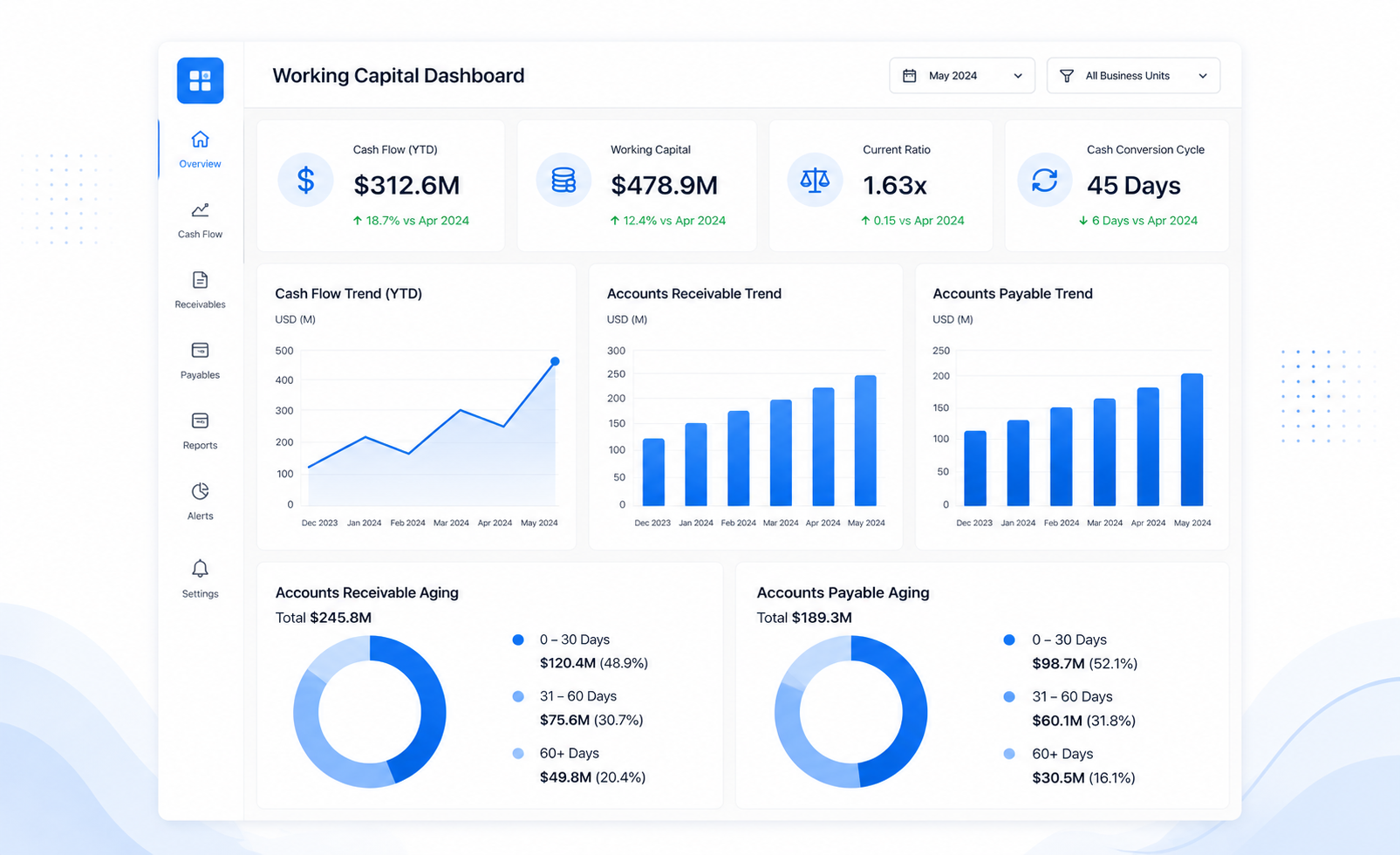
Following a large-scale merger, a global media organization faced increasing pressure to improve cash flow visibility and financial efficiency. While revenues remained stable, poor working capital management limited liquidity and reduced the organization’s ability to reinvest and respond to market dynamics.

The challenge was not growth; it was unlocking trapped cash within existing operations.

Customer

A multinational media enterprise undergoing post-merger integration, dealing with fragmented financial processes and inconsistent cash management practices across business units.

Business Objective

  • Improve cash conversion cycle and free cash flow visibility
  • Identify and unlock working capital trapped in operations
  • Standardize financial processes across merged entities
  • Strengthen control over receivables and payables

Scope of Services

Working Capital Diagnostic

Conducted a structured assessment of accounts receivable and payable processes, identifying inefficiencies across the cash cycle.

Process Deep-Dive (Order-to-Cash & Procure-to-Pay)

Analyzed end-to-end financial workflows to uncover delays in collections and inefficiencies in vendor payment structures.

Opportunity Identification & Prioritization

Identified multiple high-impact levers to improve liquidity, including customer payment delays and suboptimal vendor terms.

Financial Visibility Framework

Designed a centralized tracking and reporting mechanism to monitor working capital performance across business units.

Transformation Roadmap & Governance

Established a structured execution plan supported by a program management office (PMO) to drive adoption and ensure accountability.

Key Challenges Addressed

  • Lack of visibility into real-time cash flow performance
  • Delayed customer payments impacting liquidity
  • Vendor payment terms below industry benchmarks
  • Fragmented financial processes post-merger
  • Absence of standardized working capital governance

Benefits

Improved Cash Visibility

Enabled leadership to track free cash flow and working capital performance in real time

Optimized Financial Processes

Standardized receivables and payables management across business units

Stronger Vendor & Customer Management

Improved control over payment cycles and contractual terms

Structured Financial Governance

Introduced accountability through centralized monitoring and execution frameworks

Impact

  • Identified opportunities to unlock $800M+ in cash benefits within two months
  • Improved cash conversion cycle across business units
  • Reduced delays in receivables and optimized payables structure
  • Strengthened financial control in a post-merger environment

Introduction

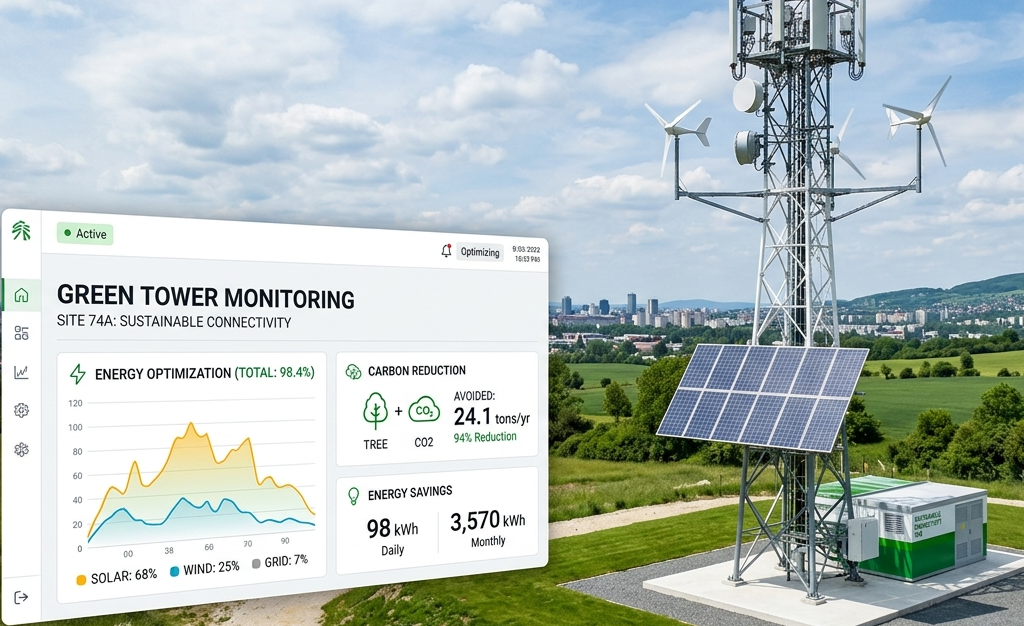
Telecom ESG transformation is becoming critical as operators face increasing pressure to reduce carbon emissions, optimize energy consumption, and align with sustainability regulations. A leading European telecom operator undertook a large-scale ESG transformation to build a future-ready, sustainable business model while maintaining operational efficiency.

Customer

A leading European telecom operator providing connectivity and digital services across global markets, managing large-scale network infrastructure with high energy consumption and strict regulatory requirements around sustainability.

Business Objective

  • Achieve net-zero emission targets
  • Reduce energy consumption across network infrastructure
  • Align operations with ESG regulations
  • Enable sustainable growth without impacting service quality

Scope of Services

  • ESG strategy design and roadmap development
  • Energy optimization across telecom infrastructure
  • Data-driven monitoring of emissions and energy usage
  • Integration of sustainability metrics into operations
  • Governance model for ESG tracking and reporting

Key Challenges Addressed

  • High energy consumption across telecom networks
  • Lack of real-time visibility into emissions
  • Regulatory pressure for sustainability compliance
  • Balancing cost optimization with ESG goals

Benefits

  • Improved energy efficiency across operations
  • Better visibility into sustainability metrics
  • Reduced environmental impact
  • Alignment with global ESG standards

Impact

  • 45% emission reduction target achieved
  • Strong progress toward net-zero goals
  • Improved operational efficiency alongside sustainability
  • Enhanced brand positioning as a sustainable telecom provider

Introduction

Telecom operations transformation is essential for operators dealing with rising costs, fragmented processes, and increasing customer expectations. A leading Asia-Pacific telecom operator transformed its operations to improve efficiency, reduce costs, and enable scalable service delivery.

Customer

A leading Asia-Pacific telecom operator offering mobile, broadband, and digital media services, operating across multiple markets with complex service delivery models and high operational costs.

Business Objective

  • Reduce operational costs
  • Improve workforce productivity
  • Standardize processes across operations
  • Enhance service delivery efficiency

Scope of Services

  • End-to-end operations assessment
  • Workforce and process optimization
  • Implementation of standardized operating model
  • Performance tracking and KPI alignment
  • Automation-led process improvements

Key Challenges Addressed

  • High operational costs
  • Inefficient workforce utilization
  • Fragmented processes across business units
  • Lack of standardized KPIs

Benefits of Telecom Operations Transformation

  • Streamlined operations across departments
  • Improved workforce efficiency
  • Better cost control and visibility
  • Enhanced service delivery performance

Impact

  • 70% productivity improvement
  • 15% cost reduction achieved
  • Faster decision-making and execution
  • Scalable operating model for growth

Introduction

A serverless data platform is critical for organizations handling massive and rapidly growing datasets. The UK’s telecommunications regulator faced increasing volumes of mobile and broadband data, making traditional infrastructure inefficient and difficult to scale. Limited flexibility and high operational overhead restricted timely analysis. By implementing a serverless data platform on Azure, the regulator enabled scalable data ingestion, reduced infrastructure complexity, and strengthened its ability to generate real-time regulatory and market intelligence insights.

Customer

The UK’s telecommunications regulator responsible for overseeing mobile and broadband markets and enabling data-driven decisions.

Business Objective

  • Handle rapidly growing telecom data volumes
  • Enable scalable ingestion of multi-terabyte datasets
  • Support regulatory and market intelligence analytics
  • Reduce infrastructure management overhead
  • Ensure reliability, scalability, and cost efficiency

Scope of Services 

  • Advisory to define serverless data architecture and strategy
  • Design and implementation of data lake on Microsoft Azure
  • Ingestion and processing of large-scale telecom datasets
  • Enablement of analytics access for regulatory teams
  • Ongoing platform support and operational maintenance

Benefits of Serverless Data Platform

  • Seamless ingestion and processing of massive datasets
  • Faster access to actionable market intelligence insights
  • Reduced operational overhead through serverless architecture
  • Scalable and cost-efficient data platform
  • Improved support for regulatory analytics and decision-making

Impact

  • Enhanced market intelligence capabilities
  • Improved regulatory oversight through data insights
  • Increased agility in responding to telecom market changes