Introduction
Healthcare Data Warehouse Modernization to AWS enables healthcare providers to move beyond legacy data infrastructure and unlock scalable analytics capabilities. Many healthcare organizations rely on on-premise data warehouses that limit flexibility, increase operational costs, and slow down analytics initiatives. As healthcare systems generate increasing volumes of operational and clinical data, modern data platforms become essential for enabling faster insights and supporting data-driven decision-making.
This case study highlights how an Australian low-cost healthcare provider modernized its data warehouse environment by migrating to a scalable cloud platform on AWS. By transforming its legacy data infrastructure into a modern cloud-based analytics platform, the organization improved accessibility to enterprise data, accelerated analytics adoption, and strengthened its readiness for advanced analytics and AI initiatives.
Customer
The customer is an Australian healthcare provider focused on delivering cost-effective healthcare services while maintaining operational efficiency across its organization.
As the healthcare group expanded its services and operations, its legacy on-premise data warehouse environment began limiting scalability and analytics capabilities. Fragmented systems and infrastructure complexity slowed reporting and reduced visibility into operational performance. Therefore, the organization required a modern data platform capable of supporting analytics growth and future innovation.
Business Objective
The primary objective was to evaluate and implement a cloud-based modernization strategy for the organization’s existing data warehouse.
The healthcare provider aimed to migrate its legacy on-premise data warehouse to a scalable cloud platform that could support growing data volumes and advanced analytics initiatives. In addition, leadership wanted to improve operational insights and enable faster data-driven decision-making across the organization.
Another key goal was to establish a stable, secure data platform that could support long-term analytics needs while ensuring ongoing operational reliability.
Scope of Services
The engagement focused on end-to-end data warehouse and analytics transformation, including:
-
Feasibility analysis for cloud-based data warehouse modernization
-
Migration and modernization of the legacy DWH to AWS
-
Design and development of analytics capabilities on the cloud platform
-
Establishment of scalable and secure cloud data architecture
-
Ongoing platform support and operational maintenance
Benefits
-
Scalable and cost-efficient cloud data warehouse platform
-
Improved accessibility to enterprise data across the organization
-
Faster generation of insights for operational and clinical decisions
-
Reduced complexity associated with legacy data systems
-
Reliable platform operations supported by continuous maintenance
Impact
-
Accelerated adoption of analytics capabilities
-
Improved data-driven decision-making across the organization
-
Enhanced operational efficiency
-
Greater readiness for AI and advanced analytics initiatives

Introduction
Cloud Data Platform Modernization enables healthcare organizations to unlock the full value of enterprise data by replacing fragmented legacy systems with scalable and unified platforms. Many healthcare groups operate multiple operating companies (OpCos), each maintaining separate data repositories. As a result, data becomes siloed, analytics initiatives slow down, and enterprise-wide insights become difficult to generate.
This case study highlights how an APAC-based healthcare group modernized its data landscape through Cloud Data Platform Modernization. By migrating legacy on-premise platforms to the cloud and consolidating fragmented OpCo-level repositories, the organization established a scalable data foundation. Consequently, the healthcare group improved operational efficiency, enabled advanced analytics, and strengthened its readiness for future AI-driven innovation.
Customer
The customer is an APAC-based healthcare group operating multiple operating companies (OpCos) across the region. Each OpCo maintained independent data repositories and infrastructure, which created fragmentation across the enterprise data environment.
As the organization expanded, these siloed systems limited analytics capabilities and slowed down enterprise data initiatives. Therefore, the healthcare group required a modern cloud-based platform capable of supporting unified analytics and scalable data operations.
Business Objective
The organization aimed to modernize legacy on-premise data platforms while consolidating fragmented OpCo-level repositories into a unified environment. In addition, leadership sought to enable cloud scalability and improve operational efficiency across the enterprise.
Another key objective was to support data monetization and advanced analytics use cases while securely integrating third-party data sources. At the same time, the platform needed to maintain 24×7 operational reliability and support business-critical healthcare operations.
Scope of Services
The engagement focused on end-to-end data platform transformation, including:
-
Migration of on-premise data platforms to the cloud
-
Consolidation of multiple OpCo data repositories into a unified platform
-
Design and implementation of scalable cloud-based data architecture
-
Development of data monetization and analytics use cases
-
Integration of third-party data sources
-
Ongoing 24×7 platform support and maintenance
Benefits
-
Unified and scalable data platform across operating companies
-
Improved data accessibility and analytics capabilities
-
Faster development of data monetization use cases
-
Reduced complexity caused by fragmented data repositories
-
Reliable round-the-clock platform operations
-
Strong foundation for advanced analytics and future AI initiatives
Impact
-
Accelerated data-driven decision-making across operating companies
-
Improved operational efficiency across the healthcare group
-
Increased value realization from enterprise data assets
-
Enhanced readiness for advanced analytics and AI adoption

Introduction
Preventive healthcare and wellness organizations operate under intense regulatory scrutiny while facing pressure to innovate faster and deliver measurable outcomes. This case study highlights how AI-Driven Intelligence for Preventive Healthcare enabled a regulated healthcare and wellness enterprise to accelerate formulation and trial planning, reduce quality incidents, and improve long-term ROI—without compromising compliance, trust, or ESG commitments.
Customer Overview
A healthcare and wellness enterprise focused on preventive care, operating in a highly regulated environment. The organization sought to responsibly embed AI across formulation, trials, quality, and compliance functions to improve efficiency, outcomes, and brand credibility while maintaining regulatory trust.
Business Objectives
The customer launched an AI-Driven Intelligence for Preventive Healthcare initiative with the following goals:
-
Embed AI-driven intelligence into preventive care and wellness operations
-
Reduce formulation and product development cycle times
-
Accelerate clinical and trial planning decisions
-
Minimize quality incidents through proactive exception handling
-
Ensure regulatory compliance, data trust, and ESG alignment
-
Improve ROI and brand credibility through predictive, data-driven outcomes
Scope of Services
BXITech delivered a tailored AI-driven intelligence and exception handling solution designed specifically for regulated healthcare and wellness environments.
Unified Healthcare Data Foundation
-
Integrated data across formulation, trials, quality, and compliance systems
-
Eliminated silos while maintaining data governance and traceability
AI-Driven Exception Detection
-
Implemented AI models to proactively detect risks, deviations, and inefficiencies
-
Enabled early intervention before issues escalated into quality or compliance incidents
Predictive Analytics for Formulation & Trials
Quality Intelligence
-
Enabled continuous quality monitoring and adherence to defined processes
-
Reduced quality incidents through proactive, insight-driven actions
Governance, Compliance & Responsible AI
-
Established AI governance and compliance frameworks
-
Ensured regulatory alignment, data trust, and ESG accountability across AI models
Leadership Insight Enablement
-
Enabled leadership with real-time visibility into outcomes, risks, and strategic expectations
-
Supported confident, compliant, and forward-looking decision-making
Benefits
-
Faster formulation cycles through AI-driven insights and exception management
-
Improved speed and accuracy in trial planning and execution
-
Reduced quality risks by identifying issues before escalation
-
Higher ROI through predictive success and optimized resource utilization
-
Increased trust in data, compliance, and ESG outcomes
-
Stronger brand engagement driven by reliable preventive-care innovation
Impact
-
30% reduction in formulation cycle time
-
20% faster trial planning decisions
-
15% fewer quality incidents
-
Improved ROI, predictive success, and ESG-aligned trust metrics

Introduction
Centralized Collaboration Platform for Healthcare Networks has become essential as healthcare providers expand across regions and facilities. When teams operate on disconnected systems, collaboration slows, data becomes fragmented, and decision-making suffers. These challenges directly affect productivity and the consistency of patient care.
This case study highlights how a Centralized Collaboration Platform for Healthcare Networks enabled a healthcare provider managing multiple facilities to connect teams, unify data, and improve operational and clinical decision-making. By modernizing collaboration and data-sharing capabilities, the organization reduced silos, increased productivity, and established a scalable foundation to support growth across its healthcare network.
Customer
The customer is a healthcare provider managing 20 facilities across multiple regions. The organization supports both clinical and administrative teams that rely on timely access to shared data to deliver effective patient care.
As the healthcare network expanded, fragmented systems and inconsistent data access created barriers to collaboration. These limitations affected operational efficiency, slowed decision-making, and made it difficult to scale new facilities quickly.
Business Objective
The primary objective was to establish a centralized platform that could connect teams across facilities and improve collaboration.
The organization aimed to eliminate data silos that were impacting both administrative workflows and patient care processes. In addition, leadership wanted to improve the speed and quality of clinical and operational decision-making by enabling shared access to reliable data.
Other goals included increasing productivity across healthcare teams and enabling faster onboarding and scaling of new facilities without extensive manual configuration. A Centralized Collaboration Platform for Healthcare Networks was identified as the foundation to support these objectives.
Scope of Services
The engagement focused on modernizing collaboration and data-sharing capabilities across the healthcare network.
First, fragmented systems across facilities were assessed to identify sources of data silos and operational friction.
Next, a centralized, AI-driven collaboration and data platform was implemented to unify communication and information access across teams.
Clinical and administrative data sources were securely integrated to enable consistent and reliable data sharing.
Real-time data access was enabled to support care coordination and operational alignment across facilities.
Finally, a scalable architecture was established to reduce manual configuration effort when onboarding new facilities, enabling faster and more efficient expansion.
Benefits
-
Improved productivity across clinical and administrative teams through unified collaboration
-
Faster and more informed decision-making supported by shared and accessible data
-
Reduced operational friction caused by disconnected systems
-
Accelerated scaling of healthcare operations without prolonged manual setup
-
Enhanced ability to deliver consistent and efficient patient care across facilities
Impact
-
35% increase in productivity across healthcare teams
-
10 facilities onboarded onto the centralized platform
-
Measurable transformation in healthcare delivery enabled by AI-driven collaboration

Customer
As part of a GPT-4 to LLaMA2 migration, Neo Analyst—an Antler-backed enterprise SaaS analytics startup, set out to modernize its AI architecture for large-scale enterprise adoption. The platform delivered NLP-driven analytics and recommendations but faced growing resistance from enterprise customers due to reliance on proprietary LLMs, high inference costs, and strict compliance requirements. To unlock enterprise growth, Neo Analyst needed an open, compliant, and scalable AI foundation without compromising performance.
Business Objective
Neo Analyst aimed to:
-
Replace GPT-4 with an enterprise-compliant open LLM (LLaMA2)
-
Maintain or exceed GPT-4-level accuracy and reasoning quality
-
Meet strict GDPR and SOC2 compliance requirements
-
Reduce AI inference and infrastructure costs at scale
-
Enable multi-agent orchestration for advanced analytics workflows
-
Build a serverless, scalable AWS-native architecture
-
Accelerate AI adoption across enterprise customer workflows
Together, these goals defined the roadmap for a GPT-4 to LLaMA2 migration aligned with enterprise readiness.
Scope of Services
BXI Technologies partnered with Neo Analyst to execute an end-to-end AI platform transformation.
Enterprise Compliance Readiness
-
Implemented GDPR-aligned data governance and privacy controls
-
Established SOC2 alignment across security, availability, and confidentiality
-
Secured AI workflows and agent communication channels
GPT-4 to LLaMA2 Migration
-
Replaced all GPT-4 modules with hosted LLaMA2 7B models
-
Performed instruct-tuning and fine-tuning to replicate GPT-style reasoning
-
Benchmarked accuracy and output quality to meet or exceed GPT-4 performance
Multi-Agent AI Architecture
AWS-Native, Serverless Architecture
-
Rebuilt the platform using AWS Lambda-based microservices
-
Enabled auto-scaling, fault tolerance, and high availability
-
Applied native AWS IAM, encryption, and security policies
This GPT-4 to LLaMA2 migration delivered a cost-efficient, enterprise-ready AI platform.
Benefits
-
Open-source AI architecture aligned with enterprise expectations
-
Strong compliance posture supporting regulated customers
-
Reduced AI inference and infrastructure costs
-
Improved platform reliability and scalability
-
Advanced analytics powered by coordinated AI agents
-
Faster onboarding of enterprise customers
Impact
-
Full migration and AWS hosting completed in 8 weeks
-
System uptime increased from 80% to 99%
-
30% reduction in AI inference and cloud costs
-
SOC2 and GDPR compliance achieved for enterprise deployment
-
Performance matched or exceeded GPT-4 for analytics use cases
-
Enabled enterprise deals previously blocked by GPT-based architecture

Customer
Healthcare process automation was critical for this leading U.S. healthcare services provider specializing in network-enabled care delivery and point-of-care mobile applications. The organization employs 6,000+ people and supports a nationwide network of 160,000+ providers serving 100M+ patients.
Business Objective
The customer needed to:
-
Reduce turnaround time (TAT) for client-facing healthcare processes
-
Improve work quality and minimize manual error rates
-
Automate high-volume, repetitive transactions
-
Scale operations efficiently across a large provider network
-
Reduce operational cost dependency on manual work
-
Integrate multiple systems to ensure seamless data and workflow continuity
The goal was to build a scalable, AI-driven automation layer supporting large-scale clinical and administrative operations.
Scope of Services
BXI Technologies partnered with the customer to:
-
Deploy AI agentic agents to automate repetitive healthcare tasks
-
Integrate workflows across six core enterprise systems
-
Build and deploy automation across 16 end-to-end processes
-
Implement 49 production bots to minimize manual intervention
-
Standardize and streamline client-facing workflows
-
Deliver a scalable automation framework supporting 1.32M+ annual transactions
This created a centralized digital operations model that reduced process cycle time and improved SLA performance.
Benefits
The transformation delivered:
-
Significant reduction in turnaround time (TAT)
-
Improved accuracy and consistency across healthcare workflows
-
Enhanced operational efficiency with AI-driven agents
-
Better utilization of workforce through FTE savings
-
Streamlined workflows across six integrated systems
-
Improved SLA adherence for client operations
-
Automation at scale for multiple high-volume processes
Impact
- 1,320,000+ automated transactions annually
- 97,000+ FTE hours saved each year
- 6 systems integrated
- 49 production bots deployed
- 16 processes automated end-to-end
This resulted in faster client delivery, reduced operational cost, and improved healthcare process automation at scale.

Customer
An independent U.S. healthcare services provider specializing in long-term medical plan management. The organization supports the full patient journey across multiple health stages and is led operationally by a Chief Medical Officer (CMO). Their strategic goal is to modernize care coordination and clinical decision-making through GenAI-powered multi-agent automation.
Business Objective
The client aimed to:
-
Improve efficiency across the full patient healthcare lifecycle
-
Reduce manual work during onboarding, plan creation, and plan management
-
Build a CMO Co-Pilot to support clinical decision-making
-
Enable GenAI-driven workflows for scheduling, communication, and notes
-
Enhance patient experience in long-term care environments
-
Create a scalable multi-agent framework that could evolve into a full clinical co-pilot
The goal was to establish a GenAI foundation for operational and strategic medical support.
Scope of Services
BXI Technologies partnered with the client to:
-
Design and implement a multi-agent GenAI framework
-
Create domain-specialized agents, trained using RAG on EHR and patient history data
-
Automate end-to-end workflows across:
-
Integrate GenAI agents with existing healthcare systems
-
Build a scalable architecture to support the future CMO Co-Pilot vision
The result is a working GenAI automation layer that streamlines patient operations and supports clinical decision cycles.
Benefits
-
Significantly faster patient onboarding and process turnaround
-
Higher accuracy in patient plan creation and management
-
More efficient appointment scheduling and operational coordination
-
Improved productivity and support for the CMO through GenAI co-pilot functions
-
Better utilization of clinical experts across the patient lifecycle
-
A strong foundation to scale into a full CMO decision-support platform
Impact
-
99% faster patient onboarding
-
30% more efficient appointment scheduling and plan management
-
Significant improvement in overall system efficiency and CMO utilization

Customer
Patient data summarization is critical for a healthcare organization responsible for managing large volumes of patient information, including transcriptions, diagnosis reports, and care workflows. Clinical teams rely on timely, accurate insights for decision-making while maintaining compliance with healthcare regulatory standards.
Business Objective
The customer aimed to:
-
Summarize large, fragmented patient datasets efficiently
-
Reduce manual effort spent analyzing transcriptions and medical reports
-
Improve speed and accuracy of clinical decision-making
-
Extract meaningful insights and recommendations from unstructured data
-
Enhance patient outcomes through more informed, faster decisions
-
Implement an AI-driven framework that supports clinical teams while maintaining compliance
Scope of Services
BXI Technologies partnered with the client to:
-
Implement intelligent patient data summarization using advanced LLMs
-
Automate extraction of key medical insights from transcriptions and diagnosis reports
-
Build an AI-driven recommendation engine suggesting next steps in the care journey
-
Ensure outputs maintain clinical relevance and meet regulatory accuracy standards
-
Deliver structured, ready-to-use insights to physicians and care coordinators
Benefits
-
Faster and more accurate interpretation of patient data
-
Reduced manual review effort for clinicians
-
Improved decision-making with AI-driven recommendations
-
Clearer, summarized insights for stronger care coordination
-
Better alignment to regulatory standards through structured outputs
-
Higher-quality clinical outcomes with data-driven assistance
Impact
-
75% improvement in patient data insight quality
-
65% faster clinical decision-making
-
55% better clinical outcomes
Customer
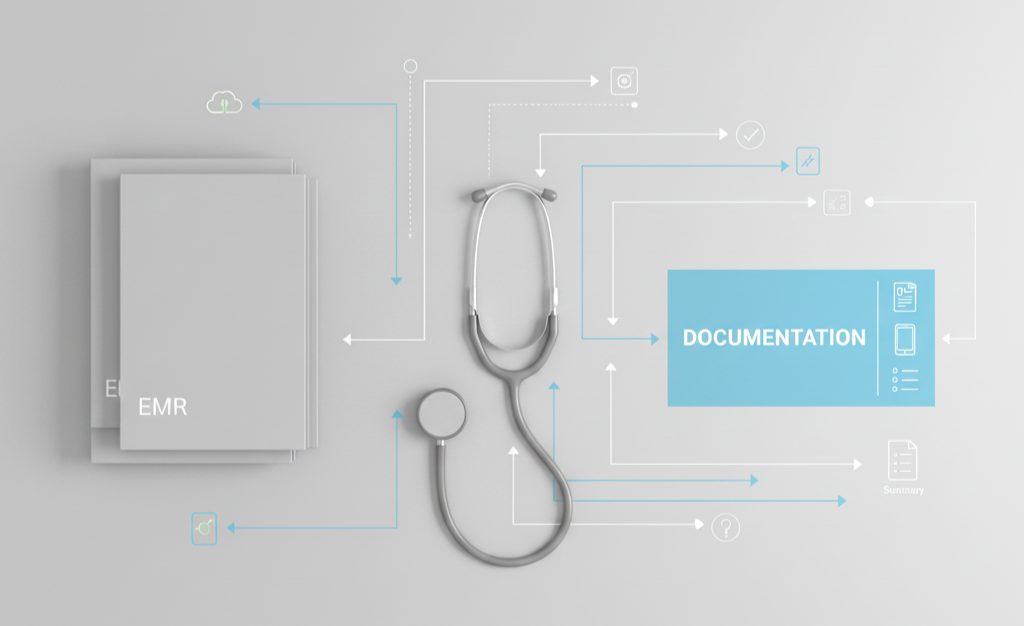
Intelligent clinical documentation enabled the transformation of clinical productivity for an Indian healthcare provider managing high documentation workloads.
Business Objective
Reduce Documentation Burden:
Lower clinician documentation time per patient encounter to improve overall clinical productivity.
Enhance Provider Well-Being & Reduce Burnout:
Address high burnout levels (75%) by introducing AI-enabled tools that streamline administrative tasks.
Improve Quality of Care & Patient Experience:
Free up clinician time for patient interaction, improving satisfaction scores and clinical outcomes.
Scale Operational Efficiency Across Global Operations:
Deploy digital productivity solutions that reduce operational waste, enhance throughput, and scale across regions.
Enable Sustainable Growth:
Use productivity gains to support higher patient volumes, increase revenue per clinician, and expand value-added services.
Scope of Services
BXI Technologies partnered with the healthcare provider to implement an intelligent clinical documentation solution powered by advanced AI and workflow automation. The engagement focused on:
-
Automating clinical note creation and documentation tasks
-
Integrating AI-driven summarization into existing EMR workflows
-
Supporting clinicians across 16 specialties
-
Measuring impact on productivity, experience, and patient satisfaction
-
Enabling scalable deployment and operational readiness across global locations
Benefits
-
Productivity Gains: Reduced clinician documentation time and improved workflow efficiency.
-
Enhanced Provider Experience: Significant reduction in burnout and administrative load.
-
Financial Optimization: Increased capacity, improved provider throughput, and measurable cost savings.
-
Higher Patient Satisfaction: More clinician–patient interaction time and improved experience metrics.
-
Scalability & Future-Readiness: Foundation set for multi-specialty, multi-region expansion.
Impact
-
50% of employed clinicians across 16 specialties are now using the solution.
-
The organization achieved the 50th percentile for documentation burden, reducing documentation time by 34 minutes per provider per day.
-
72% of clinicians reported increased enjoyment of practice.
-
79% reported improved documentation efficiency.
-
85% expressed a preference to continue using the intelligent documentation solution.
-
Higher patient satisfaction observed among clinicians with ≥60% utilization.
-
Estimated annual cost savings of $3 million driven by productivity improvements.

Customer
Healthcare Digital Transformation for IT Efficiency became a priority for a leading US health provider after a major merger expanded its operations and increased demand on IT services. The health system needed a digital model aligned with care outcomes, not technology-first decisions.
Business Objective
The customer wanted to:
-
Improve IT efficiency across a large, multi-entity health system
-
Strengthen digital experience for clinicians and care providers
-
Align technology investments to business goals and the care roadmap
-
Support growth following a major merger and market expansion
-
Modernize IT operations without disrupting active clinical workflows
-
Enhance digital enablement for nurses and frontline care teams
-
Build a foundation for scalable data, trust, governance, and security
Scope of Services
BXI partnered with the health system to:
Strategic IT Alignment
-
Worked directly with business leaders to understand care roadmaps and goals
-
Mapped technology investments to clinical and operational needs
-
Shifted the model from “technology first” to “outcome and use-case first”
Digital Enablement for Clinical Staff
-
Prioritized high-impact use cases in nursing workflows
-
Implemented solutions to reduce friction in daily tasks
-
Used third-party implementation vendor to measure caregiver experience and feedback
-
Improved frontline digital tools to reduce effort and improve productivity
Efficiency and Governance Improvements
-
Focus on data management, trust, and governance
-
Built the foundations for digital scaling across the merged organization
-
Established processes to support a larger portfolio of services
Benefits
-
Better alignment between business goals and IT execution
-
Digital solutions prioritized based on care impact, not technology trends
-
Reduced friction in clinical workflows and nursing tasks
-
Strong foundation for scaling digital services across merged entities
-
Built reliable governance for data management and trust
-
Improved caregiver experience measured through direct feedback
Impact
-
45 percent cost efficiency gained through improved data management, trust and governance
-
30 percent productivity gain through enhanced digital engagement for clinicians
-
Improved digital experience for care teams using targeted implementation and feedback loops