Customer
Intelligent Sourcing & Risk Hedging for a Leading Power & Industrial Equipment Producer
A global leader in transformers, heavy electrical systems, and industrial power equipment, heavily dependent on CRGO steel and other volatile raw materials. With market fluctuations accelerating and competitors adopting advanced forecasting, the customer needed a smarter, data-driven procurement approach. The goal was to build sourcing intelligence that could stabilize planning, reduce volatility exposure, and strengthen resilience across the production lifecycle.
Business Objective
The customer sought to:
-
Stabilize procurement planning despite extreme CRGO and raw-material volatility
-
Improve forecast accuracy for critical materials essential to production continuity
-
Strengthen sourcing decisions with deeper, data-backed insights
-
Reduce exposure to high-risk or unreliable suppliers
-
Improve negotiation leverage during volatile market cycles
-
Build proactive early-warning capabilities for shortages, spikes, and disruptions
Scope of Services
BXI Technologies addressed major procurement challenges, including:
-
Extreme price fluctuations in CRGO and other metals
-
Competitors adopting AI-driven forecasting, increasing market pressure
-
Manual procurement planning leading to delays, errors, and reactive decision-making
-
Limited supplier visibility and high-risk exposure
-
Lack of consolidated insight into market trends, risks, and alternatives
Our work included:
-
Implementing advanced forecasting models for raw-material trends
-
Integrating real-time market intelligence and volatility indicators
-
Building supplier risk scoring and sourcing alternatives
-
Automating alerts for price spikes, shortages, and disruption signals
-
Creating a unified procurement intelligence dashboard
Benefits
The customer achieved:
-
Faster procurement decisions backed by reliable data
-
Clear visibility into raw-material behaviors and market patterns
-
Improved negotiation leverage through stable forecasts
-
More predictable and stable production planning
Impact
-
20–30% better forecast accuracy
-
15–25% procurement cost savings
-
30–40% fewer firefighting events (shortages/spikes)
-
Up to 20% reduced reliance on high-risk suppliers

Customer
Digital Twin–Enabled Scale-Up Acceleration for a Global Industrial Manufacturer
A multinational industrial manufacturing company operating complex production lines across multiple regions. The organization faced recurring delays, late-phase quality failures, and unpredictable performance during scale-up of new or modified production lines. To avoid costly capex overruns and ensure smoother commissioning, the company needed a digital-twin-driven approach that could validate behavior, simulate risks, and align engineering and operations before physical deployment.
Business Objective
The customer aimed to:
-
Minimize execution and quality risks during production scale-up
-
Validate production behavior virtually before real-world deployment
-
Avoid costly capital expenditure overruns caused by late-stage failures
-
Improve predictability of throughput, load, and quality metrics
-
Strengthen collaboration between engineering, operations, and process teams
-
Accelerate production readiness with higher confidence
Scope of Services
BXI Technologies delivered an end-to-end digital-twin modernization program, which included:
-
Production line scale-up planning and quality-risk assessment
-
Integration of a full digital twin environment mirroring physical production systems
-
Operational risk modeling and scenario simulation for “what-if” analysis
-
Validation of throughput, load, and equipment behavior prior to deployment
-
Cross-functional alignment between engineering and operations to ensure shared visibility and decision-making
Benefits
-
Early detection of quality risks before physical trials
-
Stronger collaboration between engineering and operations teams
-
Reduction in rework cycles and scale-up delays
-
Higher confidence in capex decisions backed by virtual validation
-
Improved readiness of production teams prior to real-world execution
Impact
-
35–45% reduction in scale-up execution risk
-
30–40% fewer quality defects during initial production runs
-
25–35% faster production ramp-up time

Customer
Tier 2–4 Market Expansion for a National Retail Brand
For a large national retail brand, Tier 2–4 market expansion became a key growth priority. While the brand had built a strong presence in Tier 1 cities, scaling into emerging markets introduced new complexity. Customer preferences varied widely by region, language played a critical role in engagement, and store performance was inconsistent across locations.
Limited real-time visibility made it difficult for regional teams to spot issues early or guide store managers effectively. To scale with confidence, the retailer needed an AI-led, localized approach that could drive growth while bringing consistency, control, and transparency across its expanding store network.
Business Objective
The retailer set out to:
-
Expand customer penetration and improve conversions in Tier 2–4 cities
-
Deliver localized engagement using regional insights and language-first experiences
-
Improve store-level performance and reduce operational variance
-
Gain real-time visibility into store KPIs
-
Enable store managers with timely, data-backed corrective actions
Together, these objectives created a strong foundation for Tier 2–4 market expansion powered by localized intelligence and scalable retail operations.
Scope of Services
BXI Technologies partnered with the retailer to design and execute a scalable, AI-driven expansion program:
-
Analyzed Tier 2–4 markets and built demand models to identify growth opportunities
-
Deployed vernacular AI assistants across stores to support localized customer interactions
-
Integrated POS, CRM, loyalty, and store operations systems into a unified data layer
-
Rolled out a performance cockpit for regional and store managers to track KPIs
-
Enabled near real-time monitoring of store performance and anomaly detection
This shift moved the organization away from reactive store management toward proactive, insight-led operations. Regional leaders gained a consolidated view of performance, while store managers received actionable guidance tailored to local conditions.
Benefits
As a result, the retailer achieved:
-
Stronger engagement in regional markets through vernacular-first interactions
-
Improved store visibility with real-time KPI tracking
-
Faster identification of performance gaps and store-level issues
-
More consistent, data-backed decision-making by store managers
-
Reduced operational inconsistencies across Tier 2–4 locations
Impact
- 20–30% increase in Tier 2–4 customer engagement driven by vernacular AI
- 12–18% higher conversion rates compared to non-localized campaigns
- 30–40% reduction in store-level performance variance
- 25–35% faster detection of operational anomalies

Customer
A leading global retailer operating across more than 20 countries undertook a retail cloud infrastructure modernization initiative to support its rapidly growing digital commerce business. As online demand increased across regions, the retailer’s legacy IT infrastructure began to limit performance, scalability, and reliability, especially during peak shopping periods. To sustain global growth and deliver consistent customer experiences, the organization needed a modern, cloud-first foundation that could scale quickly and operate reliably across markets.
Benefits
The retailer set out to:
-
Scale digital and e-commerce operations across 20+ countries
-
Improve platform performance and response times
-
Eliminate bottlenecks caused by aging IT infrastructure
-
Reduce operational costs through infrastructure modernization
-
Enable faster expansion into new geographic markets
-
Ensure high reliability and uptime during peak demand periods
Scope of Services
BXI Technologies partnered with the retailer to modernize its digital infrastructure and improve operational agility. The engagement focused on transforming the core technology foundation to support global scale and growth.
Key areas included:
-
Modernization of existing infrastructure to a cloud-native architecture
-
Migration of critical workloads from legacy systems to the cloud
-
Performance optimization to address latency and response-time issues
-
Implementation of AI-powered optimization tools to improve efficiency
-
Designing a scalable, resilient platform to support global e-commerce traffic
This retail cloud infrastructure modernization program established a resilient digital backbone that could support continuous growth, seasonal demand spikes, and rapid geographic expansion.
Benefits
As a result of the transformation, the retailer achieved:
-
A modern, cloud-ready infrastructure built for scale
-
Improved agility across global e-commerce operations
-
Enhanced platform reliability during high-traffic events
-
Faster market entry enabled by a flexible technology foundation
-
Reduced reliance on legacy systems through AI-driven optimization
Impact
-
70% of workloads migrated to a cloud-native environment
-
50% improvement in platform response times
-
99.99% application uptime achieved
-
40% reduction in operational costs
-
Expansion into 3 new markets within 12 months
Beyond immediate performance and cost improvements, the modernization effort positioned the retailer for long-term digital scalability. With a cloud-native foundation in place, the organization can continuously optimize operations, launch new services faster, and respond more effectively to changing customer expectations across markets.
Customer
A clothing division needed to work with channel partners to grow digital commerce revenue.
Business Objective
-
Overcoming E-Commerce Integration Challenges
-
Transforming Multichannel Distribution for Unified Commerce Success.
-
A sought to improve its channel partners’ digital commerce capabilities. but was unsure which investments would result in maximum revenue growth.
Scope of Services
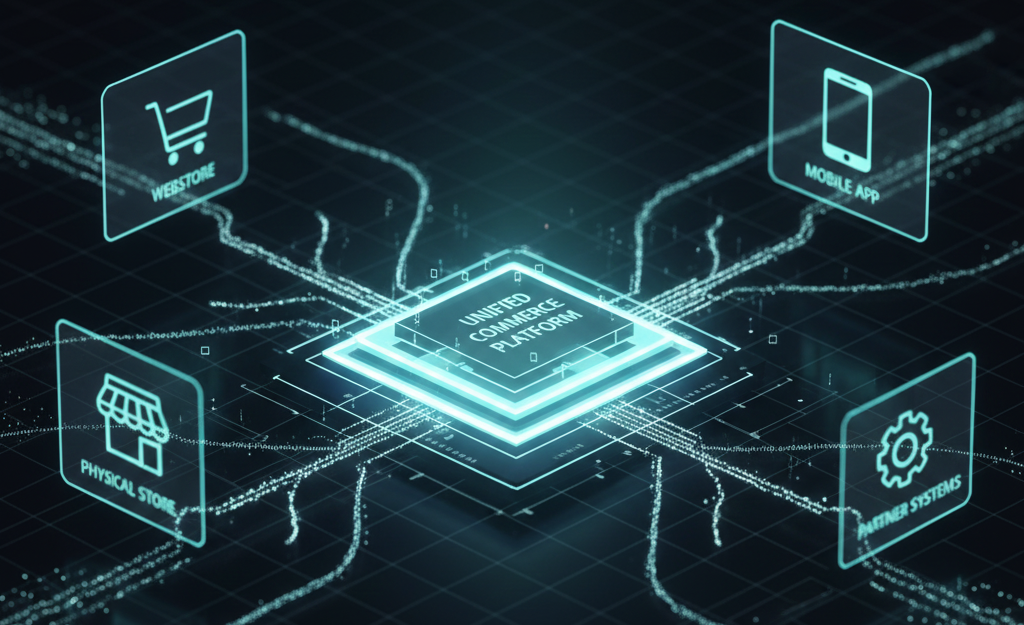
E-commerce businesses and retailers expanding their multichannel distribution capabilities will need to integrate multiple applications and systems both within and outside the company to strive toward unified commerce capabilities.
In their efforts to build an integrated e-commerce ecosystem often face multiple challenges such as:
-
Lack of end-to-end process visibility and orchestration
-
Inefficient integration capabilities to meet the business needs
-
Constrained ability to make effective decisions due to siloed data
-
Lack of overarching governance and integrations control due to the consumerization of e-commerce applications
Due to the variety of applications needed to serve the needs of high-volume, high-velocity and high-variability e-commerce activities, many organizations struggle to effectively integrate their business processes.
Benefits
-
We could assess the need to invest in an integration platform by evaluating the impact critical challenges hampering e-commerce growth they have on the business.
-
Help them select the right-fit integration platform provider by assessing vendor capabilities across three dimensions: business, technology and ecosystem support.
-
Accomplished e-commerce performance objectives by creating a robust integration plan with the platform provider.
Impact
-
Roughly has seen a 30% growth in the share of total sales through digital commerce from 2019 to 2021.
-
Most channel partners that we have strategically partnered with on digital commerce efforts are now growing faster and becoming more profitable for us, so our growing digital commerce business serves as a proxy for sustainable, profitable growth.

Customer
A leading e-commerce giant in the European market, operating 20+ consumer brands across six regions and over 150 countries. The business manages a large global portfolio and must coordinate marketing execution across markets with varying maturity, channels, and customer expectations. Their scale demands highly agile marketing operations, centralized intelligence, and personalization at speed.
Business Objective
The customer wanted to:
-
Transform global marketing operations into an agile, scalable operating model
-
Enable personalized, consumer-centric marketing at global scale
-
Increase customer penetration across multiple brands and regions
-
Replace decentralized, manual processes with unified systems and coordinated execution
-
Improve visibility and decision-making across regions and business units
-
Identify and size value opportunities to build adoption and leadership alignment
-
Establish a multi-year digital and MarTech transformation roadmap
Scope of Services
BXI partnered with the customer to execute a global marketing transformation program, including:
Strategic Marketing Transformation
-
Defined the vision & personalization ambition across 20+ brands
-
Created top-down opportunity sizing to secure leadership commitment
-
Established a multi-year value capture plan, linked to sprint-level execution
Operating Model Redesign
Data & Measurement Enablement
-
Built a customer marketing data testing environment
-
Enabled pod teams to generate insights on-demand
-
Implemented measurement framework to track impact of use cases
Transformation Roadmap
-
Defined a 2.5-year MarTech transformation roadmap with 80+ initiatives
-
Prioritized platform development, data integration, and marketing process scale-out
Benefits
-
A unified vision for personalized customer marketing at enterprise scale
-
Clear opportunity sizing to align leadership and accelerate adoption
-
Agile pods established to test and scale personalization in real markets
-
Multi-year value capture plan aligned to sprint execution
-
On-demand customer data and insights enabling rapid experimentation
-
A structured testing environment to measure impact of use cases
-
Strong cross-functional alignment across brands, regions, and leadership
Impact
-
~$250 million projected cost savings from process and platform efficiencies
-
~15% projected revenue growth via consumer-centric marketing approach
-
80+ initiatives included in a 2.5-year MarTech roadmap
-
100% leadership buy-in for a unified digital transformation vision

Customer
An India headquartered multinational steel manufacturing giant and has operations in 26 countries and have a commercial presence in over 50 countries with employees across five continents. It is Europe’s 2nd largest steel producer.
Business Objective
- Provide a scalable skilled resource pool
- Innovation delivery model taking advantage of Automation, Self-Healing, and Auto healing.
- Support Data & Analytics
- Tool Rationalization
- Infrastructure Modernization
Scope of Services
- Multilingual Technology WPS
- Application Service Desk – 24×7 Service desk support for 300+ applications delivered from 4 client locations in India.
- On Premise Support in 3 client manufacturing locations across India
- Dedicated Operations Management Centre at Mumbai office
- Delivery Locations: 4
- Volumetric Data: 29,000 tickets/ monthly; 40,000+ Users; 4 Contact mediums
- English + Indian Languages support
Benefits
- Dedicated Regional Service Delivery Model
- Business aligned Smart Ops to focus on Self Service, Self-healing, and auto healing
- Unified Operation Centre that Service Desk L1 & L1.5 and Tool Consolidation
- SmartOps rollout for Monitor, Detect, and Resolve proactive events across tracks,
- Digital Services Hub – Single Point of Accountability
- Process Efficiency – through SOPs and improved FCR
Impact
- 95% Reduction in time for gate pass
- 20% Increase in First Call Resolution
- Consolidation of two different Service Desks resulting in a Centralized service desk – giving the client a single source of accountability

Customer
A Fortune 500 enterprise and the world’s largest producer of potash and phosphate fertilizer.
Business Objective
- Provide a scalable skilled resource pool.
- Establish an innovation delivery model leveraging DevOps, automated testing, and continuous improvement.
- Leverage evolving technologies including RPA, AI, IoT.
- Strengthen Data & Analytics capabilities.
- Drive Tool Rationalization across the IT landscape.
- Enable Application and Infrastructure Modernization to support future-ready operations.
Scope of Services
The services were delivered across both applications and core IT infrastructure.
Application Services
- Managing 169 applications (Key Apps: SAP, Salesforce, Power BI, Maximo, Azure).
- Application support, maintenance, and minor changes.
- Quality Assurance for major development and project requirements.
Infrastructure Services
- 24/7 Service Desk for L1 & L1.5 support in four languages: English, Brazilian, Portuguese, and Spanish.
- Server and storage support, data center management, cloud operations administration (IaaS), VDI, middleware, database administration, EUC/workplace services.
- Managed network services, service desk services and user administration, disaster recovery, and cybersecurity operations.
Benefits
- Integrated operational model delivering agility, productivity, and scalability.
- Business-aligned SmartOps enabling self-service, self-healing, and auto-healing.
- Unified Operations Centre consolidating Service Desk L1/L1.5 and tools.
- Enterprise-wide DevOps rollout supported by standardized tools, frameworks, and accelerators.
- SEED team driving comprehensive digital transformation including blockchain, supply chain optimization, scaling AIoT, and customer experience enhancements.
- Technology-led Industry 4.0 transformation for business processes.
- Legacy-to-Cloud migration, SAP S/4HANA, and SAP mobility for mining workers.
- Application modernization using Low-Code/No-Code tech stack.
- Data analytics transformation enabling AI scaling and advanced data science capabilities.
Impact
- 45% ticket reduction through automation.
- Up to 70% reduction in equipment breakdowns.
- ~43% YoY cost optimization over 5 years.
- >95% process and system uptime.
- 70% improvement in utilization across 3 years.