
Technology Brilliance

Introduction

Digital Engineering Transformation enables product-driven enterprises to improve R&D efficiency, reduce engineering costs, and accelerate innovation across complex product portfolios. In large-scale product engineering organizations, fragmented testing environments, growing software backlogs, and rising maintenance costs limit productivity and slow time-to-market.

This case study highlights how Digital Engineering Transformation helped a multinational digital printing and document management corporation consolidate engineering operations across software, hardware, and mechanical domains. By standardizing testing frameworks, improving integration workflows, and optimizing engineering structures, the organization reduced costs, improved quality, and extended product lifecycle performance. As a result, engineering shifted from reactive maintenance to structured, innovation-led delivery.

Customer

The customer is a well-known American multinational corporation specializing in digital printing, document management, and business services. The organization operates globally with a large-scale product engineering workforce supporting printer portfolios and digital systems.

With growing product complexity and global scale, the engineering organization required a more efficient and standardized approach to testing, defect management, and lifecycle optimization.

Business Objective

The primary objective was to achieve significant cost savings through engineering efficiency and consolidation. At the same time, the organization aimed to reduce the backlog of software and system defects.

Leadership also sought to lower product run and maintenance costs while extending product lifecycle across printer portfolios. Additionally, the company needed to accelerate time-to-market for new features without increasing R&D spending.

Ultimately, the goal was to improve engineering productivity while maintaining innovation velocity and product quality.

Scope of Services

The engagement focused on end-to-end digital engineering and testing across software, hardware, and mechanical domains.

Software development testing covered C, C++, Java, Unix, and Solaris technology stacks. Hardware development testing included Cricut systems, PCB, FPGA, and ASIC components. Mechanical engineering testing addressed design drawings, 3D CAD models, and FMEA processes.

System integration testing ensured coordinated product design and feature development across domains.

Finally, engineering consolidation initiatives improved scalability, standardized quality processes, and increased delivery efficiency across the global product portfolio.

Benefits

  • Improved engineering efficiency through consolidation and standardization

  • Faster defect resolution and reduced software backlog

  • Lower product maintenance and operational costs

  • Extended product lifecycle across printer families

  • Higher R&D throughput without increased engineering spend

  • Faster delivery of product features

  • Sustained innovation supported by Agile delivery models

Impact

  • $100M+ cost savings for the engineering organization

  • 30–40% reduction in software backlog

  • 20% reduction in product run and maintenance costs

  • 10–25% extension in product lifecycle

  • 30% faster time-to-market

  • $700M+ overall business impact

  • 400 innovation disclosures filed

  • 345 patents filed

  • 1,200 engineers engaged

  • 100,000 sq. ft. lab space and 30 Scrum rooms supporting Agile delivery

Introduction

AI-Led Personalization Platform adoption enables financial institutions to improve engagement quality and marketing productivity at scale. This case study highlights how an AI-Led Personalization Platform helped a global investment bank simplify operations and unlock growth.

Customer

A global investment bank operating across retail, corporate, and wealth divisions with a fragmented MarTech landscape built through siloed initiatives.

Business Objective

The bank aimed to improve customer engagement quality, reduce operational complexity, and increase ROI on digital investments through a unified AI-Led Personalization Platform.

Scope of Services

The delivery team supported implementation of a unified personalization platform integrating customer data, AI-based segmentation, automated journey orchestration, and omnichannel delivery. A test-and-learn operating model aligned marketing, analytics, and technology teams around shared KPIs.

Benefits

  • Improved engagement quality

  • Faster campaign execution

  • Reduced manual effort and tool overlap

Impact

  • 9% revenue uplift opportunity

  • $100M+ cost-saving potential

  • Scalable foundation for AI-led growth

Introduction

AI-Driven Customer Engagement allows restaurant brands to respond to shifting consumer behavior with real-time, personalized interactions. This case study highlights how AI-Driven Customer Engagement helped a restaurant enterprise unify customer intelligence and unlock new revenue opportunities.

Customer

A restaurant business navigating digital adoption, delivery platforms, and rising operating costs.

Business Objective

The customer aimed to improve customer engagement, increase visit frequency, and drive incremental revenue through omnichannel personalization.

Scope of Services

BXITech implemented an AI-powered customer data engine combining first- and third-party data. Salesforce CDP and Marketing Cloud capabilities enabled unified customer identities, real-time personalization, and automated engagement across digital channels.

Benefits

  • 360-degree customer visibility

  • Real-time personalization

  • Improved engagement and retention

  • Smarter demand planning

Impact

  • $550M incremental revenue opportunity over 5 years

  • Real-time personalization at scale

  • Unified data architecture

Customer

This GCC IP monetization case study showcases how a Global Capability Center (GCC) enabled a global software and technology enterprise to convert acquired intellectual property into revenue-generating digital assets. The customer is a multinational software organization that established its Global Capability Center to centralize product engineering, innovation, and IP monetization initiatives.

The initiative demonstrates how a GCC can evolve beyond a cost-focused delivery model into a strategic innovation and commercialization hub. By modernizing legacy products, embedding AI capabilities, and accelerating go-to-market execution, the organization successfully transformed its IP portfolio into scalable commercial offerings while driving measurable business outcomes.

Business Objective

The primary objective of this GCC-led IP monetization program was to reduce dependency on legacy products and unlock new, scalable digital revenue streams.

Key objectives included:

  • Diversifying the organization’s revenue profile

  • Monetizing existing software assets and acquired intellectual property

  • Modernizing products with AI-enabled capabilities

  • Expanding service offerings and commercial engagement models

  • Improving global product roadmap alignment and market responsiveness

This transformation repositioned the Global Capability Center as a growth enabler rather than a traditional support function.

Scope of Services

BXI Technology partnered closely with the customer’s Global Capability Center to deliver an end-to-end IP monetization and product transformation program. The scope of services included:

  • Assessment and rationalization of acquired IP and legacy software assets

  • Product modernization focused on scalability, performance, and innovation

  • Establishment of innovation centers to accelerate roadmap execution

  • Creation of a dedicated customer success capability to improve renewals, cross-sell, and up-sell performance

  • Product engineering investments to infuse AI and advanced analytics into core platforms

  • Commercial enablement to support new engagement models and indirect sales channels

  • Global delivery support across multiple geographies with optimized sourcing timelines

The program emphasized rapid execution while maintaining product stability, market relevance, and long-term value realization.

Benefits

  • Diversified revenue streams through structured IP monetization

  • Improved customer retention and renewal outcomes

  • Faster product innovation cycles enabled by modern engineering practices

  • Reduced operational inefficiencies from legacy product structures

  • Enhanced commercial reach through partner-led and indirect channels

  • Stronger alignment between product strategy, engineering, and go-to-market execution

Impact

  • 7 solution areas successfully commercialized

  • 6-month sourcing and integration timeline achieved

  • 14+ global customers onboarded

  • Major product releases delivered within 12 months of IP acquisition

  • Software labs established across 2 continents and 14 locations

Customer

A multinational restaurant chain based in the United States, operating thousands of locations across multiple regions. With rapid digital adoption, rising commodity and labor costs, and a major consumer shift toward delivery platforms, the company needed a modern, data-driven strategy to strengthen customer engagement and drive revenue growth across channels.

Business Objective

The customer wanted to:

  • Drive transformative customer engagement using AI and personalization

  • Build a unified customer data strategy to identify and target prospects across channels

  • Deliver omnichannel, tailored experiences that increase restaurant visits

  • Expand value-added products and services based on customer insights

  • Develop a business and MarTech strategy capable of bottom-line impact

  • Create a 360-degree customer view combining first- and third-party data

  • Enable real-time personalization to drive incremental revenue and growth

Scope of Services

BXI partnered with the customer to design and implement a data-driven marketing and personalization engine, including:

AI-powered data engine:

  • Built a 360-degree customer profile by combining first-party data with Epsilon third-party data

  • Assigned unique customer IDs to enable precise targeting and engagement

  • Created insights to identify new revenue opportunities at customer and segment level

CDP integration and MarTech activation:

  • Connected Epsilon identity to a new Salesforce CDP

  • Optimized Salesforce Marketing Cloud for email, mobile and digital engagement

  • Implemented Marketing Cloud Personalization for real-time experiences

  • Enabled Marketing Cloud Intelligence for advanced analytics

  • Streamed and modeled data into a unified lakehouse to enable personalization, segmentation and enrichment

Real-time automation and insights:

  • Delivered real-time data integrations to power personalization engines

  • Enabled real-time insights for demand forecasting, supply planning and new product launches

Benefits

  • Unified and enriched customer identity across digital channels

  • Personalized engagement driving repeat visits and loyalty

  • Real-time personalization across email, app and digital touchpoints

  • Advanced analytics enabling new revenue opportunities

  • Unified data architecture enabling smarter segmentation and targeting

  • Real-time insights for product launch and pricing decisions

  • Scalable MarTech foundation connecting data, personalization and execution

Impact

  • 550 million dollars incremental revenue opportunity over five years

  • Real-time personalization across customer journeys

  • Unified lakehouse architecture enabling smarter segmentation

  • Continuous real-time insights improving product launch and regional decisions


Customer

A well-known American restaurant chain specializing in pizza and pasta, serving customers across dine-in, takeout, and delivery channels. Known for its wide menu, strong brand presence, and national footprint.

Business Objective

The restaurant wanted to expand its value-added products and services to strengthen customer loyalty and increase repeat visits.
Key goals included:

  • Delivering personalized customer experiences across channels

  • Building a modern MarTech strategy

  • Improving customer engagement and loyalty

  • Driving revenue growth through tailored experiences and promotions

  • Competing effectively with digital-first delivery platforms

Scope of Services

The project focused on enabling next-generation customer engagement through:

Digital & MarTech Strategy

  • Assessment of current customer engagement model

  • Identification of gaps in customer personalization

  • Modern MarTech roadmap creation

Customer Experience Transformation

  • Unified customer journeys across app, web, in-store, and delivery

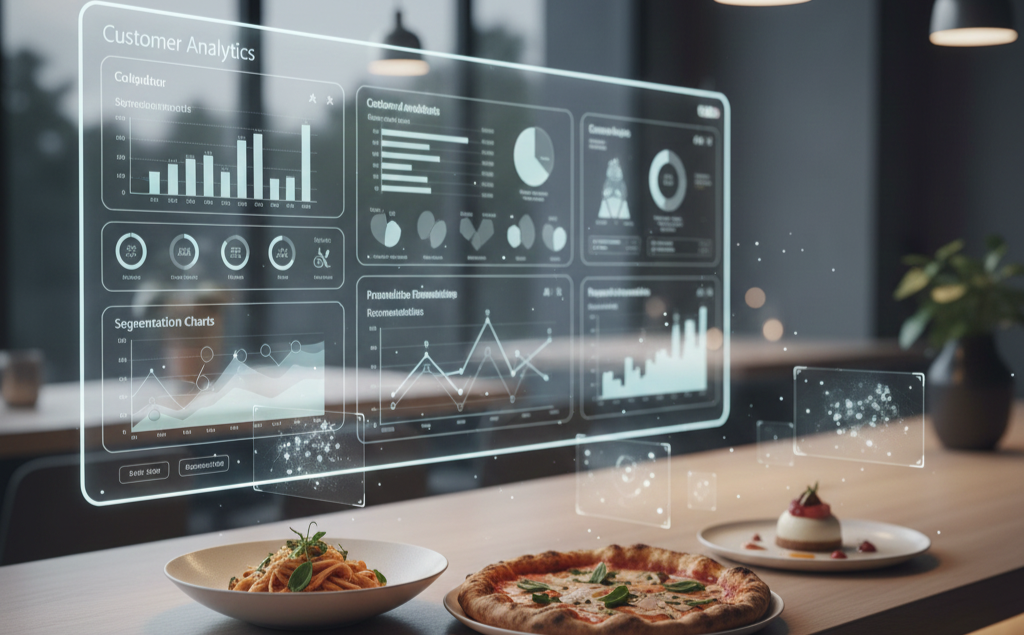
  • Personalization engines for offers, promotions, and menu recommendations

Real-Time Insights & Automation

  • Real-time automations across marketing and operations

  • Intelligent insights to anticipate supply & demand

  • Predictive recommendations for new product launches

Benefits

Real-Time Automations & Insights

  • Real-time data helped anticipate supply and demand across regions

  • Faster identification of trending menu items

  • Enabled smarter, localized promotions

  • Supported quick launch of new products

  • Strengthened customer lifetime value

Impact

$550M incremental revenue opportunity over 5 years

Driven by personalization, targeted marketing, and customer engagement initiatives.

Additional Impact:

  • Increased visits across dine-in and delivery channels

  • Higher customer retention

  • Efficient campaign performance through automated segmentation