Customer
Unified product engineering transformation for digital printing and business services became a strategic priority for a well-known American multinational leader in digital printing, document management, and business services. Operating globally with a large product engineering organization, the customer faced rising R&D costs, fragmented testing environments, and slower product releases. To remain competitive, the organization needed a unified engineering operating model that could improve quality, reduce cost, and accelerate time-to-market across software, hardware, and mechanical domains.
Business Objective
The customer aimed to:
-
Modernize the end-to-end product engineering lifecycle
-
Consolidate software, hardware, and mechanical testing into a single model
-
Reduce engineering and maintenance costs
-
Improve product quality and defect detection
-
Accelerate time-to-market for new products
-
Increase reuse of platforms and assets
-
Extend product lifecycles while improving R&D output
-
Free up capacity for innovation rather than reactive maintenance
These goals defined the roadmap for a unified product engineering transformation for digital printing and business services.
Scope of Services
BXI Technologies delivered a comprehensive engineering transformation program.
-
Designed a unified operating model for end-to-end product engineering
-
Integrated testing across:
-
Software: C, C++, Unix, Java
-
Hardware: PCB, ASICs, FPGAs
-
Mechanical: 3D CAD, FMEA
-
-
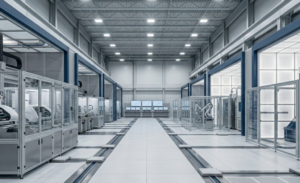
Established a 24×7 production engineering lab
-
Consolidated fragmented environments and testing pipelines
-
Implemented backlog reduction and defect management programs
-
Introduced platform investment and risk–reward financial models
-
Set up an agile innovation hub, allocating 30% of effort to innovation
-
Automated lab operations and testing workflows
Benefits
The unified engineering model enabled the organization to:
-
Standardize testing across software, hardware, and mechanical domains
-
Improve visibility into defects and product issues
-
Reduce engineering and operational costs
-
Accelerate release cycles with fewer defects
-
Increase reuse of platforms and engineering assets
-
Adopt an agile, innovation-led operating model
-
Consolidate global lab operations into a single framework
-
Allocate more capacity to innovation instead of maintenance
Impact
-
$700M+ total business impact
-
$100M+ cost savings through efficiency and consolidation
-
30–40% reduction in bug backlog
-
20% lower product run and maintenance cost
-
10–25% extension in product lifecycle
-
30% faster time-to-market
-
R&D output increased from 10 to 12 product families at lower spend